# Сопутствующие статьи по теме Ethereum

Новостной центр HTX предлагает последние статьи и углубленный анализ по "Ethereum", охватывающие рыночные тренды, новости проектов, развитие технологий и политику регулирования в криптоиндустрии.

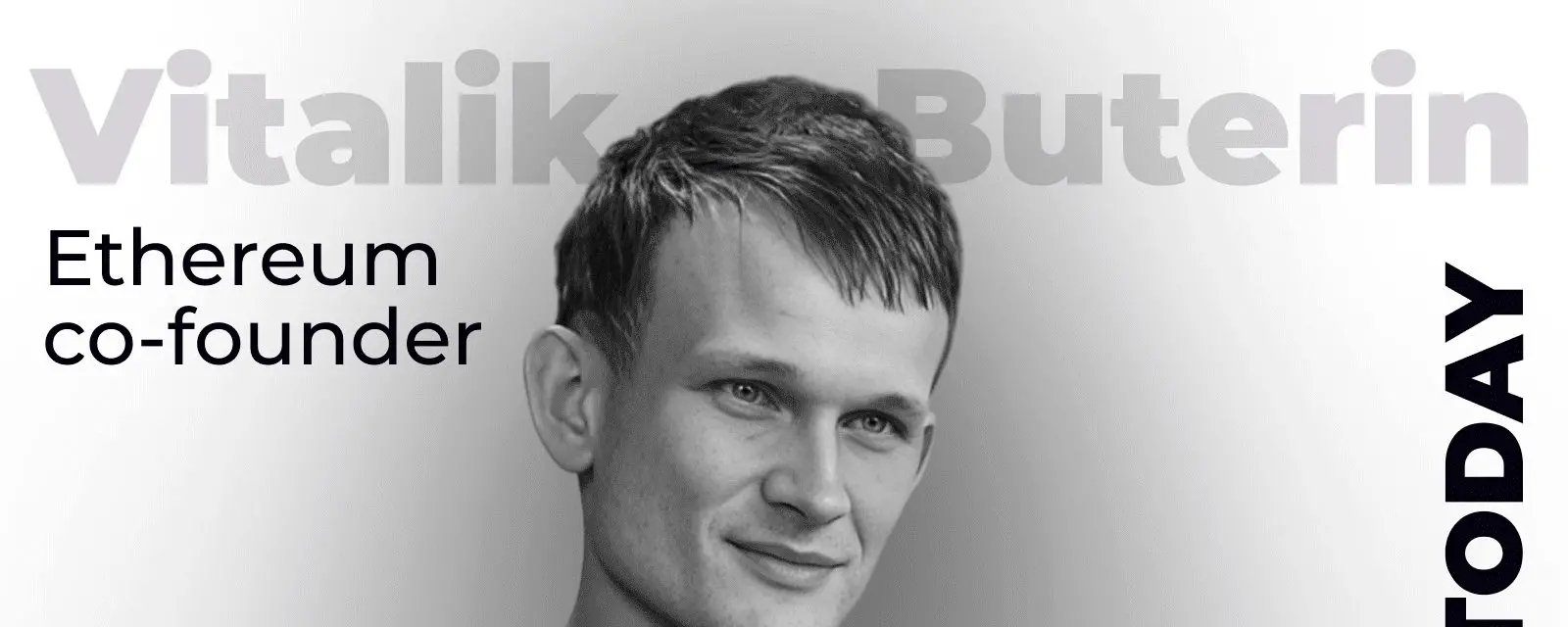
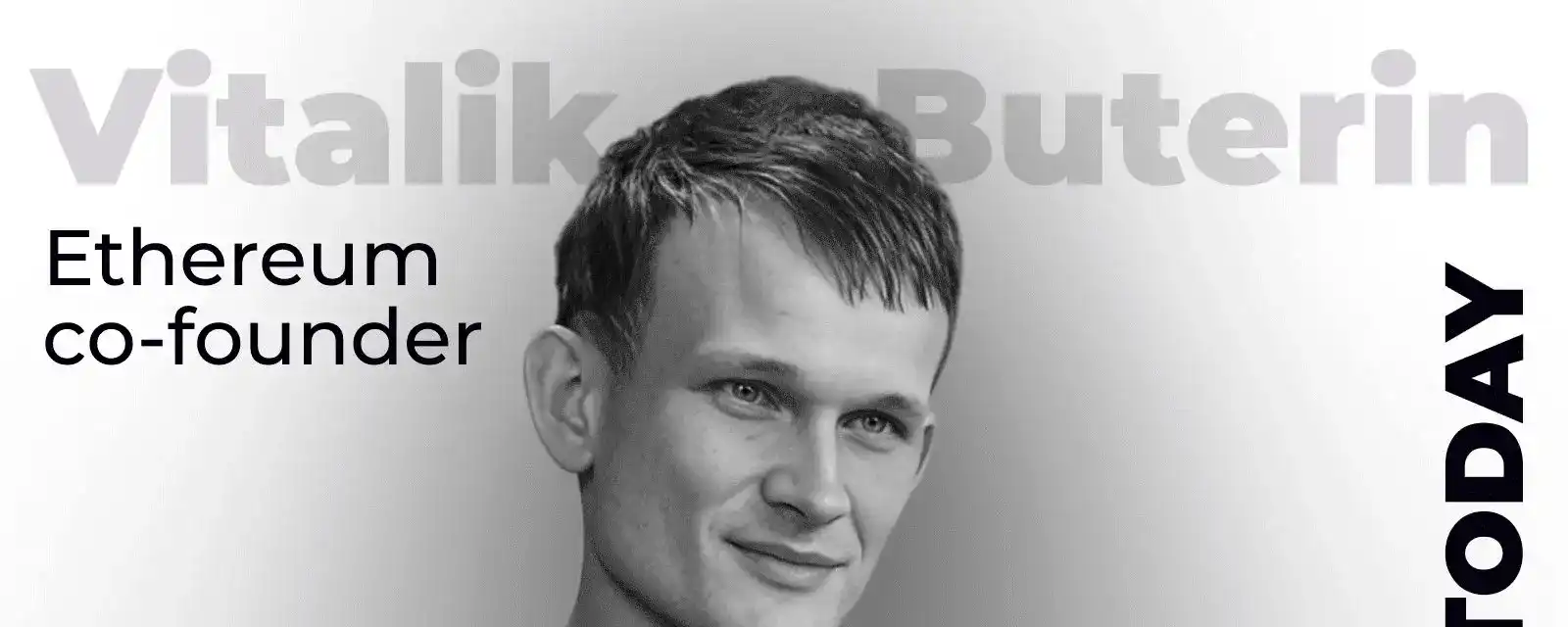
Vitalik: We Need to Create Sanctuaries, Not Fight AI

In a recent interview, Vitalik Buterin, founder of Ethereum, addresses the central anxiety of the AI era. He argues the primary risk isn't AI's intelligence, but human passivity—ceding decisions, privacy, and agency to centralized systems or "super AIs" for a sense of "disempowering safety." His solution is not to fight AI, but to build "sanctuary technologies." These are optional, non-totalizing spaces that protect users while preserving their sovereignty and privacy. Ethereum is presented as a prime example, offering a parallel financial system one can freely choose, not a fix for the old one. Reflecting on his journey from a 19-year-old on "autopilot" to an active "pilot," Vitalik notes the world reinvents itself every 5-10 years. To keep up, individuals must actively pilot their lives, not be passive passengers. He stresses that active learning vastly outperforms passive learning, even with equal time invested. His practical advice for builders and individuals in the AI age includes: periodically forcing oneself to do tasks manually to keep the mind engaged; prioritizing active learning and verification over outsourcing answers; building tools that help retain human agency; not outsourcing all strategic thinking to AI; and preserving serendipity through real-world interactions. Ultimately, Buterin redefines Ethereum/crypto's role: not to win against or fix the old world, but to provide a free, optional alternative. The core message is that as AI grows more powerful, the truly scarce resource will be proactive humans who retain their sovereignty, privacy, and capacity for independent thought. The era demands not less tool use, but more intentional and active use of technology.

链捕手13 ч. назад

Vitalik: We Need to Create Sanctuaries, Not Fight AI

链捕手13 ч. назад

Weekly Editor's Picks (0509-0515)

Weekly Editor's Picks (0509-0515): A Weekly Digest to Filter Noise This weekly digest curates deep analysis often lost in fast information flows. Key highlights: * **Macro:** A new "NACHO" (Not A Chance Hormuz Opens) trade emerges on Wall Street, betting on a prolonged closure of the Strait of Hormuz, shifting focus from political rhetoric to fundamental oil market data. * **Investment & Startups:** * Justin Sun discusses his long-term investment theses, highlighting future opportunities in embodied AI, drones, spatial computing, and space exploration. * Anthropic and OpenAI's crackdown on unauthorized stock transfers disrupts the pre-IPO token market, prompting a re-evaluation of its boundaries. * Bitwise analyzes massive capital inflows into new, compliant blockchains like Arc, Canton, and Tempo, tailored for stablecoins and asset tokenization. * A skeptical view questions HYPE's potential for further price appreciation, citing high fully diluted valuation, unlocking token supply, and unclear new buyer demographics. * **AI:** The "Semiconductor Century" report outlines the 2026 AI investment landscape, identifying key players (Nvidia, TSMC, ASML) and catalysts across the semiconductor supply chain, from design to manufacturing. * **Policy & Stablecoins:** The potential CLARITY Act is analyzed for its impact on DeFi. It could trigger massive institutional capital inflows and redirect stablecoin yields, benefiting structured, compliant DeFi protocols like Pendle, Morpho, and Centrifuge. * **CeFi & DeFi:** New tokens like sato and FLOOD, built on Uniswap v4's "Hook" mechanism, are gaining traction. Meanwhile, following the Kelp DAO exploit, Chainlink's CCIP is gaining market share from LayerZero in the cross-chain sector. * **Ethereum:** Grayscale suggests Ethereum's staking reward model needs reform to address issues like reduced fee burns from L2s and potentially excessive ETH lock-up, proposing a reward curve with a cap to benefit ETH's long-term value. * **Weekly Recap:** Summarizes key events including Trump's China visit, new Fed leadership, CLARITY Act progress, notable price movements (ZEC, TON), strong corporate earnings (Circle, Gemini), and institutional Bitcoin accumulation.

marsbitВчера 02:40
Weekly Editor's Picks (0509-0515)

marsbitВчера 02:40

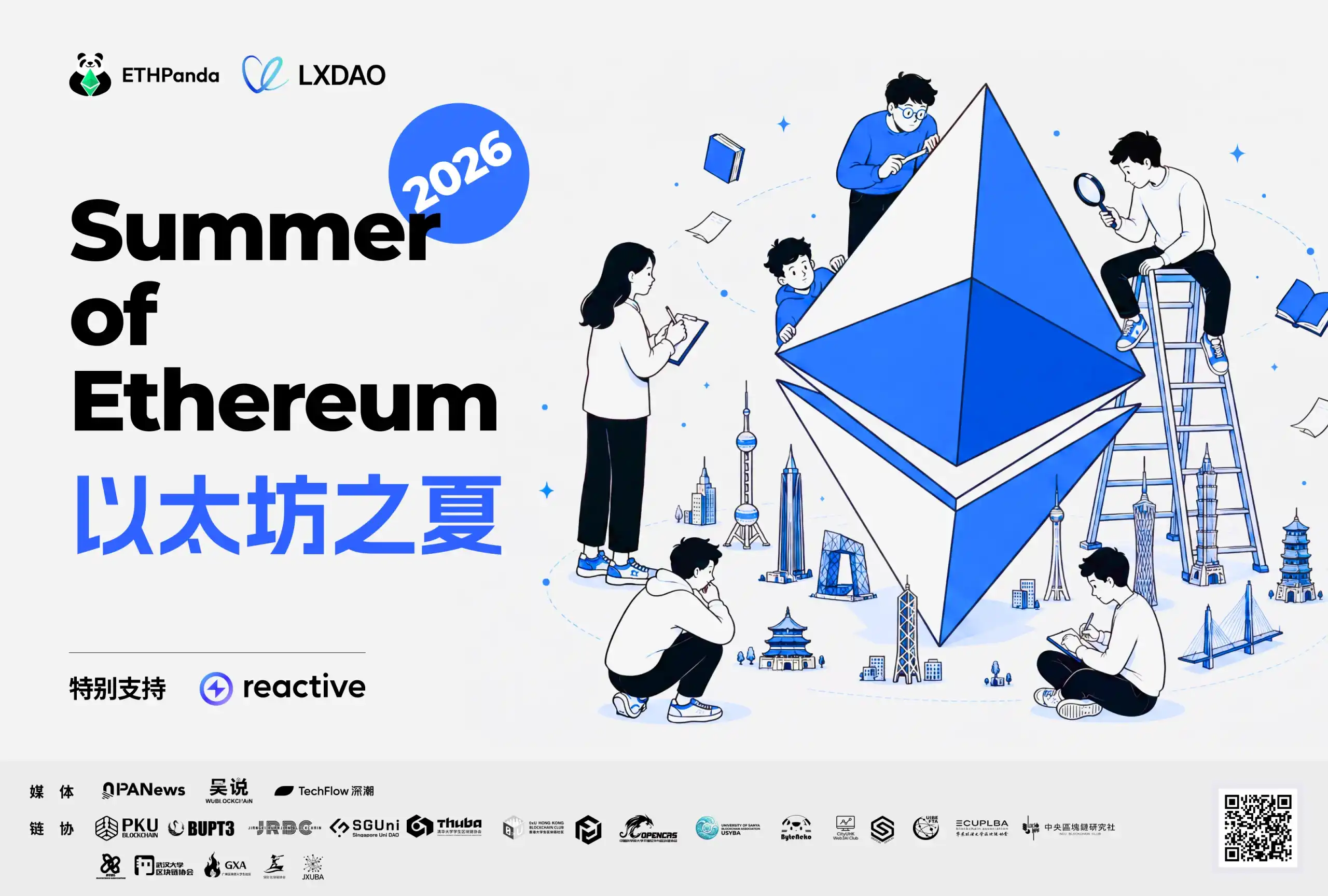
Some Issues Are Better Discussed in Person: Summer of Ethereum 2026 Is Here!

Summer of Ethereum 2026 is returning, focused on bringing crucial discussions about Ethereum's long-term development to in-person meetups across multiple cities. Organized by LXDAO and ETHPanda, the initiative aims to move beyond online discourse and event scheduling by addressing Ethereum's systemic challenges through real-world connections. The core question this year is the value of offline gatherings for the Ethereum community. While online discussions on topics like the roadmap, L2, account abstraction, and governance are abundant, they often lack depth and alignment. The goal is to bring these fragmented, complex issues—such as UX, developer tools, public goods, and local community building—into shared physical spaces to foster deeper understanding, trust, and actionable collaboration. The program will not follow a rigid format but will adapt to each city's context, potentially including talks, panels, workshops, and community gatherings. Key discussion areas include protocol evolution, Ethereum UX/account abstraction, real-world applications, developer tools, and sustainable community governance. The aim is for each event to leave behind clearer problems, stronger personal connections, and tangible follow-up actions. The call is open to developers, researchers, students, community members, local organizers, projects, and media partners. Participation is encouraged whether one brings deep expertise or just genuine curiosity. For Ethereum's ecosystem—built on principles of open networks and long-term collaboration—this "non-negotiable" effort seeks to translate belief into concrete, local cooperation. The ultimate hope is that these meetings will seed lasting partnerships and turn abstract challenges into progress, one city at a time. All event details and schedules will be updated on the Luma Calendar.

marsbit2 дня назад 11:22

Some Issues Are Better Discussed in Person: Summer of Ethereum 2026 Is Here!

marsbit2 дня назад 11:22

Q1 Wall Street Institutional Holdings Revealed: Jane Street Slashes Bitcoin ETF Position by 71%, JPMorgan Increases Holdings by 174%

Wall Street's Q1 13F filings reveal divergent strategies among major institutions regarding crypto exposure amid a broad market downturn. Bitcoin fell nearly 24% in Q1, with total crypto market cap down 20.4%. Key moves include Jane Street sharply reducing its Bitcoin ETF holdings (cutting IBIT by 71%) while significantly increasing its Ethereum ETF positions and building a new stake in Galaxy Digital. In contrast, JPMorgan Chase aggressively bought the dip, increasing its IBIT holding by 174% and boosting stakes in other Bitcoin ETFs, while initiating a position in a Solana ETF and clearing its XRP ETF. Wells Fargo increased its Ethereum ETF exposure by over 60% despite outflows from the asset class, while nearly exiting its Galaxy Digital position. BlackRock continued buying Bitcoin on-chain (adding ~15,000 BTC) and increased its holdings of crypto-correlated stocks like MicroStrategy and Bitmine, though its overall crypto portfolio value shrank due to price declines. ARK Invest notably increased its bet on Circle, highlighting institutional interest in the stablecoin infrastructure narrative. The filings signal three trends: growing institutional interest in Ethereum for long-term infrastructure plays, strategic differences (not bearishness) driving Bitcoin positioning, and crypto-equities becoming a core, though contested, allocation (e.g., mixed views on Galaxy Digital). The Q1 accumulation by some institutions appears validated in Q2, with Bitcoin rebounding above $80,000 and spot Bitcoin ETFs seeing renewed net inflows.

marsbit2 дня назад 11:07

Q1 Wall Street Institutional Holdings Revealed: Jane Street Slashes Bitcoin ETF Position by 71%, JPMorgan Increases Holdings by 174%

marsbit2 дня назад 11:07

From Gas Limit to Keyed Nonces: How to Understand the Next Stage of Ethereum's Scalability?

From Gas Limits to Keyed Nonces: Understanding the Next Phase of Ethereum Scalability This article explores how recent Ethereum developments focus on moving complexity away from end-users, wallets, and DApps to the protocol layer. It discusses the consensus around significantly increasing the Gas Limit to 200 million, a change aimed at reducing fees and improving network capacity. However, it emphasizes that this increase is part of a holistic approach that includes mechanisms like enshrined Proposer-Builder Separation (ePBS) and Block-Level Access Lists to manage state growth and maintain node decentralization. The piece also delves into Keyed Nonces (EIP-8250), a proposed upgrade to Ethereum's transaction ordering. It explains how moving from a single, linear nonce queue per account to multiple independent nonce domains ("channels") can enable parallel transaction streams for different use cases. This is particularly crucial for privacy protocols and smart wallets, reducing transaction conflicts and unlocking new design possibilities. Ultimately, the article argues that these technical upgrades—alongside native account abstraction and cross-L2 interoperability—are converging towards a singular goal: enhancing the overall user experience. This means making on-chain interactions smoother, safer, and more cohesive, with wallets serving as the critical interface translating complex protocol improvements into intuitive user actions.

marsbit05/14 13:43

From Gas Limit to Keyed Nonces: How to Understand the Next Stage of Ethereum's Scalability?

marsbit05/14 13:43

活动图片