# Сопутствующие статьи по теме Ethereum

Новостной центр HTX предлагает последние статьи и углубленный анализ по "Ethereum", охватывающие рыночные тренды, новости проектов, развитие технологий и политику регулирования в криптоиндустрии.

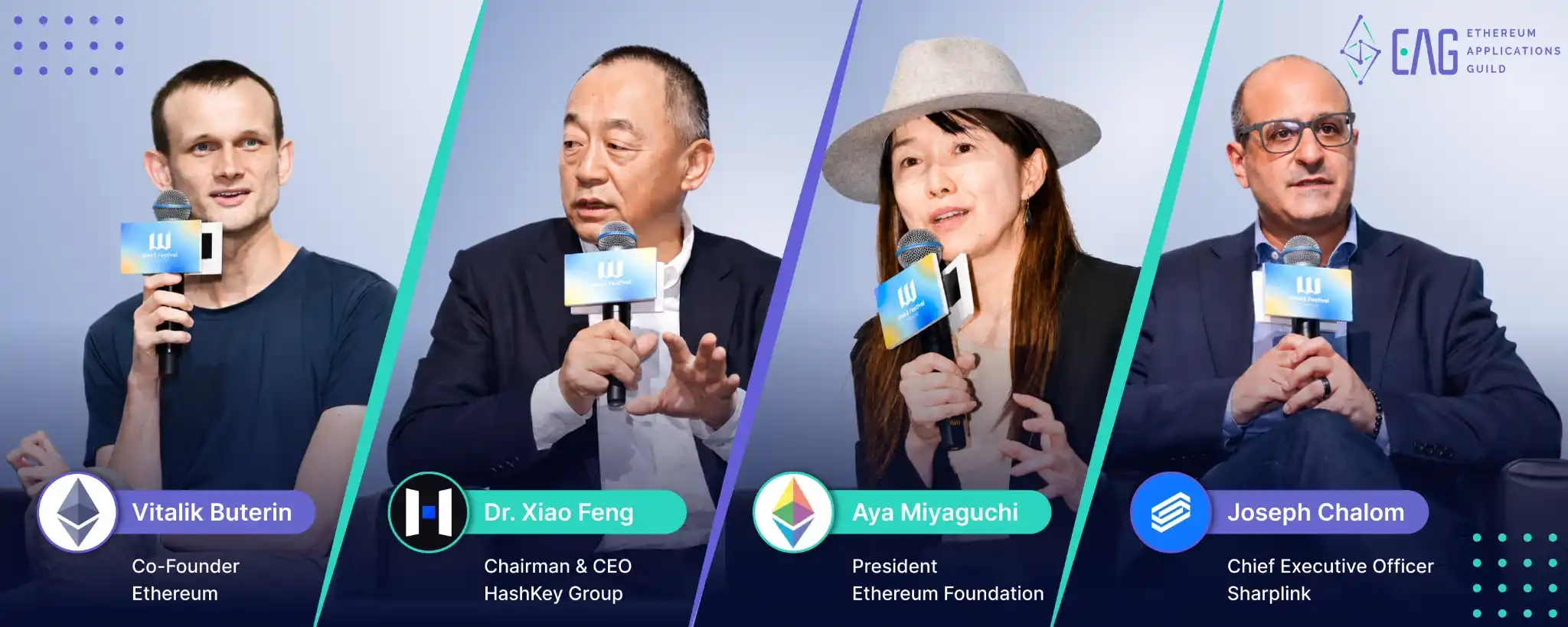
Dialogue with Vitalik, Xiao Feng, Aya Miyaguchi, and Joseph Chalom: From the 'Subtraction Principle' to the Agent Economy

Conversation with Vitalik Buterin, Xiao Feng, Aya Miyaguchi, and Joseph Chalom: Highlights from the Ethereum Application Summit on key future directions. Vitalik Buterin discussed the concept of "Full Stack Open Source Security," extending security from the protocol to hardware layers like wallets and chips. He predicted AI will simplify blockchain interaction, enabling natural language commands for complex operations. He emphasized that Ethereum's future focus should be on security, decentralization, and trustless infrastructure—the areas where it holds its core competitive edge. The fusion of AI, Fully Homomorphic Encryption (FHE), and blockchain is seen as crucial for real-world applications requiring privacy, such as healthcare. Xiao Feng underscored the importance of simplifying technology for mass adoption. He drew parallels to the evolution from command lines to GUIs and apps, suggesting that AI-driven natural language interfaces will be key to bringing more users into Web3. He stressed that while performance is important, Ethereum must continue to uphold its foundational principles of decentralization and user sovereignty. Aya Miyaguchi, Chair of the Ethereum Foundation, explained the evolving role of the Foundation through the "Principle of Subtraction." As the ecosystem matures, the EF is stepping back from areas where the community can take the lead, acting as one of many "gardeners" rather than a central driver. She highlighted that real applications are built on Ethereum's core values: censorship resistance, open source, security, and privacy. The concept of "Local-first" initiatives, like the Ethereum Applications Guild (EAG), was also emphasized for leveraging regional strengths to create global impact. Joseph Chalom, CEO of SharpLink, positioned Ethereum as the future infrastructure for global capital markets, differentiating it from Bitcoin through its "productivity" via staking yields. He envisioned the rise of an "Agent Economy" by 2027, where AI agents, powered by Web3 wallets, will autonomously manage financial tasks like yield optimization and RWA investments. The summit concluded that with core infrastructure maturing, the application layer is now the key driver for Ethereum's next phase of growth and real-world adoption.

marsbit05/12 09:43

Dialogue with Vitalik, Xiao Feng, Aya Miyaguchi, and Joseph Chalom: From the 'Subtraction Principle' to the Agent Economy

marsbit05/12 09:43

What Happens to Ethereum Developer Tools After the Grants Run Out?

On February 27th, the Ethereum Foundation (EF) announced Project Odin, a structured sustainability support program designed for a select group of strategic, previously grant-funded teams. Unlike a standard grant, Odin offers a long-term advisory mechanism focused on helping these teams establish credible, sustainable paths within a two-year framework, thereby reducing long-term dependence on single funding sources. The program addresses a critical post-grant challenge: how essential public goods, especially major developer tools, can achieve financial sustainability beyond initial funding. While grants from EF and programs like Gitcoin or RetroPGF remain vital for startups and research, they often fall short for mature, widely-used infrastructure. Tools like compilers, languages, and network stacks are deeply embedded but struggle with monetization, trapped between being too foundational to lose and too public to generate natural revenue. Project Odin provides teams with a dedicated Strategic Advisor to guide them through a three-phase process: 1) analyzing current funding and realistic options, 2) validating potential paths with stakeholders, and 3) executing plans, which may include crafting support contracts, service agreements, or other recurring revenue models. The first pilot participant is Vyper, a critical smart contract language for the EVM, highlighting the need for sustainable models for core infrastructure. The initiative reframes the public goods conversation from "who should be funded" to "how do already-proven teams avoid perpetual funding crises?" It encourages ecosystem participants—protocols and projects that depend on these tools—to view sustainable support not just as charity, but as essential risk management for their own operational supply chains.

marsbit05/12 08:35

What Happens to Ethereum Developer Tools After the Grants Run Out?

marsbit05/12 08:35

Understanding Hash in One Article: The "Browser Miner" on Ethereum

Hash is an Ethereum-based ERC-20 token described as a "browser-minable post-quantum token." Its key features include enabling browser-based GPU mining without specialized hardware, a fixed supply cap of 21 million tokens, immutable and permissionless smart contracts with no team allocation or pre-mining, and an emphasis on post-quantum security using Keccak256 hashing. The mining mechanism is a simplified on-chain proof-of-work where miners solve unique challenges tied to their wallet address. Key design elements prevent answer theft, with epochs resetting every 100 blocks (~20 minutes) and a per-block minting limit. Emission follows a Bitcoin-like halving schedule every 100,000 mints, starting at 100 tokens per mint. Projections suggest all tokens could be mined within approximately 294 days if a target rate of one mint per minute is sustained. Hash emphasizes "post-quantum" security by leveraging hash-based primitives like Keccak256, which are considered more resistant to quantum attacks compared to elliptic-curve cryptography. While not a fully post-quantum asset, it aligns with Ethereum's broader post-quantum research narrative. The project completed its Genesis sale at $0.03 and began trading on Uniswap, with its price reaching around $0.19. The initial circulating supply is small, with 5% sold in Genesis and 5% allocated to liquidity. The majority (47.6% of total supply) is allocated to early-stage mining, leading to a front-loaded emission schedule. This structure, combined with low initial liquidity, makes Hash a high-volatility, high-risk project dependent on sustained miner participation and market demand to absorb new supply.

marsbit05/11 10:55

Understanding Hash in One Article: The "Browser Miner" on Ethereum

marsbit05/11 10:55

Has Hook Summer Truly Arrived? sato, Lo0p, FLOOD Ignite the New Uniswap v4 Narrative

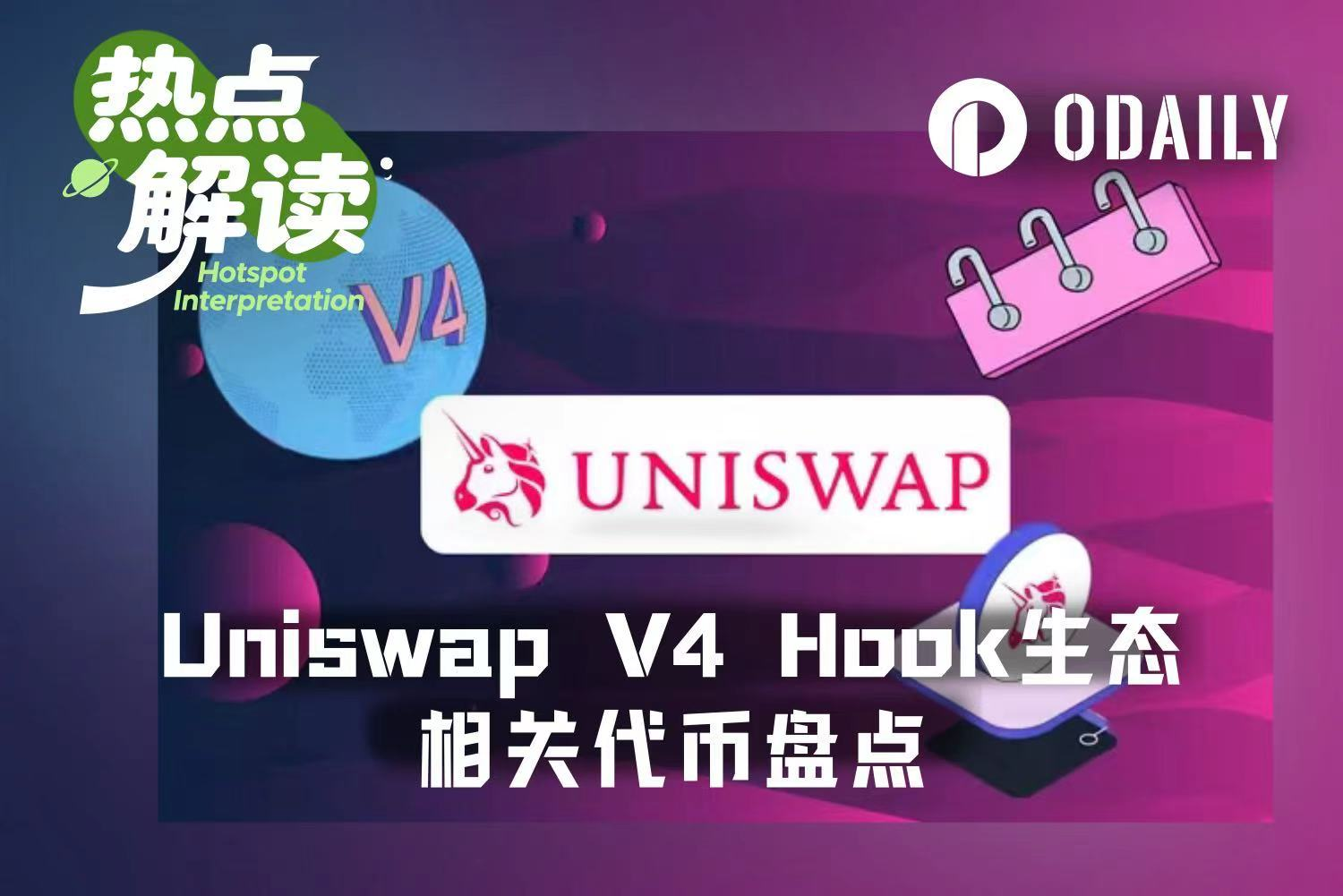
With the broader market showing signs of recovery, a new wave of interest has emerged around Ethereum-based meme coins. Following ASTEROID, tokens like sato, sat1, Lo0p, and FLOOD, built upon the Uniswap v4 Hook protocol, are capturing market attention. Their market capitalizations range from millions to tens of millions of dollars, injecting much-needed focused liquidity into a market lacking narratives. This article explores whether this trend signifies an incoming "Hook Summer" and its potential impact on UNI's price. Hooks are essentially plug-in smart contracts for Uniswap v4 liquidity pools, allowing developers to inject custom logic at key points in a pool's lifecycle (like initialization, adding/removing liquidity, swaps). This transforms the AMM into programmable building blocks. Key highlighted projects include: * **sato**: Peaked over $38M market cap. It utilizes a v4 curve for minting/burning; buying locks ETH as reserve to mint new tokens, while selling redeems ETH from the reserve and burns tokens. * **sat1**: Market cap briefly exceeded $10M, promoted as an "optimized sato," but later declined significantly. * **Lo0p**: Reached nearly $6.6M. It's a lending AMM protocol where buying LO0P tokens locks them as collateral, allowing users to borrow ETH from the pool reserve at 40% LTV, aiming to improve capital efficiency for idle ETH in LPs. * **FLOOD**: Peaked near $6M. Its mechanism directs asset reserves from buys into Aave v3 to generate yield, with fees and interest retained in the pool to potentially influence the token's price long-term. In the long term, the development of the Hook ecosystem can attract users and liquidity to Uniswap v4, benefiting UNI's fundamentals—especially combined with the recent activation of the protocol fee switch, where a portion of fees is used to burn UNI. However, in the short term, these Hook-based tokens are unlikely to directly drive significant UNI price appreciation. Their impact is moderated by factors like token sustainability, price volatility, and broader market and regulatory conditions. Currently, Uniswap v4's TVL ($595M) still trails behind v2 and v3, indicating adoption and growth will take time. The article concludes that while the Hook ecosystem provides long-term "nourishment" for UNI, its short-term role is more of a "catalyst" than a "booster." Readers are cautioned that these are early-stage experimental tokens and may carry unknown risks.

Odaily星球日报05/11 06:30

Has Hook Summer Truly Arrived? sato, Lo0p, FLOOD Ignite the New Uniswap v4 Narrative

Odaily星球日报05/11 06:30

活动图片