# Сопутствующие статьи по теме Compliance

Новостной центр HTX предлагает последние статьи и углубленный анализ по "Compliance", охватывающие рыночные тренды, новости проектов, развитие технологий и политику регулирования в криптоиндустрии.

Interactive Brokers Opens 'Stablecoin Deposits': Why Is the Wall Street Giant Tearing Down the 'Payment Berlin Wall' at This Moment?

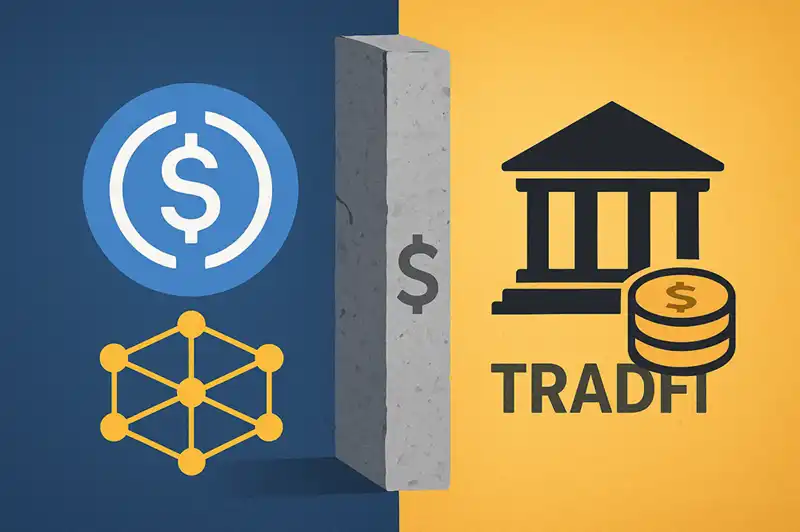
Interactive Brokers (IBKR), a major global electronic brokerage, has announced a landmark update allowing clients to deposit funds using stablecoins—primarily USDC—to trade traditional assets like stocks, futures, and forex. This move effectively bridges a significant gap between crypto and traditional finance (TradFi), addressing long-standing inefficiencies in fiat payment channels. Traditionally, cross-border wire transfers via SWIFT are slow (taking 1-3 business days), costly, and limited to banking hours. By leveraging blockchain technology, IBKR enables near-instant, 24/7 settlements, drastically reducing friction and improving capital efficiency for traders. Behind the scenes, IBKR likely partners with regulated entities like Paxos or Circle to convert USDC to USD seamlessly, ensuring compliance while using the blockchain as a new settlement layer. This strategic shift aims to attract crypto-native high-net-worth clients and institutions holding significant wealth in stablecoins, offering them a secure, compliant path to invest in traditional markets. It also signals the evolution of stablecoins from mere trading instruments to a foundational global payment infrastructure. However, challenges remain, including stringent KYC/AML requirements, address screening, and enhanced tax transparency. Despite these hurdles, IBKR’s move is a decisive step toward erasing the boundaries between crypto wallets and securities accounts, setting a new standard for the industry.

marsbit12/16 02:07

Interactive Brokers Opens 'Stablecoin Deposits': Why Is the Wall Street Giant Tearing Down the 'Payment Berlin Wall' at This Moment?

marsbit12/16 02:07

From 'Safe Harbor' to 'Compliant Innovation': An Analysis of the Impact of the SEC's Innovation Exemption Policy

From "Safe Harbor" to "Compliant Innovation": An Analysis of the SEC's Innovation Exemption Policy The U.S. SEC, under Chairman Paul Atkins, introduced the "Innovation Exemption" policy in July 2025, marking a historic shift from an "enforcement-as-regulation" approach to a proactive framework. This temporary exemption, set to take effect in January 2026, provides a 12–24 month grace period for crypto projects (exchanges, DeFi protocols, stablecoin issuers, DAOs) to operate with simplified disclosures instead of full SEC registration, reducing initial compliance burdens. The exemption is principle-based, requiring basic investor protections like periodic reporting, risk disclosures, investment limits, and adherence to technical standards such as ERC-3643 for identity verification. It operates alongside congressional efforts like the CLARITY Act (clarifying SEC/CFTC jurisdiction) and the enacted GENIUS Act (regulating stablecoins under banking rules). Reactions are polarized: startups and institutions welcome the lower entry costs and regulatory clarity, which attract capital and foster innovation. However, the DeFi community warns that mandatory KYC/AML and transfer restrictions risk "traditionalizing" decentralized protocols. Traditional financial institutions oppose it, fearing regulatory arbitrage. Globally, this flexible U.S. model contrasts with the EU’s pre-authorization MiCA regime, forcing companies into dual compliance strategies. The exemption positions the U.S. as a competitive "global crypto capital hub," but international coordination remains crucial for long-term stability. Ultimately, "compliant innovation" becomes the new core competency, requiring projects to balance agility with a clear path to verifiable decentralization.

marsbit12/15 23:06

From 'Safe Harbor' to 'Compliant Innovation': An Analysis of the Impact of the SEC's Innovation Exemption Policy

marsbit12/15 23:06

Does Encryption Becoming 'Boring' Signal Its Formal Entry into the Mainstream Application Stage?

The article argues that the perceived "boredom" in cryptocurrency signals its maturation into mainstream adoption, driven by regulatory clarity, particularly around stablecoins. This stability allows projects to shift from serving crypto-natives to building practical, regulated products for the mass market. The author highlights that while early crypto ideals like anonymity were initially celebrated, they became a barrier to scale due to compliance needs. The current phase involves pragmatic, "boring" solutions, such as the "stablecoin sandwich," which bridges traditional finance and blockchain but reintroduces intermediaries to handle compliance and data verification. A key future direction is Proof of Personhood, exemplified by Worldcoin's efforts to distinguish humans from bots using biometric verification. This is positioned as essential for scaling payments and combating fraud. Worldcoin's new wallet, integrating global bank accounts and a Visa card, demonstrates that user demand is for seamless financial tools, not necessarily new tokens. Additionally, the rise of "Mini Apps" allows developers to bypass app store fees, while decentralized messaging (e.g., XMTP) offers privacy-focused communication. The conclusion is that crypto's infrastructure is finally becoming practical and regulated, just as AI advances make cryptographic verification of truth increasingly critical.

比推12/15 13:44

Does Encryption Becoming 'Boring' Signal Its Formal Entry into the Mainstream Application Stage?

比推12/15 13:44

Crypto Prediction in the Gray Zone: Alliance Formation, Regulatory Pressure, and the Battle for the Future

The article "Encrypted Predictions in the Gray Area: Alliances, Regulatory Pressure, and Future Debates" discusses the recent formation of the "Prediction Market Alliance" by Kalshi and Crypto.com, joined by Coinbase, Robinhood, and Underdog. This alliance aims to unify the industry's voice and promote a balance between regulation, liquidity, and trust in the rapidly growing but legally ambiguous encrypted prediction market sector. Unlike traditional gambling, encrypted prediction markets operate on blockchain or crypto-based event-trading mechanisms. Users trade contracts on uncertain outcomes like elections or sports events, with prices reflecting collective market probability assessments. Key differences from traditional betting include market-driven pricing (rather than house-set odds), continuous trading opportunities, and a focus on information discovery rather than entertainment. The market is bifurcated into crypto-native platforms like Polymarket (global, blockchain-based) and regulated entities like Kalshi (U.S.-approved). While these markets are expanding quickly—evidenced by surging trading volumes around events like U.S. elections—they face significant challenges: regulatory uncertainty, liquidity instability (high activity around events but drops afterward), and disputes over outcome resolution standards. The alliance seeks to advocate for responsible and transparent development amid growing consumer interest and evolving regulations. However, major players like Polymarket, DraftKings, and FanDuel have not joined, indicating divergent strategies within the industry. The future of encrypted prediction markets hinges on achieving scalable liquidity and long-term trust within a regulatory-acceptable framework.

cointelegraph_中文12/15 09:34

Crypto Prediction in the Gray Zone: Alliance Formation, Regulatory Pressure, and the Battle for the Future

cointelegraph_中文12/15 09:34

"Asia's First Stock" HashKey Goes Public: A Decade of Dedication, Edge Emerging

"Asia's first crypto stock" HashKey has listed on the Hong Kong Stock Exchange, marking a milestone after a decade of strategic development. As of September 2025, the platform has facilitated HKD 1.3 trillion in cumulative spot trading volume, commanding over 75% market share among Hong Kong’s 11 licensed virtual asset trading platforms. HashKey’s success stems from its long-term compliance-first strategy, aligning closely with Hong Kong’s evolving regulatory landscape. While many platforms operated in regulatory grey areas, HashKey focused on building robust infrastructure, obtaining licenses, and adhering to strict anti-money laundering (AML), know-your-customer (KYC), and asset segregation requirements. The company capitalized on Hong Kong’s introduction of the Virtual Asset Service Provider (VASP) licensing regime in 2022, becoming one of the first fully regulated exchanges. The compliance-heavy model requires significant investment in technology, auditing, and risk management, resulting in higher operational costs and a longer path to profitability. However, it has positioned HashKey as a trusted gateway for institutional investors, offering services including staking, asset management, and real-world asset (RWA) tokenization. HashKey’s IPO symbolizes a broader industry transition from speculative trading to institutional participation and regulated financial infrastructure. It represents the rise of compliance as a core competitive advantage in the virtual asset sector and underscores Hong Kong’s strategic role in shaping Asia’s digital finance future.

深潮12/15 06:36

"Asia's First Stock" HashKey Goes Public: A Decade of Dedication, Edge Emerging

深潮12/15 06:36

HashKey IPO Oversubscribed 300 Times, Investors Betting on Its Era Positioning

HashKey, known as "Hong Kong's first licensed crypto asset stock" (Stock Code: 03887), concluded its IPO subscription on December 12, with its official listing scheduled for December 17. Despite concerns over continued significant financial losses—reporting an adjusted net loss of approximately HK$1.57 billion from 2022 to 2024—the public offering was oversubscribed by 301.6x, raising HK$506 billion in margin financing against an initial target of HK$1.67 billion. The company attributes its losses to high upfront investments in compliance, technology development, and ecosystem expansion, drawing parallels to Coinbase’s early growth trajectory. HashKey operates multiple business segments, including regulated exchange services (HashKey Exchange and HashKey Global), blockchain infrastructure (HashKey Chain), asset management (HashKey Capital), OTC services, and tokenization solutions. Its strategic value lies in being a bridge between traditional finance and Web3, positioning itself as a compliant gateway for institutional entry into Asian crypto markets. With backing from cornerstone investors like UBS, Fidelity, and CDH Investments, HashKey aims to strengthen Hong Kong’s ambition to become a "global virtual asset hub." While skeptics point to its financials and perceived inefficiencies, investor enthusiasm reflects confidence in HashKey’s regulatory compliance, institutional leadership in Asia, and its role in regional digital finance infrastructure. The IPO is seen less as a short-term profit play and more as a bet on Hong Kong’s—and Asia’s—future in the evolving crypto and Web3 landscape.

marsbit12/15 00:10

HashKey IPO Oversubscribed 300 Times, Investors Betting on Its Era Positioning

marsbit12/15 00:10

Why Can HashKey Become Hong Kong's 'First Crypto Stock'?

HashKey, a licensed Virtual Asset Trading Platform (VATP) in Hong Kong, has passed the listing hearing of the Hong Kong Stock Exchange (HKEX) and is poised to become the city’s first listed crypto-native company. Its Post-Hearing Information Pack (PHIP) reveals key aspects of its business, compliance, and governance. A major strength lies in its global multi-jurisdictional regulatory compliance, with licenses in financial hubs including Hong Kong, Singapore, Japan, Bermuda, the UAE, and Ireland. This allows it to operate across borders while adhering to local regulations. The platform emphasizes strong technical and internal controls: 96.9% of user assets are stored in cold wallets, customer funds are segregated, and multi-signature approval processes are implemented. It has also developed HashKey Chain, a compliant Ethereum Layer-2 network designed for institutional use, particularly in tokenized securities, which embeds regulatory requirements at the protocol level. HashKey Holdings is incorporated in Cayman Islands and has established a corporate governance structure aligned with HKEX standards, including a board with independent directors and a fully independent audit committee. Its potential listing is seen as a significant milestone, demonstrating that Web3 businesses can operate within regulatory frameworks. It also reflects Hong Kong’s supportive stance toward virtual asset innovation. However, ongoing compliance across multiple regions entails high and continuous operational and legal costs.

marsbit12/14 06:44

Why Can HashKey Become Hong Kong's 'First Crypto Stock'?

marsbit12/14 06:44

活动图片