Project Updates

Tracks blockchain projects from inception to their latest updates and major milestones. By covering project financing, partnerships, and product upgrades, it helps investors stay informed about the latest industry trends and developments.

Has Hook Summer Truly Arrived? sato, Lo0p, FLOOD Ignite the New Uniswap v4 Narrative

With the broader market showing signs of recovery, a new wave of interest has emerged around Ethereum-based meme coins. Following ASTEROID, tokens like sato, sat1, Lo0p, and FLOOD, built upon the Uniswap v4 Hook protocol, are capturing market attention. Their market capitalizations range from millions to tens of millions of dollars, injecting much-needed focused liquidity into a market lacking narratives. This article explores whether this trend signifies an incoming "Hook Summer" and its potential impact on UNI's price. Hooks are essentially plug-in smart contracts for Uniswap v4 liquidity pools, allowing developers to inject custom logic at key points in a pool's lifecycle (like initialization, adding/removing liquidity, swaps). This transforms the AMM into programmable building blocks. Key highlighted projects include: * **sato**: Peaked over $38M market cap. It utilizes a v4 curve for minting/burning; buying locks ETH as reserve to mint new tokens, while selling redeems ETH from the reserve and burns tokens. * **sat1**: Market cap briefly exceeded $10M, promoted as an "optimized sato," but later declined significantly. * **Lo0p**: Reached nearly $6.6M. It's a lending AMM protocol where buying LO0P tokens locks them as collateral, allowing users to borrow ETH from the pool reserve at 40% LTV, aiming to improve capital efficiency for idle ETH in LPs. * **FLOOD**: Peaked near $6M. Its mechanism directs asset reserves from buys into Aave v3 to generate yield, with fees and interest retained in the pool to potentially influence the token's price long-term. In the long term, the development of the Hook ecosystem can attract users and liquidity to Uniswap v4, benefiting UNI's fundamentals—especially combined with the recent activation of the protocol fee switch, where a portion of fees is used to burn UNI. However, in the short term, these Hook-based tokens are unlikely to directly drive significant UNI price appreciation. Their impact is moderated by factors like token sustainability, price volatility, and broader market and regulatory conditions. Currently, Uniswap v4's TVL ($595M) still trails behind v2 and v3, indicating adoption and growth will take time. The article concludes that while the Hook ecosystem provides long-term "nourishment" for UNI, its short-term role is more of a "catalyst" than a "booster." Readers are cautioned that these are early-stage experimental tokens and may carry unknown risks.

Odaily星球日报05/11 06:30
Has Hook Summer Truly Arrived? sato, Lo0p, FLOOD Ignite the New Uniswap v4 Narrative

Odaily星球日报05/11 06:30

Telegram Takes Direct Control of TON, Social Traffic Rewrites the Public Chain Narrative

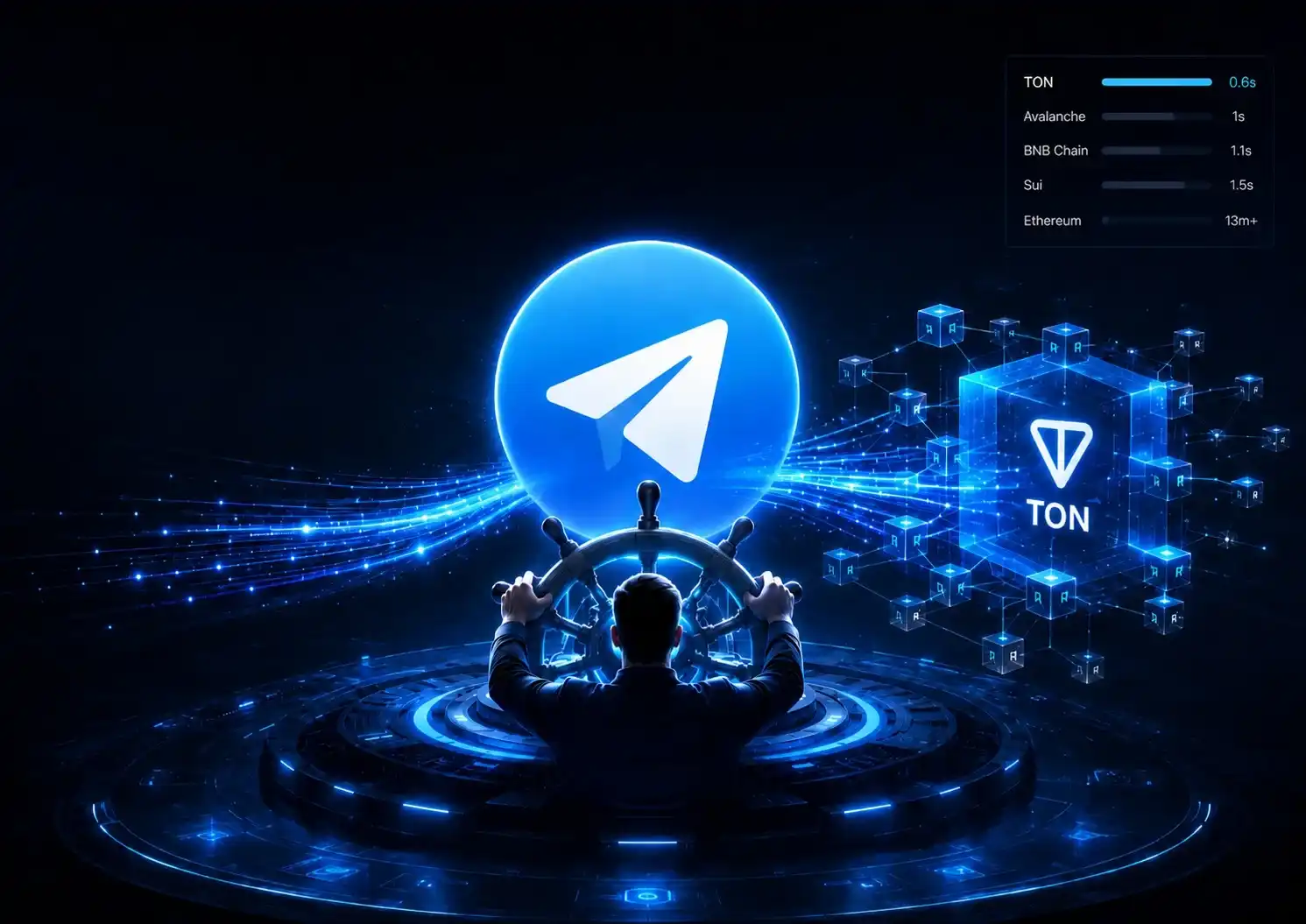
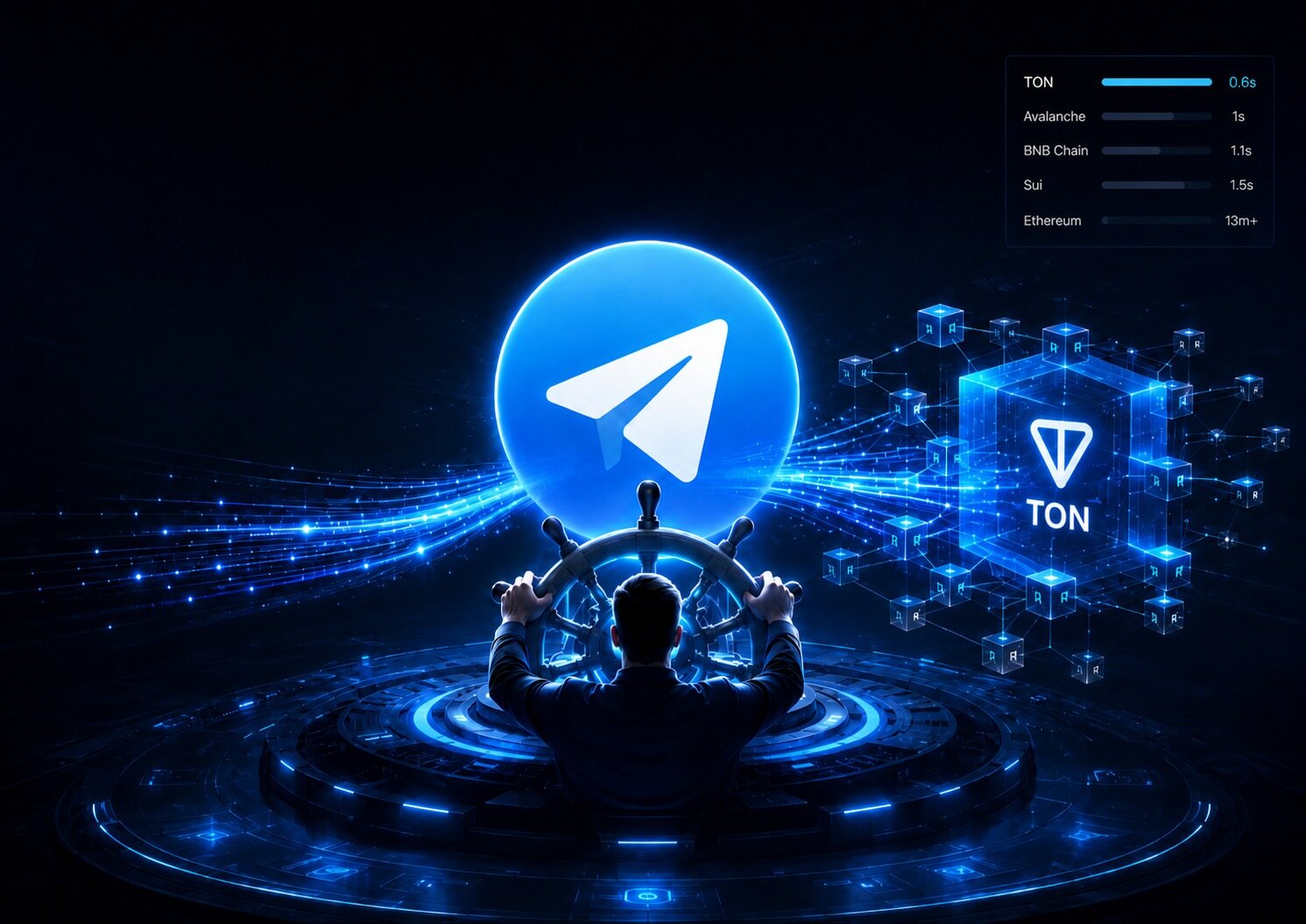
Telegram founder Pavel Durov announced that Telegram will replace the TON Foundation as the core driver and largest validator of The Open Network (TON). Key initiatives include a sixfold reduction in transaction fees, performance upgrades, and improved developer tools within the next few weeks. This marks a strategic shift from Telegram merely providing user access to deeply integrating TON into its platform's core infrastructure. The goal is to transform Telegram's massive social traffic into sustainable on-chain activity. While viral mini-apps like Notcoin have demonstrated Telegram's ability to drive user adoption, TON aims to support frequent, low-value transactions inherent to social platforms—such as tipping, in-app payments, and game rewards. Ultra-low fees and sub-second finality (0.6 seconds) are crucial to making blockchain interactions seamless and nearly invisible within the Telegram user experience. However, Telegram's increased central role raises questions about network decentralization. Durov argues that Telegram's participation will attract more large validators, thereby enhancing decentralization. TON also offers high annual staking rewards (18.8%), aiming to retain capital within its ecosystem. The fundamental challenge for TON is no longer leveraging Telegram's user base, but becoming an indispensable, seamless infrastructure layer for Telegram's everyday applications—moving from an adjacent chain to an embedded utility.

marsbit05/11 01:30

Telegram Takes Direct Control of TON, Social Traffic Rewrites the Public Chain Narrative

marsbit05/11 01:30

Telegram Takes Direct Control of TON, Social Traffic Reshapes Public Chain Narrative

Telegram's founder, Pavel Durov, has announced a major shift in the development of The Open Network (TON). Telegram will now become the core driver of TON, replacing the TON Foundation and becoming its largest validator. The focus will be on technical upgrades over the next few weeks, including slashing network fees by six times to near-zero and improving finality time to 0.6 seconds. This move signifies a deeper integration between Telegram and TON, moving beyond just providing a user base. The goal is to transform Telegram's vast social traffic and built-in features—like Mini Apps, payments, and bots—into sustainable, on-chain usage scenarios. The reduced fees and faster speeds are crucial for enabling the small, frequent transactions typical of social interactions. While this promises stronger execution and product alignment, it raises questions about centralization. Durov argues Telegram's involvement will attract more validators, enhancing decentralization, but the outcome remains to be seen. Additionally, TON's high annual staking reward of 18.8% aims to retain capital within the ecosystem. The key challenge for TON is no longer just leveraging Telegram's entry point, but becoming an invisible, seamless infrastructure layer within Telegram's daily use. Its success hinges on converting viral attention into lasting, embedded utility.

Odaily星球日报05/11 01:21

Telegram Takes Direct Control of TON, Social Traffic Reshapes Public Chain Narrative

Odaily星球日报05/11 01:21

Popular Interaction Collections | Rialo Demo Testnet Now Live; Early Whitelist Application for Elastics (May 10)

Popular Interaction Roundup: Rialo Demo Testnet Live; Elastics Early Whitelist Applications (May 10th) This article highlights three notable blockchain projects currently open for user interaction and early access. 1. Rialo: A "Real-World Blockchain" developed by Subzero Labs, aiming to make decentralized applications as user-friendly and performant as Web2 apps while integrating real-world data. It recently completed a $20 million seed round led by Pantera Capital. The demo testnet is live; users can sign up on the playground, claim testnet $RIALO tokens, and explore four available features: Meridian, Guarded Vault, Ermac, and Project 1337. 2. Elastics: An AI agent project for prediction markets, allowing users to trade using natural language. It automates market scanning, analysis, and trading. The project announced a $2 million pre-seed round. For early access, users are advised to join the official Discord server to try for early roles and fill out the whitelist application form on the official website. 3. Saturn: A Bitcoin-based digital credit stablecoin protocol, powered by products related to MicroStrategy's Michael Saylor. It targets yields over 11% for DeFi and announced a $2 million seed round. Notably, 5% of its total token supply will be allocated to users interacting in Season 1. The interaction involves connecting a wallet, depositing USDC to mint sUSDat/srUSDat, and then providing srUSDat to Pendle to earn points. All projects provide links for direct user participation.

Odaily星球日报05/10 00:11

Popular Interaction Collections | Rialo Demo Testnet Now Live; Early Whitelist Application for Elastics (May 10)

Odaily星球日报05/10 00:11

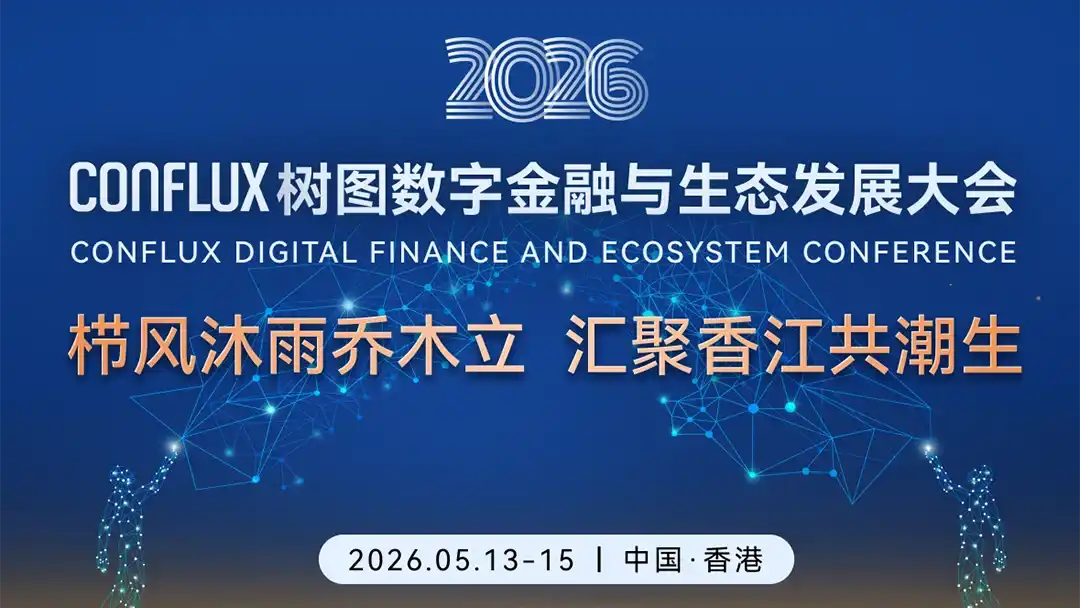
Standing Tall Through Storms, Gathering in Hong Kong to Ride the Tide | Registration Opens for Conflux Tree-Graph Digital Finance & Ecosystem Development Conference

Every technological wave quietly reshapes the world. From the steam engine to the internet and the digital economy, each has been a growth engine. Today, the convergence of blockchain, AI, and digital finance is accelerating a new transformation. Digital assets are reaching new peaks, global regulatory attitudes are clarifying, and concepts like RWA and stablecoins are scaling into real-world applications. AI Agents are beginning to participate in human production. We stand at a historic juncture where traditional and digital finance are deeply integrating, presenting clear opportunities and tangible challenges. Having operated stably for five years and connected multiple regions globally, Conflux Network continues to serve digital finance and on-chain applications. Hong Kong, as an international financial hub bridging China and the world, is seeing progressive exploration and improved frameworks for Web3 and digital finance. Leveraging Conflux's technical foundation, the Conflux Digital Finance and Ecosystem Development Summit will be held in Hong Kong from May 13 to 15, 2026. This event will foster in-depth dialogue on the future: discussing the evolution of digital financial infrastructure, the compliant implementation of RWA and stablecoins, ecosystem reshaping and on-chain governance in the age of AI Agents, and Web3 security frameworks. It will gather global scholars, entrepreneurs, investors, financial institutions, and industry representatives for cross-disciplinary exchange. On the final day, Conflux will co-host a themed salon with The University of Hong Kong to share these future-oriented discussions with the next generation. As technology moves from "usable" to "scalable," and finance evolves from "digital" to "on-chain and intelligent," industrial restructuring is underway. Whether you are a developer, researcher, entrepreneur, or an explorer curious about digital finance and Web3, we look forward to meeting you in Hong Kong.

marsbit05/09 03:06

Standing Tall Through Storms, Gathering in Hong Kong to Ride the Tide | Registration Opens for Conflux Tree-Graph Digital Finance & Ecosystem Development Conference

marsbit05/09 03:06

One Article to Understand $UORE: The V4 Hook Project That Packs Mining, Lottery, and NFT Into a Single Transaction

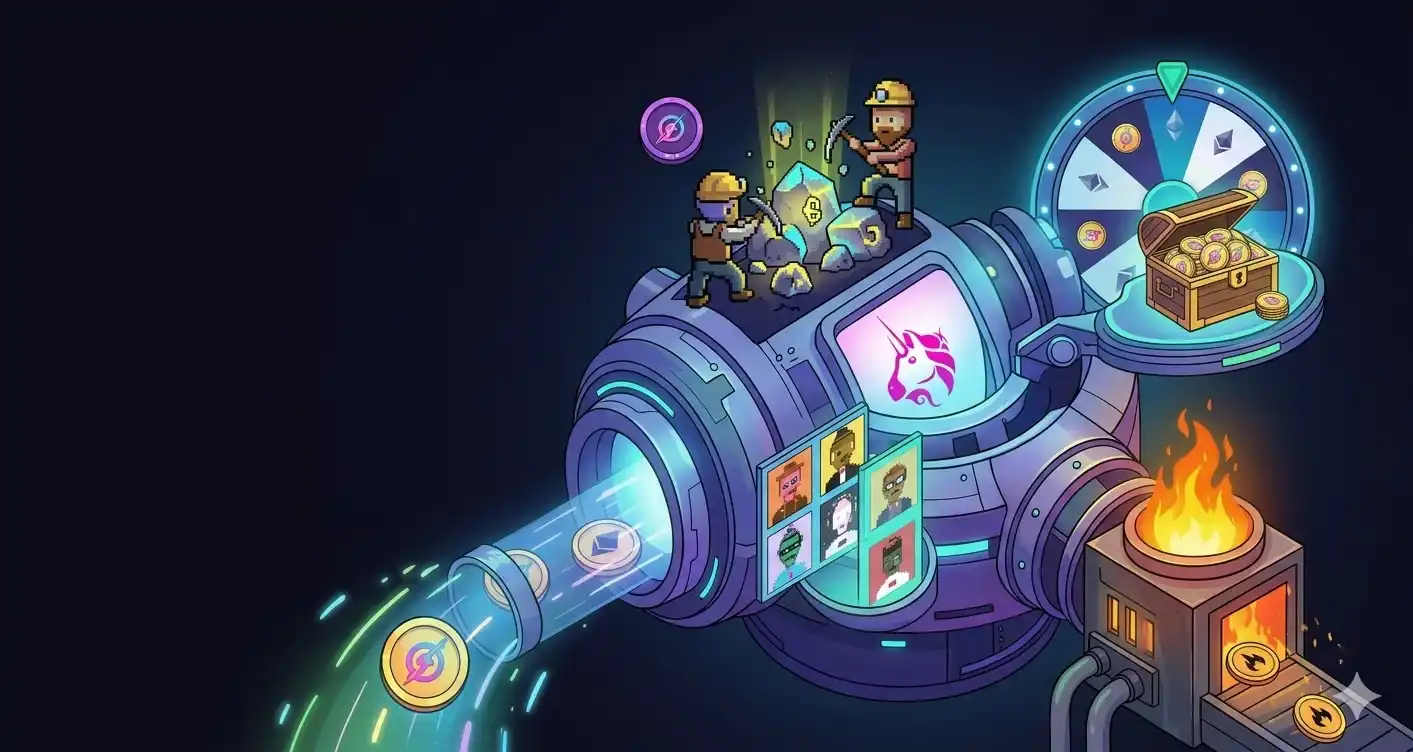
An In-Depth Look at $UORE: The V4 Hook Project Packing Mining, Lotteries, and NFTs into a Single Transaction $UORE is the latest project leveraging the Uniswap V4 Hook mechanism, following in the footsteps of projects like SATO, uPEG, and Slonks. It distinguishes itself by integrating multiple functions—on-chain mining, a buy-to-enter lottery, auto-generated pixel NFTs (Orelings), and a deflationary burn mechanism—all within a single Uniswap V4 liquidity pool transaction. This complexity results in transaction gas fees that are 2-3 times higher than a standard swap. The project's tokenomics are intricate. Each whole $UORE token held automatically mints a corresponding Oreling NFT, a 32x32 pixel miner character with random traits determined by the next block's hash. Each Oreling has a Class (rarity) and Hash value, which combine to form its Mining Power for staking rewards. Rewards are distributed daily from an emission that decays by 1% daily, with an 80/20 split between stakers and a Motherlode lottery pool. A "refined-ore boost" mechanism taxes early reward claims, redistributing 10% to remaining stakers. The Motherlode lottery awards tickets for buys of ≥0.1 ETH, with winning chances scaling up to 1% for 1 ETH purchases. Wins split the pool 50% to the buyer and 50% to a random staker. A 1% buy tax is burned, and a 1% sell tax funds an automatic buyback-and-burn mechanism triggered at 0.1 ETH. The project's code is a fork of uPEG, with claimed fixes for NFT duplication and flash loan attacks. Its creator, Noah, describes it as a fusion of Solana's ORE mining concept with uPEG's V4 Hook framework. Key challenges noted include high gas costs, the narrowing attention window for V4 Hook narratives as it's the fourth such project, and significant complexity that creates a high barrier to understanding for users. The project's whitepaper notably advises users to "Read the contracts and understand the mechanics before deploying capital," underscoring its complex and fast-moving nature within a trend where the "alpha" lifespan for new projects appears to be shrinking rapidly.

marsbit05/09 02:23

One Article to Understand $UORE: The V4 Hook Project That Packs Mining, Lottery, and NFT Into a Single Transaction

marsbit05/09 02:23

Whitepaper 2.0, Two Sets of State Forks, the Rise of Clones: What Happened to Sato Overnight?

On the night of May 7, 2026, the SATO project released "Whitepaper 2.0" alongside significant front-end changes, shifting from "buy/sell" to "mint/burn" terminology. This update aimed to clarify market confusion regarding trading mechanics, token burns, and price discrepancies between its bonding curve and secondary markets. Key changes included explicitly defining the separate existence of the bonding curve pool (for minting/burning) and the secondary SATO/USDT pool, and detailing the core mathematical formulas governing the curve. Concurrently, SATO's market cap fell sharply from near $40 million to around $14.4 million. A fork project, SAT1, emerged with a similar bonding curve model but a key technical difference: SAT1 uses a single unified state variable (`ethCum`) for all core logic (minting, burning, halt trigger), whereas SATO's mechanism relies on two state variables (`ethCum` and `totalMintedFair`), which can drift apart and cause operational discrepancies. Both projects position themselves as operator-free "issuance machines" with asymptotic supply curves approaching 21 million tokens and charge a 0.3% fee on transactions, which remains in the protocol. The article emphasizes that despite intricate designs, both SATO and SAT1 are in highly volatile, sentiment-driven phases, and warns that mechanism innovation does not replace the need for personal risk management.

marsbit05/08 16:12

Whitepaper 2.0, Two Sets of State Forks, the Rise of Clones: What Happened to Sato Overnight?

marsbit05/08 16:12

活动图片