# Пов'язані статті щодо IPO

Центр новин HTX надає останні статті та поглиблений аналіз на тему "IPO", що охоплює ринкові тренди, оновлення проєктів, технологічні розробки та регуляторну політику в криптоіндустрії.

Conversation with Patagon Founder: Revealing the Inside Story of Anthropic's Secondary Market

**Summary: Inside Anthropic's Massive, Opaque Secondary Market** In a revealing interview, Patagon founder Dio Casares pulls back the curtain on the booming, high-risk secondary market for shares in companies like Anthropic. This private market, fueled by companies staying private longer and massive funding rounds, is estimated to involve hundreds of billions of dollars. Casares distinguishes between two types of "secondary" trading: 1. **Company-approved SPV (Special Purpose Vehicle) sales:** Where new capital flows into the company, often facilitated by select private equity firms. Anthropic supports this to manage liquidity and pre-IPO selling pressure. 2. **The "gray" market:** Platforms like Hive and Forge that match buyers and sellers, often creating pricing confusion and competing with official funding rounds. These intermediaries are widely disliked by companies. The market structure is complex and fragmented, relying heavily on personal connections. Brokers connect buyers and sellers, often layering multiple SPVs to pool capital, with single transaction fees as high as 10%. Strikingly, some finance professionals earn more from this trading than from their primary investment roles. **Key risks highlighted include:** * **High Fraud Rates:** An estimated 10-20% of transactions involve fake stock certificates or sellers who take payment without having the shares. * **Complex, Risky Structures:** Nested SPVs, "forward contracts" on employee equity, and tokenized private equity create layers of opacity. This is exemplified by a recent incident where an xAI employee's shares were revoked after an espionage allegation, leaving buyers empty-handed. * **Post-IPO "Settlement Hell":** After an IPO, delays in distributing shares through multiple SPV layers and decisions by fund managers to hold onto shares could trigger years of lawsuits as downstream investors are locked out. **For small investors** holding positions through tokenized vehicles or layered SPVs, it's often impossible to verify the underlying asset. Casares advises caution: if the investment feels wrong, consider exiting. As the private market now surpasses IPO fundraising, this "wild west" ecosystem faces a looming reckoning. While it will likely professionalize, the post-IPO period for a company like Anthropic could unleash a wave of disputes, exposing the vulnerabilities built into this frenzied, largely unregulated marketplace.

marsbit19 год тому

Conversation with Patagon Founder: Revealing the Inside Story of Anthropic's Secondary Market

marsbit19 год тому

Winter for Crypto IPOs: Consensys and Ledger Withdraw Applications

The crypto IPO window is tightening significantly in 2026, marked by prominent companies delaying or pausing their public listing plans. Following a successful 2025 "harvest year" that saw Circle, Bullish, and Gemini go public amidst a bull market, the tide has turned. Consensys, developer of MetaMask, recently postponed its IPO until at least fall 2026. Hardware wallet leader Ledger also suspended its planned US listing due to unfavorable market conditions, with Kraken having previously delayed its own plans. This shift is driven by a cooling market in 2026, characterized by a significant Bitcoin price correction, declining trading volumes, and reduced investor risk appetite for crypto stocks. The poor post-IPO performance of 2025 listings like Circle and Bullish, which saw major share price declines, has heightened investor caution. This contrasts sharply with the current AI sector, where companies like SpaceX, OpenAI, and Anthropic are commanding massive valuations and investor enthusiasm based on narratives of stable, exponential growth. Crypto companies now face pressure to transition from hype-driven models to demonstrating reliable cash flows and robust compliance. While the paused IPO plans may lead to valuation resets and affect ecosystem liquidity, they also accelerate industry consolidation toward stronger, more compliant infrastructure players. A potential recovery in Bitcoin's price and clearer regulations could reopen the IPO window in the latter half of 2026.

marsbitВчора 10:59

Winter for Crypto IPOs: Consensys and Ledger Withdraw Applications

marsbitВчора 10:59

Breaking: OpenAI Undergoes Major Reorganization, President Brockman Assumes Command

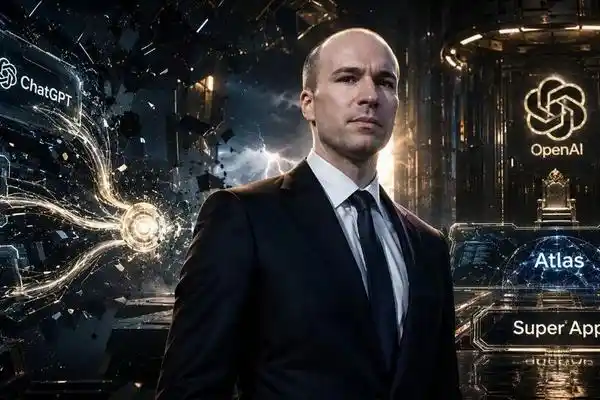
OpenAI has announced a major internal reorganization just months before its anticipated IPO. The company is merging its three flagship product lines—ChatGPT, Codex, and the API platform—into a single, unified product organization. The most significant leadership change involves co-founder and President Greg Brockman moving from a background technical role to take full, permanent control over all product strategy. This follows the indefinite medical leave of AGI Deployment CEO Fidji Simo. Additionally, ChatGPT's longtime lead, Nick Turley, has been reassigned to enterprise products, with former Instagram executive Ashley Alexander taking over consumer offerings. The consolidation, internally framed as a strategic move towards an "Agentic Future," aims to break down internal silos and create a cohesive "Super App." This planned desktop application would integrate ChatGPT's conversational abilities, Codex's coding power, and a rumored internal web browser named "Atlas" to autonomously perform complex user tasks. The reorganization occurs amid significant internal and external pressures. OpenAI has recently seen a wave of high-profile departures, including Sora co-lead Bill Peebles and other senior technical leaders, leading to concerns about a thinning executive bench. Externally, rival Anthropic recently secured funding at a staggering $900 billion valuation, surpassing OpenAI's own. Google's upcoming I/O developer conference also poses a competitive threat. Analysts suggest the dramatic restructure is a pre-IPO move to present a clearer, more focused narrative to Wall Street—streamlining operations and demonstrating decisive leadership under Brockman to counter internal turbulence and intense market competition.

marsbitВчора 07:09

Breaking: OpenAI Undergoes Major Reorganization, President Brockman Assumes Command

marsbitВчора 07:09

Cross-Border Payment Giant Wise Lands on NASDAQ

Fintech company Wise has successfully listed its A-class shares on the Nasdaq stock exchange under the ticker "WSE," while maintaining its secondary listing on the London Stock Exchange. This move, more of a primary listing transfer to the US than a traditional IPO, reflects Wise's strategic shift to be closer to a key growth market, attract a broader investor base, and support its business evolution. Founded in London by two Estonians to solve personal pain points with costly and opaque international bank transfers, Wise initially grew as TransferWise by offering faster, cheaper, and more transparent currency exchange and cross-border payments. It has since expanded beyond a simple transfer tool into a comprehensive global financial services platform, offering multi-currency accounts, business services, debit cards, and the Wise Platform, which provides its infrastructure to banks and other institutions. Wise's latest fiscal year data highlights its scale: $243 billion in cross-border transaction volume, $39 billion in customer balances, and nearly 19 million customers. The company continues to emphasize its low average fee of 0.52% and fast transaction speeds, with 75% of payments arriving within 20 seconds. The Nasdaq listing aligns with Wise's ambitions in the US market, where it aims to grow its consumer and business user base and, critically, deepen partnerships with American banks through Wise Platform. To further strengthen its US operations, Wise is reportedly seeking a national trust bank charter and a Federal Reserve master account to gain more direct control over USD payment flows. The transition also involved corporate governance discussions, as the move was approved alongside an extension of its dual-class share structure, which grants founders enhanced voting rights. In summary, Wise's Nasdaq debut marks its transition from a disruptive money transfer startup into a major global payments network player. Its future growth will be tested on its ability to scale its platform business, execute its US strategy, and maintain profitability and governance standards under the scrutiny of public markets.

marsbitВчора 01:18

Cross-Border Payment Giant Wise Lands on NASDAQ

marsbitВчора 01:18

Cross-Border Payments Giant Wise Lists on NASDAQ

Cross-border payment giant Wise has successfully transitioned its primary listing to Nasdaq (ticker: WSE), retaining a secondary listing in London. Starting trading on May 11, 2026, the company opened at $15.40, up approximately 6.21%. With a market valuation around $15.5 billion, this move signifies Wise's evolution from a low-cost international money transfer tool into a comprehensive global financial services platform. Founded by Taavet Hinrikus and Kristo Käärmann to solve personal frustrations with expensive and opaque bank fees, Wise (formerly TransferWise) pioneered transparent, low-cost foreign exchange and transfers. For its fiscal year ending March 31, 2026, Wise reported $243 billion in cross-border transaction volume, $39 billion in customer balances, $1.9 billion in transaction revenue, and $2.5 billion in net revenue, serving nearly 19 million personal and business customers. The strategic shift to a US primary listing aims to deepen investor reach, enhance liquidity, and align with the United States as a critical growth market. It supports Wise's broader business narrative, which now encompasses multi-currency accounts, business solutions, debit cards, and especially its B2B offering, Wise Platform. This platform allows banks and financial institutions like Itaú and Nubank to integrate Wise's payment infrastructure, with a long-term goal for it to drive over 50% of cross-border volume. Concurrently, Wise is strengthening its US operational capabilities, including applying for a national trust bank charter and a Federal Reserve master account to gain greater control over USD payment flows. While Wise facilitates payments into China via partners like Alipay, outbound RMB services rely on collaboration with licensed local payment institutions, adhering to regional regulations. The listing process included a controversial proposal to extend a dual-class share structure, highlighting governance challenges as the company balances founder influence with public market accountability. Moving forward, Wise must demonstrate to US investors that its low-fee model is sustainable and scalable, that Wise Platform can drive significant growth, and that its global compliance and network infrastructure can support its ambition to become an integral part of the worldwide money movement landscape.

链捕手Вчора 01:15

Cross-Border Payments Giant Wise Lists on NASDAQ

链捕手Вчора 01:15

Surging 108% on Debut! The Biggest AI Dark Horse of 2026 is Born, Altman Profits 'Passively' Again

Cerebras, an AI chip company known for its wafer-scale "dinner plate-sized" WSE-3 processor, completed a landmark IPO on the NASDAQ in 2026. Its shares surged 108% on the first day of trading, with the valuation reaching approximately $100 billion at its peak. The offering raised $5.55 billion, marking one of the largest U.S. tech IPOs since Uber in 2019. The company's dramatic turnaround was a key driver, moving from a $482 million loss to a $238 million profit in 2025, with revenue growing 76% to $510 million. Major new contracts, including a multi-year deal with OpenAI potentially worth over $20 billion and a deployment agreement with AWS, boosted investor confidence. Founder Andrew Feldman emphasized to investors the coming explosion in AI inference demand, the viability of non-GPU compute, and the perceived overestimation of NVIDIA's CUDA ecosystem moat. The IPO created substantial returns for early investors like Foundation Capital (76x return) and Benchmark (12x return). OpenAI, through a strategic agreement linked to future compute purchases, secured an estimated $1.8 billion in paper gains, while Sam Altman's personal 2017 investment grew roughly tenfold to around $30 million. Cerebras' success is positioned as the opening act for a wave of massive AI-focused IPOs expected in 2026, including potential listings from SpaceX (targeting a $1.75 trillion valuation), OpenAI ($1 trillion), and Anthropic ($900 billion), collectively representing over $3 trillion in potential market value. The article concludes that these moves signal capital is placing foundational bets on the immense compute infrastructure required for the future development of Artificial Superintelligence (ASI).

marsbit2 дні тому 11:20

Surging 108% on Debut! The Biggest AI Dark Horse of 2026 is Born, Altman Profits 'Passively' Again

marsbit2 дні тому 11:20

Listed and Halted, Surge Over 108% in a Single Day, Is Cerebras Really the 'Next Nvidia'?

Cerebras Systems (CBRS), labeled the "next Nvidia," debuted on the NASDAQ on May 14th, 2025. Its stock price surged over 108% from its $185 IPO price, briefly touching $385 before settling around $311. CEO Andrew Feldman claimed the company's wafer-scale AI chips are "58 times larger and 15-20 times faster" than competitors like Nvidia. The company's core innovation is the Wafer Scale Engine (WSE), a massive, dinner-plate-sized chip designed to avoid the bottlenecks of interconnecting multiple GPUs. Its latest system, the CS-3, offers high-performance computing for AI training and inference. While still a niche player with $5.1 billion in 2025 revenue, Cerebras has secured major contracts, most notably a multi-year, over $20 billion computing deal with OpenAI. This partnership is deep: OpenAI is a major customer, a creditor via a $1 billion loan, and holds warrants that could make it a 10-11% shareholder in Cerebras. Despite the hype, the article argues Cerebras is unlikely to dethrone Nvidia soon. Nvidia's ecosystem (CUDA), vast scale, manufacturing efficiency, and diversified product line present a formidable moat. Cerebras faces high costs, production challenges with its giant chips, and competition from AMD, Google, and others. However, strong demand for AI inference and its key partnerships could support its stock price in the short to medium term. In conclusion, Cerebras is positioned as a high-speed specialist in the AI hardware market, not a broad-market replacement for the current industry leader.

Odaily星球日报2 дні тому 10:34

Listed and Halted, Surge Over 108% in a Single Day, Is Cerebras Really the 'Next Nvidia'?

Odaily星球日报2 дні тому 10:34

A Decade's Bet on Cerebras: How the 'Wafer-Scale AI Chip' Reached NASDAQ

"Cerebras, a pioneering AI chip company, successfully debuted on NASDAQ (CBRS) on May 14, 2026, with its stock price surging approximately 68% on the first day. This marks a significant milestone following a decade-long journey, as recounted by early investor Steve Vassallo. The story begins not in 2016, but with the deep, 19-year relationship between Vassallo and founder Andrew Feldman, which started with Feldman’s previous company, SeaMicro (acquired by AMD in 2012). In 2016, Feldman and a core team of chip and system experts sought to challenge the emerging consensus. At a time when AI’s practical utility was still debated and GPUs were becoming the default hardware, they envisioned a fundamentally new computer architecture purpose-built for AI workloads. They identified memory bandwidth, not raw compute power, as the critical bottleneck for neural networks. Defying industry inertia, Cerebras pursued a radical, wafer-scale chip design—58 times larger than the biggest existing chips. This meant confronting and solving a cascade of unprecedented engineering challenges: power delivery, thermal management, and maintaining electrical continuity across tens of thousands of connections. It required reinventing nearly every aspect of modern computing—semiconductors, systems, data structures, software, and algorithms. The path was fraught with setbacks, including a prototype that caught fire on its first power-up. Progress was marked by intense, iterative problem-solving, with the board meeting every 6-8 weeks to tackle the latest technical frontier. Through disciplined perseverance and deep trust within the team, they achieved a breakthrough in August 2019 when their first wafer-scale computer successfully operated. Feldman’s drive for a 1000x leap, his formative upbringing among intellectual giants who modeled both brilliance and kindness, and his belief in building a loyal, mission-driven team were central to Cerebras’s culture. His competitive strategy was that of David vs. Goliath—finding innovative, human-centric approaches that larger incumbents would overlook. From the symbolic delivery of the first term sheet over a backyard fence in 2016 to the NASDAQ bell ringing in 2026, Cerebras’s journey is a testament to long-term vision, technical audacity, and the power of foundational founder-investor relationships. It stands as a reminder that the computing revolution can come not just from more GPUs, but from a complete reimagining of the architecture itself."

marsbit2 дні тому 03:55

A Decade's Bet on Cerebras: How the 'Wafer-Scale AI Chip' Reached NASDAQ

marsbit2 дні тому 03:55

The First OpenAI Employees to Sell Their Shares Have Become Millionaires

Early OpenAI Employees Become Millionaires Before IPO A recent report reveals that OpenAI allowed over 600 current and former employees to sell shares in October, cashing out a total of $6.6 billion. Approximately 75 employees each realized about $30 million. This highlights a significant shift in the AI industry: employees at top companies can now gain substantial wealth through secondary market sales, tender offers, and other liquidity events long before a traditional IPO. For OpenAI, this generous equity incentive strategy, alongside high salaries and bonuses, has become a powerful tool to attract and retain top AI talent amid fierce competition. The company has adjusted its policies, increasing individual sale limits and allowing newer employees to participate. This trend extends beyond OpenAI. Chinese AI firm DeepSeek is reportedly seeking its first external funding round at a potential $50 billion valuation. This move is seen as crucial for establishing an external market price, which is necessary to make employee equity grants meaningful and competitive for retaining talent. The pathways to wealth creation in AI are diversifying. Beyond waiting for IPOs (e.g., Anthropic, chipmaker Cerebras), companies are exiting via acquisitions (e.g., Databricks buying MosaicML) or through complex deals like technology licensing and team transfers (e.g., Google's deal with Character.AI). These mechanisms allow investors, founders, and employees to realize gains earlier and through more varied routes than in previous tech cycles. In summary, the AI boom is creating a new wave of wealth, distributed not just to founders and investors but also to technical talent, and the liquidity events are occurring sooner and through more channels than ever before.

marsbit05/14 13:39

The First OpenAI Employees to Sell Their Shares Have Become Millionaires

marsbit05/14 13:39

Has the Winter of Crypto IPOs Arrived? Consensys and Ledger Hit Pause

Crypto IPO Winter Arrives? Consensys and Ledger Hit Pause. Following a boom in 2025, the window for crypto company initial public offerings has narrowed sharply in 2026. Major players like MetaMask developer Consensys and hardware wallet firm Ledger have recently postponed their US listing plans, joining exchange Kraken which paused its process earlier this year. This slowdown follows a strong 2025 where companies like Circle and Bullish went public, raising billions as Bitcoin hit all-time highs. However, in 2026, declining Bitcoin prices and trading volumes have cooled investor risk appetite. Newly listed crypto stocks, including BitGo, have seen significant price drops post-IPO, reinforcing investor caution. The cooling crypto IPO market contrasts sharply with the red-hot AI sector, where companies like SpaceX and OpenAI command massive valuations and investor interest based on "productivity revolution" narratives. Crypto firms, seen as more cyclical and volatile, struggle to compete for capital. The IPO delays are prompting a strategic shift. Companies are focusing on strengthening fundamentals, pursuing private funding, and expanding into more stable revenue streams like institutional services. This phase may accelerate industry consolidation, favoring firms with robust compliance and infrastructure. Analysts suggest a potential second wave of crypto IPOs in late 2026 could depend on a Bitcoin price recovery and clearer regulatory developments.

marsbit05/14 06:31

Has the Winter of Crypto IPOs Arrived? Consensys and Ledger Hit Pause

marsbit05/14 06:31

活动图片