# Сопутствующие статьи по теме Stablecoins

Новостной центр HTX предлагает последние статьи и углубленный анализ по "Stablecoins", охватывающие рыночные тренды, новости проектов, развитие технологий и политику регулирования в криптоиндустрии.

Weekly Editor's Picks (0509-0515)

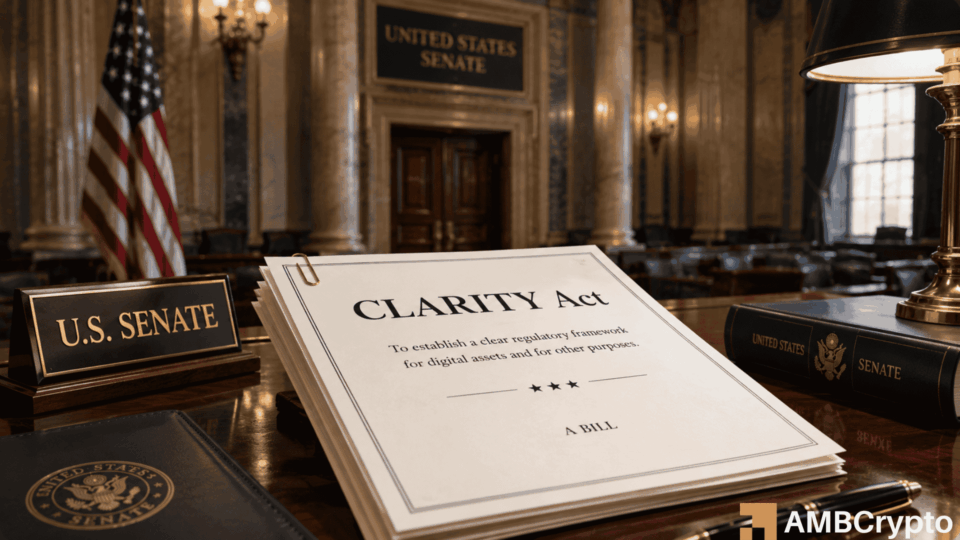
Weekly Editor's Picks (0509-0515): A Weekly Digest to Filter Noise This weekly digest curates deep analysis often lost in fast information flows. Key highlights: * **Macro:** A new "NACHO" (Not A Chance Hormuz Opens) trade emerges on Wall Street, betting on a prolonged closure of the Strait of Hormuz, shifting focus from political rhetoric to fundamental oil market data. * **Investment & Startups:** * Justin Sun discusses his long-term investment theses, highlighting future opportunities in embodied AI, drones, spatial computing, and space exploration. * Anthropic and OpenAI's crackdown on unauthorized stock transfers disrupts the pre-IPO token market, prompting a re-evaluation of its boundaries. * Bitwise analyzes massive capital inflows into new, compliant blockchains like Arc, Canton, and Tempo, tailored for stablecoins and asset tokenization. * A skeptical view questions HYPE's potential for further price appreciation, citing high fully diluted valuation, unlocking token supply, and unclear new buyer demographics. * **AI:** The "Semiconductor Century" report outlines the 2026 AI investment landscape, identifying key players (Nvidia, TSMC, ASML) and catalysts across the semiconductor supply chain, from design to manufacturing. * **Policy & Stablecoins:** The potential CLARITY Act is analyzed for its impact on DeFi. It could trigger massive institutional capital inflows and redirect stablecoin yields, benefiting structured, compliant DeFi protocols like Pendle, Morpho, and Centrifuge. * **CeFi & DeFi:** New tokens like sato and FLOOD, built on Uniswap v4's "Hook" mechanism, are gaining traction. Meanwhile, following the Kelp DAO exploit, Chainlink's CCIP is gaining market share from LayerZero in the cross-chain sector. * **Ethereum:** Grayscale suggests Ethereum's staking reward model needs reform to address issues like reduced fee burns from L2s and potentially excessive ETH lock-up, proposing a reward curve with a cap to benefit ETH's long-term value. * **Weekly Recap:** Summarizes key events including Trump's China visit, new Fed leadership, CLARITY Act progress, notable price movements (ZEC, TON), strong corporate earnings (Circle, Gemini), and institutional Bitcoin accumulation.

marsbitВчера 02:40
Weekly Editor's Picks (0509-0515)

marsbitВчера 02:40

Wall Street Capital Enters ARC, Circle Sparks a System-Level Competition for Stablecoins

Wall Street Capital Enters the ARC Arena as Circle Launches a System-Level Battle for Stablecoin Dominance On May 11, Circle successfully raised $222 million in a pre-sale funding round for its new blockchain and native token, ARC, giving the network a fully diluted valuation of $3 billion. The investor lineup, featuring Wall Street giants like BlackRock and Intercontinental Exchange alongside top-tier venture capital firms such as a16z and ARK Invest, signaled a collective strategic bet on future financial infrastructure. This move marks Circle's significant evolution from a stablecoin issuer (notably USDC) to a designer of financial systems. While USDC operates on external blockchains like Ethereum, making Circle dependent on their performance, ARC aims to create a dedicated infrastructure for the circulation, payment, and clearing of stablecoins. This would integrate currency issuance and circulation into one system, potentially shifting Circle's business model from asset management to infrastructure provision. The convergence of traditional finance and crypto-native capital in this funding round underscores a broader industry shift: stablecoins are transitioning from being mere trading tools to becoming core components of financial infrastructure. By controlling both the issuance (via USDC) and the流通 pathway (via ARC), Circle could establish a closed-loop system from issuance to settlement. If successful, this infrastructure could optimize costs, lower barriers for institutional adoption, and promote standardization in on-chain finance. Ultimately, it has the potential to challenge traditional systems like SWIFT in areas such as cross-border payments, representing a possible step toward the重构 of global financial infrastructure.

marsbit05/13 14:54

Wall Street Capital Enters ARC, Circle Sparks a System-Level Competition for Stablecoins

marsbit05/13 14:54

Circle's Three-Dimensional Valuation Framework: Where Is the Bottom, Where Is the Top

"Circle's 3D Valuation Framework: Where is the Bottom, Where is the Top?" - Article Summary The article analyzes Circle's valuation following its Q1 2026 earnings. While its core business generates substantial interest income from USDC reserves ($6.53B in Q1, up 17% YoY), this revenue is highly sensitive to interest rates and shared significantly with Coinbase. The author proposes a three-dimensional valuation framework: 1. **Interest Business (The Floor):** Valued like a bank (8-15x P/E) on net interest income after Coinbase's share. This provides a conservative valuation baseline. 2. **Payment & Platform Business (The Inflection Point):** Includes CPN (Circle Payments Network) and "Other Revenue" (transaction, integration services). This high-growth segment, not shared with Coinbase, is valued on a platform/network model (higher P/S multiples), similar to Visa/Mastercard. It represents Circle's shift beyond pure interest income. 3. **Arc Network & ARC Token (The Future / Optionality):** Arc is an institutional-focused, EVM-compatible L1 blockchain where USDC is the native gas token. A $222M ARC token pre-sale at a $3B FDV attracted major traditional finance players (BlackRock, Apollo, ICE). While Circle holds 25% of ARC tokens, their value is separate from CRCL equity. This dimension represents the long-term, high-upside bet on Circle becoming an "economic operating system." Current market cap (~$30B) prices in significant future growth beyond the sum-of-the-parts valuation derived from current earnings. The investment thesis hinges on believing in Circle's transition from a "stablecoin issuer" to a broader financial infrastructure and network platform. Key variables for the future include USDC adoption growth, CPN network effects, Arc's success, and potential renegotiation of the Coinbase revenue-sharing agreement.

marsbit05/13 13:56

Circle's Three-Dimensional Valuation Framework: Where Is the Bottom, Where Is the Top

marsbit05/13 13:56

Behind Galaxy Digital and SharpLink's $125 Million DeFi Fund: Why Are Institutional Funds Embracing DeFi Again?

In May 2026, Galaxy Digital and SharpLink announced a $125 million Institutional Onchain Yield Fund, marking a significant pivot as institutional capital begins systematically integrating corporate ETH treasuries into DeFi. This move signals a shift from passive crypto holdings to active on-chain asset management. SharpLink is evolving into an "ETH Treasury Company," focusing on managing ETH's capital efficiency beyond simple staking, akin to a digital-age internet bond. Galaxy's role is to embed Wall Street-grade risk controls—managing exposure, volatility, and compliance—into DeFi, positioning itself as an "Onchain Asset Manager." This renewed institutional interest stems from DeFi's maturation into a "real yield" era with sustainable cash flows from stablecoin lending, on-chain treasuries, restaking, and RWA pools. Stablecoins have institutionalized into an on-chain dollar system, while restaking (e.g., EigenLayer) is reshaping ETH into a productive yield-bearing asset, forming an "internet benchmark rate." The collaboration reflects an upgrade to ETH's narrative: from a speculative asset to productive on-chain collateral and financial infrastructure. However, institutionalization amplifies systemic risks like liquidity crises and cross-protocol contagion, akin to traditional finance's pitfalls. Ultimately, this fund represents a foundational step toward building a native internet financial system—with stablecoins as digital dollars, ETH as reserve capital, and DeFi as banking—indicating that on-chain markets may become integral to the global financial architecture.

marsbit05/13 00:10

Behind Galaxy Digital and SharpLink's $125 Million DeFi Fund: Why Are Institutional Funds Embracing DeFi Again?

marsbit05/13 00:10

Five Counterparty Risk Architectures: A Settlement-Layer Methodology for Classifying TradFi Models in Crypto Exchanges

**Summary:** This companion piece reframes the five TradFi-on-crypto exchange architectures, previously classified by "architectural fingerprint," through the lens of counterparty risk. The core question is: whose balance sheet bears the loss first in a stress scenario, and has it historically done so? Each of the five models corresponds to a distinct risk holder with its own documented failure modes. * **Model 1 (Stablecoin-Settled CEX Perpetuals):** Risk is held by the stablecoin issuer (e.g., reserve composition, bank connectivity) and the CEX's own book. History includes Tether's banking disconnections (2017) and reserve misrepresentations (CFTC 2021 Order). * **Model 2 (CFD Brokers):** Risk resides on the broker's balance sheet (B-book model). Regulatory differences (e.g., ESMA's mandatory negative balance protection vs. Mauritius FSC's lack thereof) define loss allocation rules, as seen in the 2015 SNB event (Alpari UK insolvency). * **Model 3 (Off-Chain Custody & Transfer Agent Chain):** Risk lies with the off-chain custodian/platform. User asset recovery depends on Terms of Use and corporate structure, exemplified by the Celsius bankruptcy ruling (2023) where Earn Account assets were deemed property of the estate. * **Model 4 (DEX Perpetual Protocols):** No single balance sheet bears risk. Loss absorption relies on a protocol's insurance fund and Auto-Deleveraging (ADL) mechanism, as demonstrated in the GMX V1 (2022) and dYdX v3 YFI (2023) incidents. * **Model 5 (Regulated CCP - DCM-DCO-FCM):** The most institutionalized model concentrates risk in the Central Counterparty (CCP). However, history shows CCPs can employ non-standard tools under extreme stress, such as mass trade cancellation (LME Nickel, 2022) or enabling negative price settlements (CME WTI, 2020). The report argues that regulatory choices and counterparty risk structures are co-extensive, not in an upstream-downstream relationship. It concludes with five separate observation checklists (not predictions) for monitoring the structural vulnerabilities of each risk model.

marsbit05/12 00:06

Five Counterparty Risk Architectures: A Settlement-Layer Methodology for Classifying TradFi Models in Crypto Exchanges

marsbit05/12 00:06

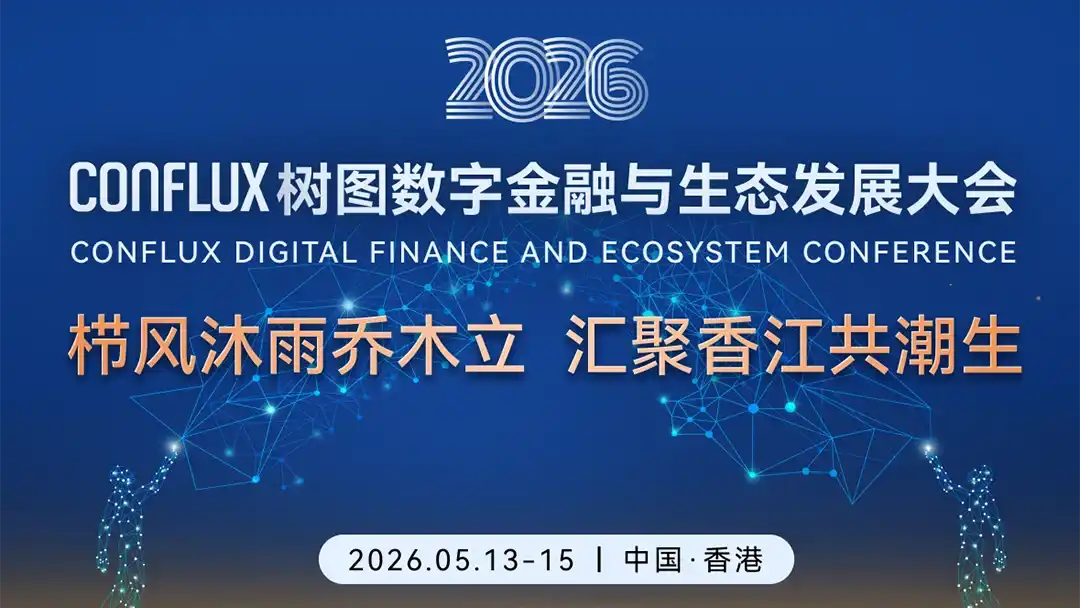
Standing Tall Through Storms, Gathering in Hong Kong to Ride the Tide | Registration Opens for Conflux Tree-Graph Digital Finance & Ecosystem Development Conference

Every technological wave quietly reshapes the world. From the steam engine to the internet and the digital economy, each has been a growth engine. Today, the convergence of blockchain, AI, and digital finance is accelerating a new transformation. Digital assets are reaching new peaks, global regulatory attitudes are clarifying, and concepts like RWA and stablecoins are scaling into real-world applications. AI Agents are beginning to participate in human production. We stand at a historic juncture where traditional and digital finance are deeply integrating, presenting clear opportunities and tangible challenges. Having operated stably for five years and connected multiple regions globally, Conflux Network continues to serve digital finance and on-chain applications. Hong Kong, as an international financial hub bridging China and the world, is seeing progressive exploration and improved frameworks for Web3 and digital finance. Leveraging Conflux's technical foundation, the Conflux Digital Finance and Ecosystem Development Summit will be held in Hong Kong from May 13 to 15, 2026. This event will foster in-depth dialogue on the future: discussing the evolution of digital financial infrastructure, the compliant implementation of RWA and stablecoins, ecosystem reshaping and on-chain governance in the age of AI Agents, and Web3 security frameworks. It will gather global scholars, entrepreneurs, investors, financial institutions, and industry representatives for cross-disciplinary exchange. On the final day, Conflux will co-host a themed salon with The University of Hong Kong to share these future-oriented discussions with the next generation. As technology moves from "usable" to "scalable," and finance evolves from "digital" to "on-chain and intelligent," industrial restructuring is underway. Whether you are a developer, researcher, entrepreneur, or an explorer curious about digital finance and Web3, we look forward to meeting you in Hong Kong.

marsbit05/09 03:06

Standing Tall Through Storms, Gathering in Hong Kong to Ride the Tide | Registration Opens for Conflux Tree-Graph Digital Finance & Ecosystem Development Conference

marsbit05/09 03:06

活动图片