# Сопутствующие статьи по теме Regulation

Новостной центр HTX предлагает последние статьи и углубленный анализ по "Regulation", охватывающие рыночные тренды, новости проектов, развитие технологий и политику регулирования в криптоиндустрии.

USDT Rating Controversy: S&P's 'Stability Scale', Tether's 'Market Debate', and the 'Shadow Central Bank' Transformation

The recent S&P Global downgrade of USDT's stability rating from "constrained" to "weak" has ignited a significant debate between traditional finance (TradFi) and the crypto ecosystem. S&P's decision was primarily based on concerns over Tether's reserve composition—now comprising ~24% in higher-volatility assets like Bitcoin and gold—and a perceived lack of governance transparency, fearing these assets could not be liquidated quickly in a mass redemption scenario. Tether countered by emphasizing its proven market resilience, having maintained its peg through multiple past crises, and its real-time reserve reporting. The core of the article identifies a fundamental clash in risk assessment frameworks: TradFi prioritizes redeemability and capital adequacy in extreme stress, while the crypto market's stability is underpinned by 24/7 on-chain liquidity and automated清算 mechanisms. The report further analyzes Tether's strategic shift from a simple stablecoin issuer to a "shadow central bank," diversifying its reserves into assets like BTC and gold for inflation hedging, yield generation, and de-dollarization. This strategy, while profitable in a bull market (e.g., $10B profit in 2025), introduces cyclical risks if asset prices fall. Looking forward, the article suggests the need for a dual-rating system: a traditional stability rating for redeemability and a new investment risk rating for收益 sustainability and exposure management, reflecting the evolving and divergent needs of the market.

marsbit12/12 02:17

USDT Rating Controversy: S&P's 'Stability Scale', Tether's 'Market Debate', and the 'Shadow Central Bank' Transformation

marsbit12/12 02:17

Bitcoin's Losses Against the Dollar Are 10 Times Lower Than Against the Ruble. How Did This Happen

The article analyzes Bitcoin's (BTC) significant 30%+ depreciation against the Russian ruble since the start of 2025, contrasting it with much smaller losses against major currencies like the US dollar (~3%). This disparity is attributed to the ruble's own substantial strengthening, which appreciated roughly 25% against the dollar over the same period. Consequently, while Bitcoin hit new all-time highs against the dollar, euro, and yen in late 2024, it failed to do so against the ruble. The piece further explains that the Russian ruble/Bitcoin exchange rate is not directly traded on major spot markets. Instead, it is calculated by converting the BTC/USD price using the current USD/RUB rate, leading to potential pricing discrepancies. This indirect method, coupled with the absence of major exchanges like Binance from the Russian market, has fragmented liquidity. The market now heavily relies on peer-to-peer (P2P) exchanges and over-the-counter trades using stablecoins like USDT, which often trade at a premium to the official dollar rate. These conditions have created a challenging environment, increasing fraud and "gray" schemes in P2P markets. The situation is further complicated by recent Russian legislation that impose criminal penalties for using "dropper" bank accounts (money mules) and restrict cash withdrawals, which are expected to significantly alter the crypto exchange landscape.

RBK-crypto12/11 21:30

Bitcoin's Losses Against the Dollar Are 10 Times Lower Than Against the Ruble. How Did This Happen

RBK-crypto12/11 21:30

Central Bank Responds to Call to 'Exit the Sandbox' and Allows Stablecoins

Sberbank CEO Herman Gref expressed the bank's hope for the authorization of stablecoins for domestic transactions in Russia, stating that Sber is actively discussing this possibility with the Bank of Russia. He emphasized the need to move beyond the current regulatory "sandbox" and allow basic transactional functionality with stablecoins, primarily ruble-denominated tokens for internal use. However, the Bank of Russia maintains its position that stablecoins are a form of cryptocurrency and excludes their use for domestic payments. Kirill Pronin, head of the central bank's financial market infrastructure department, argued that Russia's digital payment ecosystem is already highly developed, making such authorization unnecessary. The article notes that Russia currently operates with Digital Financial Assets (DFAs), which are tokenized versions of real assets issued on approved blockchain platforms. Some foreign digital rights, including compliant stablecoins, can be classified as DFAs. The first such recognized asset was a Kyrgyzstani ruble stablecoin, permitted only for foreign economic activity. Pronin also mentioned that the central bank is considering allowing banks and token issuers to directly issue digital assets in public blockchains, as the current method of transferring domestically issued tokens to open networks has not gained significant traction. This shift could reduce operational costs and cybersecurity risks.

RBK-crypto12/11 20:33

Central Bank Responds to Call to 'Exit the Sandbox' and Allows Stablecoins

RBK-crypto12/11 20:33

17 Most Anticipated Things in the Cryptocurrency Space in 2026

17 Key Crypto Developments to Watch in 2026 Stablecoin on/off ramps will mature, connecting digital dollars to local payment systems and enabling new behaviors like real-time cross-border payments and merchant adoption without bank accounts. Stablecoins will evolve into a foundational internet settlement layer. RWA tokenization will shift toward crypto-native approaches like perpetual futures for deeper liquidity. Stablecoins will see more native issuance rather than tokenization, and on-chain native debt issuance will reduce costs and improve accessibility. Banks will leverage stablecoins to innovate without overhauling legacy systems. The internet itself will become a banking layer as value moves programmatically via smart contracts and new primitives like x402. Wealth management will become personalized and automated for everyone via tokenized assets and AI-driven portfolio management. DeFi tools and tokenized private markets will expand access. AI agents will require identity verification (KYA - Know Your Agent) and new economic models to compensate content creators as agents scrape the open web. AI will also enable new research methodologies via layered, reasoning agents. Privacy will become crypto's key moat, creating strong network effects as bridging between private and public chains risks metadata leakage. Decentralized, quantum-resistant messaging will rise, emphasizing user ownership. "Secrets-as-a-service" will emerge for programmable data access control. DeFi security will evolve from "code is law" to "specification is law" with runtime enforcement of invariants. Prediction markets will expand with more contracts, AI-powered oracles, and decentralized governance. "Staked media" will rise, where commentators back arguments with verifiable, on-chain commitments. SNARKs will become efficient enough (~10,000x overhead) for verifiable cloud computing, moving beyond blockchain. Finally, crypto market structure regulation could align legal and technical frameworks, enabling networks to operate as truly open, decentralized systems.

marsbit12/11 20:32

17 Most Anticipated Things in the Cryptocurrency Space in 2026

marsbit12/11 20:32

Strategy Takes a Hardline Stance Against MSCI: What's in the 12-Page Open Letter of Defense?

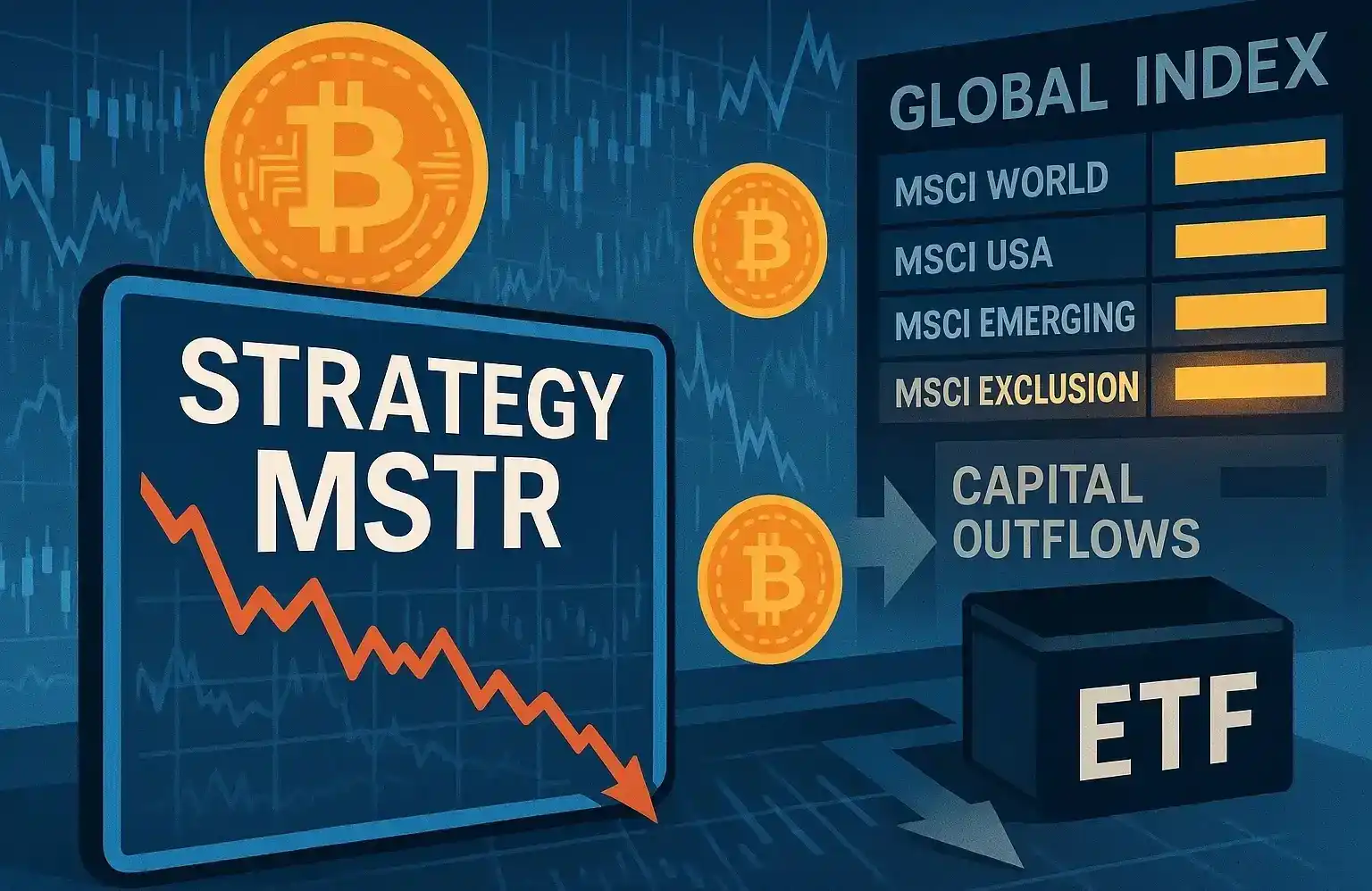
In October 2024, MSCI proposed excluding companies with over 50% of their assets in digital assets from its global investable market indices, directly threatening Digital Asset Treasury (DAT) companies like MicroStrategy. Analysts warned this could trigger up to $8.8 billion in outflows, with MicroStrategy alone facing $2.8 billion in passive selling pressure. In response, MicroStrategy submitted a 12-page public letter to MSCI, strongly opposing the proposal as "misleading and destructive." The company argued that digital assets represent a revolutionary financial technology, comparable to historic infrastructure investments like oil or telecommunications. It emphasized that DATs are operational businesses with active revenue models, not passive funds, and criticized the 50% threshold as arbitrary, discriminatory, and impractical due to Bitcoin's volatility. MicroStrategy also accused MSCI of violating index neutrality and contradicting the U.S. government's pro-digital asset strategy. The company demanded MSCI withdraw the proposal or extend the consultation period. It is not alone—over 300 entities, including Strive and Bitcoin for Corporations, have joined opposition efforts, suggesting alternative indices instead of exclusion. The outcome, expected by January 2026, will significantly impact the integration of digital asset companies into traditional financial markets.

marsbit12/11 19:52

Strategy Takes a Hardline Stance Against MSCI: What's in the 12-Page Open Letter of Defense?

marsbit12/11 19:52

活动图片