# Сопутствующие статьи по теме Competition

Новостной центр HTX предлагает последние статьи и углубленный анализ по "Competition", охватывающие рыночные тренды, новости проектов, развитие технологий и политику регулирования в криптоиндустрии.

Cloud PC Gets a Second Chance, Google/Alibaba/Microsoft Battle for Cloud AI Dominance

Google unexpectedly announced "Android Computer," a new high-end productivity-focused PC series, positioning cloud AI as its core rather than an add-on. This move signals a potential revival for the "cloud computer" concept in the AI era. The article argues that current "AI PCs" are essentially traditional Windows machines with AI features grafted on, heavily reliant on cloud AI for complex tasks due to limited local consumer-grade hardware capabilities. This reliance raises questions about the value of premium local AI hardware. Cloud computers, which struggled with latency-sensitive applications like cloud gaming, are seen as a natural fit for AI PCs due to AI's higher tolerance for response time. Google's Android Computer deeply integrates AI (powered by its Gemini model) into the OS interface, making it contextually available. Its hardware-agnostic approach (supporting both x86 and ARM chips) further underscores the shift towards cloud-centric AI. Other players are adapting: Cloud service providers like Alibaba are enhancing their AI cloud computer offerings; chipmakers (Intel, AMD) are focusing on data center AI chips; traditional PC brands are adding AI software layers; and Apple is leveraging its ecosystem and affordable hardware. Microsoft is defining AI PC standards, embedding Copilot (powered by GPT and Bing) into Windows, and also relying on cloud AI. In conclusion, Android Computer challenges the traditional PC form factor by proposing a "light local, heavy cloud" model. This approach appears promising amid rising hardware costs and local compute bottlenecks. The future PC market will involve a multifaceted competition around cloud integration, OS-level AI, and cross-device ecosystems, potentially redefining the PC as a screen and network conduit to cloud-based AI productivity.

marsbit1 ч. назад

Cloud PC Gets a Second Chance, Google/Alibaba/Microsoft Battle for Cloud AI Dominance

marsbit1 ч. назад

This Chip Sector Is on Fire

The global AI chip market is undergoing a significant paradigm shift, with ASICs (Application-Specific Integrated Circuits) emerging from a niche to a mainstream force, challenging the long-held dominance of GPUs in AI training. This "golden era" for ASICs is primarily driven by the industry's pivot from training to inference, where the cost and energy efficiency advantages of custom chips become critical for scaling to billions of users. Key signals include Google's TPU capturing 78% of its AI server shipments in Q1 2026, OpenAI's plans for a massive custom ASIC cluster with Broadcom, and cloud providers (CSPs) increasingly favoring in-house or custom designs for supply chain control and cost efficiency. Market forecasts are bullish: AI ASIC revenue is projected to hit $300 billion by 2027, with a 34% CAGR, potentially reaching a 45% share of the AI chip market. The competitive landscape is expanding beyond traditional leaders Broadcom and Marvell. MediaTek is aggressively targeting the data center ASIC market, projecting over $10 billion in 2026 revenue, while Qualcomm, leveraging its AlphaWave acquisition, is launching customized inference chips. These mobile chip giants are leveraging their SoC design expertise for a cloud-side transition. In China, companies like VeriSilicon and ASR Microelectronics are capitalizing on this trend as pivotal "enablers," providing full-stack ASIC design services and experiencing explosive order growth, particularly for cloud-side AI projects. However, challenges remain: high development costs, software ecosystem gaps compared to NVIDIA's CUDA, dependency on advanced packaging capacity (like TSMC's CoWoS), and the fundamental trade-off between customization and flexibility. The future is not a simple replacement of GPUs by ASICs but a more specialized coexistence. The consensus points toward "GPUs for training, ASICs for inference," or hybrid clusters. Ultimately, the rise of ASICs represents a democratization of computing power, shifting definition authority from a single chip giant to a broader ecosystem of cloud providers and end-users, offering the industry more choice in the silicon that powers AI.

marsbit3 ч. назад

This Chip Sector Is on Fire

marsbit3 ч. назад

Breaking: OpenAI Undergoes Major Reorganization, President Brockman Assumes Command

OpenAI has announced a major internal reorganization just months before its anticipated IPO. The company is merging its three flagship product lines—ChatGPT, Codex, and the API platform—into a single, unified product organization. The most significant leadership change involves co-founder and President Greg Brockman moving from a background technical role to take full, permanent control over all product strategy. This follows the indefinite medical leave of AGI Deployment CEO Fidji Simo. Additionally, ChatGPT's longtime lead, Nick Turley, has been reassigned to enterprise products, with former Instagram executive Ashley Alexander taking over consumer offerings. The consolidation, internally framed as a strategic move towards an "Agentic Future," aims to break down internal silos and create a cohesive "Super App." This planned desktop application would integrate ChatGPT's conversational abilities, Codex's coding power, and a rumored internal web browser named "Atlas" to autonomously perform complex user tasks. The reorganization occurs amid significant internal and external pressures. OpenAI has recently seen a wave of high-profile departures, including Sora co-lead Bill Peebles and other senior technical leaders, leading to concerns about a thinning executive bench. Externally, rival Anthropic recently secured funding at a staggering $900 billion valuation, surpassing OpenAI's own. Google's upcoming I/O developer conference also poses a competitive threat. Analysts suggest the dramatic restructure is a pre-IPO move to present a clearer, more focused narrative to Wall Street—streamlining operations and demonstrating decisive leadership under Brockman to counter internal turbulence and intense market competition.

marsbitВчера 07:09

Breaking: OpenAI Undergoes Major Reorganization, President Brockman Assumes Command

marsbitВчера 07:09

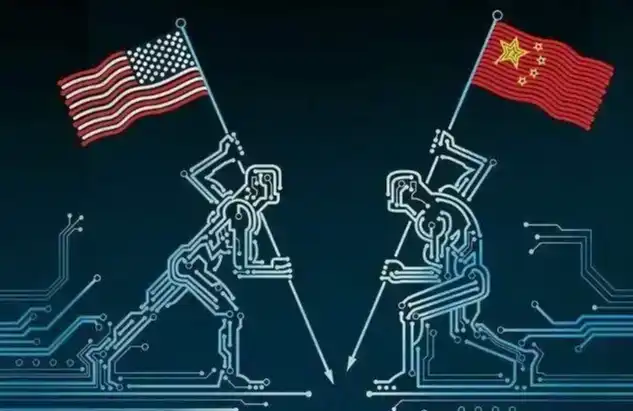
Who Will Define the Rules of the AI Era? Anthropic Discusses the 2028 US-China AI Landscape

This article, based on Anthropic's analysis, outlines the intensifying systemic competition between the U.S./allies and China for AI leadership by 2028. It argues that access to advanced computing power ("compute") is the critical bottleneck, where the U.S. currently holds a significant advantage through chip export controls and allied innovation. However, China's AI labs remain competitive by exploiting policy loopholes—via chip smuggling, overseas data center access, and "model distillation" attacks to copy U.S. model capabilities—keeping them close to the frontier. The piece presents two contrasting scenarios for 2028. In the first, decisive U.S. action to tighten compute controls and curb distillation locks in a 12-24 month AI capability lead, cementing democratic influence over global AI norms, security, and economic infrastructure. In the second, policy inaction allows China to achieve near-parity through continued access to U.S. technology, enabling Beijing to promote its AI stack globally and integrate advanced AI into its military and governance systems, altering the strategic balance. Anthropic contends that maintaining a decisive U.S. lead is essential for shaping safe AI development and governance. The core recommendation is for U.S. policymakers to urgently close compute and model access loopholes while promoting global adoption of the U.S. AI technology stack to secure a lasting strategic advantage.

marsbitВчера 05:08

Who Will Define the Rules of the AI Era? Anthropic Discusses the 2028 US-China AI Landscape

marsbitВчера 05:08

Listed and Halted, Surge Over 108% in a Single Day, Is Cerebras Really the 'Next Nvidia'?

Cerebras Systems (CBRS), labeled the "next Nvidia," debuted on the NASDAQ on May 14th, 2025. Its stock price surged over 108% from its $185 IPO price, briefly touching $385 before settling around $311. CEO Andrew Feldman claimed the company's wafer-scale AI chips are "58 times larger and 15-20 times faster" than competitors like Nvidia. The company's core innovation is the Wafer Scale Engine (WSE), a massive, dinner-plate-sized chip designed to avoid the bottlenecks of interconnecting multiple GPUs. Its latest system, the CS-3, offers high-performance computing for AI training and inference. While still a niche player with $5.1 billion in 2025 revenue, Cerebras has secured major contracts, most notably a multi-year, over $20 billion computing deal with OpenAI. This partnership is deep: OpenAI is a major customer, a creditor via a $1 billion loan, and holds warrants that could make it a 10-11% shareholder in Cerebras. Despite the hype, the article argues Cerebras is unlikely to dethrone Nvidia soon. Nvidia's ecosystem (CUDA), vast scale, manufacturing efficiency, and diversified product line present a formidable moat. Cerebras faces high costs, production challenges with its giant chips, and competition from AMD, Google, and others. However, strong demand for AI inference and its key partnerships could support its stock price in the short to medium term. In conclusion, Cerebras is positioned as a high-speed specialist in the AI hardware market, not a broad-market replacement for the current industry leader.

Odaily星球日报2 дня назад 10:34

Listed and Halted, Surge Over 108% in a Single Day, Is Cerebras Really the 'Next Nvidia'?

Odaily星球日报2 дня назад 10:34

Claude's New Policy Abandons Its Most Loyal Agent Users

Anthropic, in a move signaling the end of the "all-you-can-eat" era for AI subscriptions, has separated programmatic usage from its Claude subscription plans. Starting June 15, 2024, usage of the Claude Agent SDK, `claude -p` command, and third-party tools like OpenClaw will no longer draw from subscription limits. Instead, users receive a fixed monthly credit based on retail API prices: $20 for Pro, $100 for Max 5x, and $200 for Max 20x. This change drastically reduces usable capacity for heavy users—previously, their shared subscription limit was worth an estimated $2,000-$5,000 in API value. While Anthropic simultaneously increased Claude Code interactive limits to appease users, the new policy primarily impacts developers running automated, high-frequency agents, pushing their effective costs nearly ten times higher. Seizing the opportunity, OpenAI promptly announced a free two-month migration plan for its Codex enterprise service, which does not differentiate between interactive and automated usage, directly targeting discontented Claude users. This marks an opening salvo in the broader ASI (Artificial Superintelligence) competition, where the final battle is shifting from pure model capability to ecosystem strength, developer loyalty, and infrastructure. The article frames this as a necessary correction of a pricing "loophole" by Anthropic ahead of its IPO, as programmatic calls lack training data value and can incur massive costs. The move underscores a wider industry trend towards consumption-based billing for AI, mirroring the evolution of cloud computing.

marsbit05/15 00:22

Claude's New Policy Abandons Its Most Loyal Agent Users

marsbit05/15 00:22

Bitwise: Why Are Top-Tier Capitals Frenziedly Betting on New Public Blockchains? The Answer Lies in These Three Points

Recently, a wave of major funding announcements for new public blockchains like Arc, Canton, and Tempo signals a significant industry shift. This article analyzes the driving forces behind this surge. Firstly, regulatory clarity is a key catalyst. These massive investments, including Circle's Arc ($222M), Digital Asset's Canton ($300M), and Stripe's Tempo ($500M), all followed the US passage of the *Genius Act* in July 2025. This suggests that clear legislation is unlocking institutional capital. The anticipated, broader *Clarity Act* could further accelerate growth, particularly in tokenization and compliant infrastructure. Secondly, built-in privacy is emerging as a critical design feature. Unlike Ethereum or Solana, these new chains natively support confidential transactions. This directly addresses real-world business needs, where public transparency can be a liability for corporate dealings or personal salary data, making privacy a potential killer application. Finally, the entry of traditional giants marks a new competitive phase. These projects are backed by major firms: Arc by Circle, Canton by a consortium including Goldman Sachs and Nasdaq, and Tempo by Stripe with partners like Visa. While crypto-native projects remain strong contenders, this institutional involvement brings substantial capital, execution capability, and operational rigor. In conclusion, the convergence of regulatory progress, demand for privacy, and competition from established financial and tech players is rapidly reshaping the blockchain landscape, pushing innovation and expanding the industry's boundaries.

marsbit05/14 09:20

Bitwise: Why Are Top-Tier Capitals Frenziedly Betting on New Public Blockchains? The Answer Lies in These Three Points

marsbit05/14 09:20

Introducing a 'Paid Subscription' in the Chinese Market, What's Doubao Thinking?

Chinese AI assistant "Doubao" (from ByteDance) has announced it will launch a paid subscription service alongside its free version, with plans priced at 68, 200, and 500 yuan per month. This move follows its achievement of over 345 million monthly active users and 1.8 billion daily interactions. The paid tiers aim to serve professional users with advanced features for complex tasks like PPT generation and data analysis, while basic functions remain free. The timing is strategic: user growth from free services is plateauing, and the market is now more receptive to paying for high-value AI tools. ByteDance leverages its technical edge in model efficiency and cost control to support this shift. However, significant challenges remain. The Chinese market is characterized by low long-term subscription loyalty, with users often paying only for immediate needs. Doubao's premium features face competition from free alternatives offered by rivals. Furthermore, the core business model of AI subscriptions struggles with scalability—more paying users mean higher compute costs, potentially creating a cycle where revenue fails to cover expenses. Intense price competition from rivals could also force difficult choices between maintaining premium pricing or engaging in a race to the bottom. In summary, while Doubao's massive user base ensures short-term subscription uptake, its long-term success depends on creating uniquely valuable, "sticky" services within ByteDance's ecosystem and solving the fundamental industry dilemmas of low renewal rates and unsustainable cost structures. The outcome will serve as a critical test case for the viability of premium C-end AI subscriptions in China.

marsbit05/14 02:50

Introducing a 'Paid Subscription' in the Chinese Market, What's Doubao Thinking?

marsbit05/14 02:50

Suzerain State: Anthropic

Anthropic, a five-year-old AI lab dubbed a "suzerain," has rapidly gained unprecedented influence by securing massive financial and computational commitments from tech giants, positioning itself at the center of AI infrastructure power dynamics. In May 2026, it announced securing over 300 MW of computing power from SpaceX's Colossus 1 data center, on top of earlier multi-billion dollar deals with Amazon and Google, effectively locking in over 20 GW of future compute. These investments are tied to reciprocal spending commitments on the investors' cloud platforms, resembling infrastructure pre-sales. This "suzerain" status is fueled by explosive growth. By May 2026, Anthropic's annualized revenue reportedly surged to over $44 billion, with Claude surpassing OpenAI in LLM market share. Its high-revenue-per-user efficiency and flagship product Claude Code have secured a strong enterprise foothold. However, its pre-IPO status faces scrutiny. OpenAI challenged Anthropic's accounting, alleging its reported revenue includes gross payments shared with cloud partners, unlike OpenAI's net revenue reporting. The resolution of this debate is critical as both companies approach public listings. Currently, Anthropic holds unique leverage as the only top-tier model available across AWS, Google Cloud, and Microsoft Azure, inverting traditional vendor-customer dynamics. Yet, its suzerainty is considered a time-limited game, dependent on converting its current advantages into sustainable, audited profitability and navigating the complex web of strategic dependencies with its powerful patrons.

marsbit05/14 00:41

Suzerain State: Anthropic

marsbit05/14 00:41

活动图片