# Сопутствующие статьи по теме Bubble

Новостной центр HTX предлагает последние статьи и углубленный анализ по "Bubble", охватывающие рыночные тренды, новости проектов, развитие технологий и политику регулирования в криптоиндустрии.

When the Bubble Comes, How to Short "Smartly"?

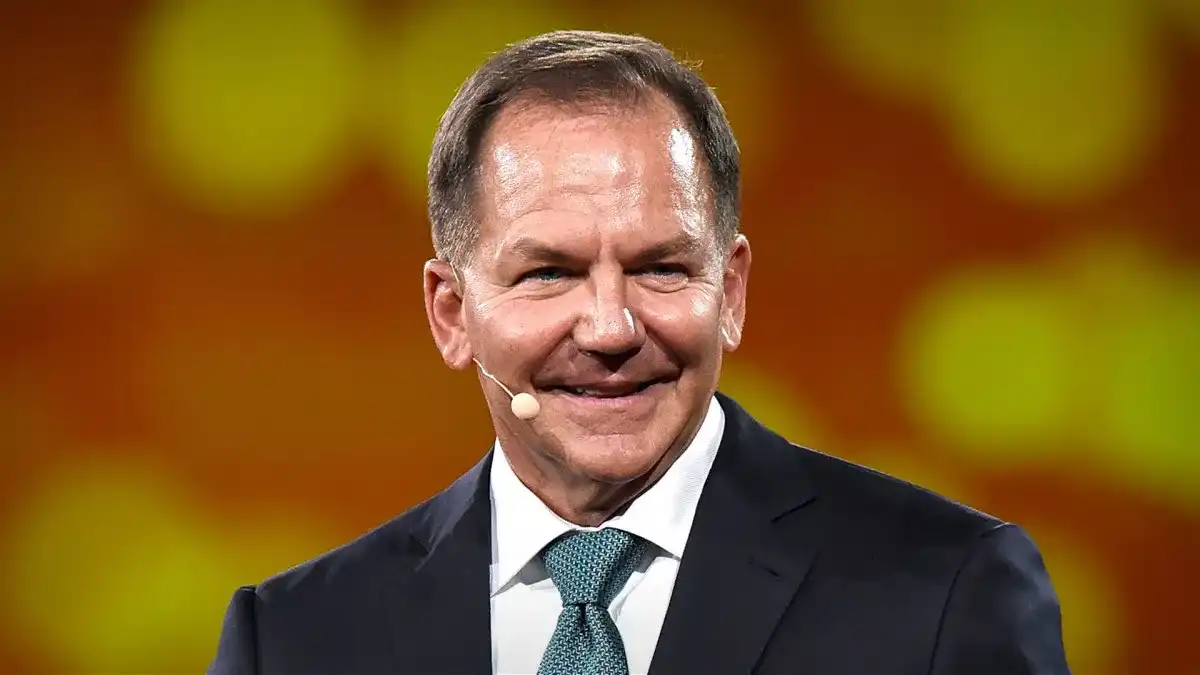
Title: When the Bubble Comes, How to "Smartly" Short? Author: Campbell (Macro Analyst) Summary: Amid the heated debate over whether the current AI-driven market is in a bubble, analysts are divided. While some, like Dan Niles and Paul Tudor Jones, argue that the AI boom has further to run, Michael Burry warns of similarities to the dot-com bubble. The author explores practical strategies for navigating and potentially shorting a bubble without being crushed by its momentum. Key challenges in shorting a bubble include the exponential risk from parabolic price increases and the high cost of options due to extreme volatility. Instead of directly shorting the bubbly asset, the author proposes three approaches: 1. **Find the "Wedge"**: Identify external factors that could pop the bubble, such as rising interest rates. By betting on trends that could undermine the bubble (e.g., inflation or higher rates), investors can hedge without timing the bubble's collapse. 2. **Short the "Victims"**: Target assets adjacent to the bubble that are highly vulnerable to its burst, such as over-leveraged companies or sectors with "negative convexity." These assets may have cheaper options and suffer disproportionately when the bubble stalls. 3. **Wait for Confirmation**: Exercise discipline and wait for clear signals of a breakdown, including deteriorating fundamentals, exhausted buying sentiment, and decisive breaks in trendlines. Only then should investors take substantial short positions. The author shares their recent actions, including shorting SPX and high-yield bonds while buying short-term put spreads, and emphasizes avoiding direct shorts on vertically rising assets. The core takeaway: Hedge, identify wedges, wait for confirmation, and only then commit heavily.

marsbit05/14 08:57

When the Bubble Comes, How to Short "Smartly"?

marsbit05/14 08:57

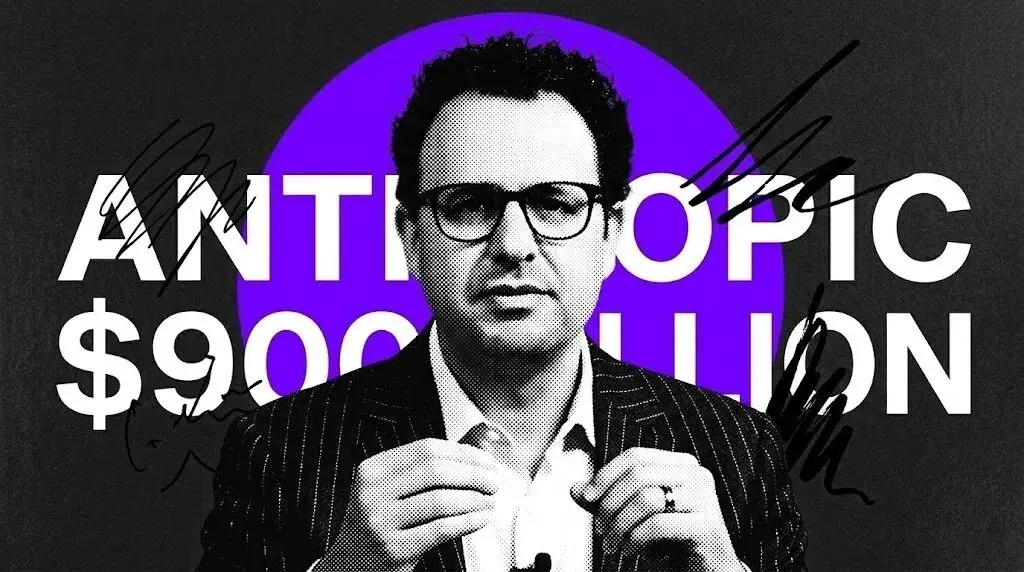
How the $900 Billion Anthropic Was Built?

Anthropic, the AI startup behind Claude, is reportedly in early talks to raise at least $30 billion in new funding, targeting a valuation exceeding $900 billion. This would propel it past OpenAI's recent $852 billion valuation. The funding round is expected to close by late May 2026. The company's valuation surge is driven by extraordinary revenue growth, reportedly reaching an annualized $30 billion by March 2026 from $1 billion in December 2024. However, OpenAI questions this figure, suggesting a net revenue closer to $22 billion after cloud platform fees. Despite high revenue, Anthropic's gross margin is reportedly around 40%, and it is not yet profitable, with breakeven projected for 2028. A significant portion of the new capital would fund massive, pre-committed computing infrastructure with partners like Amazon, Google, and Microsoft. This highlights a new AI financing model where high valuations fuel compute spending, which in turn requires even higher future valuations to sustain. Notably, many early-stage investors are reportedly sitting out this round. Bankers privately estimate a potential IPO valuation between $400-500 billion, creating a rare scenario where the final private funding round valuation ($900B+) could far exceed the expected public market debut. Anthropic is targeting an IPO between October 2026 and the first half of 2027. Its public listing is poised to be a critical test for the entire AI sector's valuation logic, potentially validating or challenging the high-stakes "valuation-compute-valuation" cycle that has defined private market investments.

链捕手05/13 02:42

How the $900 Billion Anthropic Was Built?

链捕手05/13 02:42

NVIDIA Begins Adding Soap to the Bubble

NVIDIA is taking on a dual role: not just as a leading chip supplier, but as a massive capital allocator across the entire AI supply chain. In 2026, the company has committed over $40 billion in investments within five months, targeting everything from optical fiber manufacturing and data center operations to foundational AI model development. This investment spree, described as a systematic "sprinkler" approach, primarily funds companies that are major buyers of NVIDIA's own GPUs. Critics, including analysts from Goldman Sachs, label this a "circular revenue" loop—comparable to a supplier financing a customer to buy more of its products. A prominent example is NVIDIA's investment in OpenAI, which is expected to generate around $13 billion in revenue for NVIDIA, much of which may be reinvested back into OpenAI. While CEO Jensen Huang dismisses the "circular financing" critique as "absurd," arguing the investments are confidence votes in long-term generational shifts, some analysts express discomfort. They note that while investments in critical supply chain components like optics are strategically sound, funding new cloud providers like CoreWeave feels like "pre-paying for your own GPUs." The strategy carries significant risks. If the AI investment cycle turns, the market may question how much demand is genuine versus artificially sustained by NVIDIA's own balance sheet. Despite posting record-breaking earnings—$215.9 billion in annual revenue and $120 billion in net profit for FY2026—NVIDIA's stock fell after its report, signaling that "beating expectations" may no longer be enough to assure investors about the duration of the AI spending boom. The article concludes that while a bubble isn't necessarily a fraud, NVIDIA's actions resemble adding soap to a bubble—making it appear more robust and durable. This creates a complex scenario requiring extreme冷静 from investors to distinguish between real structural growth and financial engineering.

marsbit05/12 07:29

NVIDIA Begins Adding Soap to the Bubble

marsbit05/12 07:29

Undercover in Crypto for 8 Years, 5 Jobs: The Revolution and Scam in My Eyes

"Undercover in Crypto for 8 Years, 5 Jobs: The Revolution and the Scam I Saw" In 2017, the author entered crypto believing it would revolutionize everything: replacing fiat, disintermediating finance, and shifting power to users. Eight years later, almost none of that has happened as predicted. The author worked at Circle, Messari, Coinbase, and Crossmint, witnessing the asset class grow from under $10B to over $4T, through multiple speculative bubbles and a near-systemic crisis. The journey began with the 2017-18 ICO frenzy, an "internet bubble 2.0" fueled by Ethereum. The promised "decentralized Uber" never materialized; instead, it was an era of greed, fraud, and rampant speculation where founders cashed out early. In the 2018-19 hangover, the focus shifted. The seeds of crypto's next phase were planted: stablecoins (like USDC) for borderless dollars and DeFi (decentralized finance) for rebuilding financial primitives like lending and trading on-chain. The COVID-19 pandemic and massive monetary stimulus triggered "DeFi Summer" in 2020-21. DeFi's value soared 250x to $180B, but it resembled a high-stakes game for mercenary traders with "food-themed" tokens. A new bubble formed around NFTs, with digital art selling for millions. The 2022 "crypto winter" mirrored the 2008 financial crisis. The collapse of the algorithmic stablecoin Terra (UST) triggered a chain reaction, bringing down hedge funds (Three Arrows Capital) and lending platforms (Celsius, Voyager). The final blow was the implosion of FTX and Sam Bankman-Fried, who had misused customer funds. This was crypto's "Lehman Moment." After the crash, the Biden administration's hostile regulatory crackdown under the SEC pushed innovation toward the legally safest, most absurd path: meme coins. The 2024 meme coin mania peaked at $150B before imploding. This political pressure, however, mobilized the industry. Donald Trump capitalized, promising a crypto-friendly stance, which many credit for helping him win the 2024 election. Trump's victory marked a turning point. A pro-crypto SEC chair took over, the "GENIUS Act" provided clear stablecoin rules in 2025, and institutional adoption accelerated. Circle (maker of USDC) IPO'd, and traditional giants like MoneyGram began using stablecoins for cross-border payments via firms like Crossmint. Looking back, the predicted consumer revolution (decentralized Uber) didn't happen. Instead, crypto built the plumbing for a new internet financial system. Each boom/bust cycle refined the infrastructure for global, 24/7 finance accessible to anyone online. The $300B+ stablecoin market, settling tens of trillions annually and creating demand for U.S. debt, is now a strategic U.S. priority. The future lies in convergence, not replacement. Crypto will be the backend, invisible to most users. The next frontier is integration with AI, where autonomous agents will use crypto wallets and stablecoins to transact. The result will be a global financial system equally accessible in New York or Nigeria, paving the way for countless new innovations.

marsbit05/09 10:20

Undercover in Crypto for 8 Years, 5 Jobs: The Revolution and Scam in My Eyes

marsbit05/09 10:20

Smart Money Hoards $40 Billion in Cash, Retail Bets $2.6 Trillion on Calls: The Critical Moment of the US Stock Market's AI Narrative

Title: Smart Money Hoards $40 Billion in Cash, Retail Traders Bet $2.6 Trillion on Call Options: The Tipping Point for the AI Narrative in U.S. Stocks The U.S. stock market is experiencing a striking divergence. While the S&P 500 hits new highs, the financial sector is down 6% year-to-date, underperforming more than during the 2008 and COVID crises. In contrast, a record $2.6 trillion in S&P 500 call options traded in a single day, and the Philadelphia Semiconductor Index RSI is at its highest since 1999. This reflects a clear split: "smart money" is retreating while retail traders chase gains. Key data points highlight this critical juncture in the AI-driven rally: 1. SoftBank had to cut its $10 billion loan target against its OpenAI stake to $6 billion, as lenders questioned the valuation of the private AI giant, signaling primary market skepticism. 2. The explosive $2.6 trillion daily options volume, with 60% being calls, is described by a Goldman Sachs partner as a "semi-irrational chase," drawing parallels to the 1999 tech bubble. 3. The financial sector's severe underperformance relative to the S&P 500 is a classic technical warning signal, indicating potential underlying economic stress. 4. Apollo Global Management, despite strong earnings, is building a $40 billion cash buffer in its insurance business, preparing for what its CEO calls a 30-35% probability of an exogenous shock from geopolitics, inflation, and AI's economic disruption. 5. Consumer behavior mirrors this split: while Whirlpool plunged on a worsening macro outlook for big-ticket items, DoorDash rose on strong demand for small, immediate services. Together, these conflicting signals from primary markets, secondary markets, leading sectors, and top institutions suggest market risk premia have compressed to a precarious level. The current price action may be increasingly reliant on speculative sentiment rather than fundamental support, marking a potential tipping point for the AI investment narrative.

marsbit05/09 07:40

Smart Money Hoards $40 Billion in Cash, Retail Bets $2.6 Trillion on Calls: The Critical Moment of the US Stock Market's AI Narrative

marsbit05/09 07:40

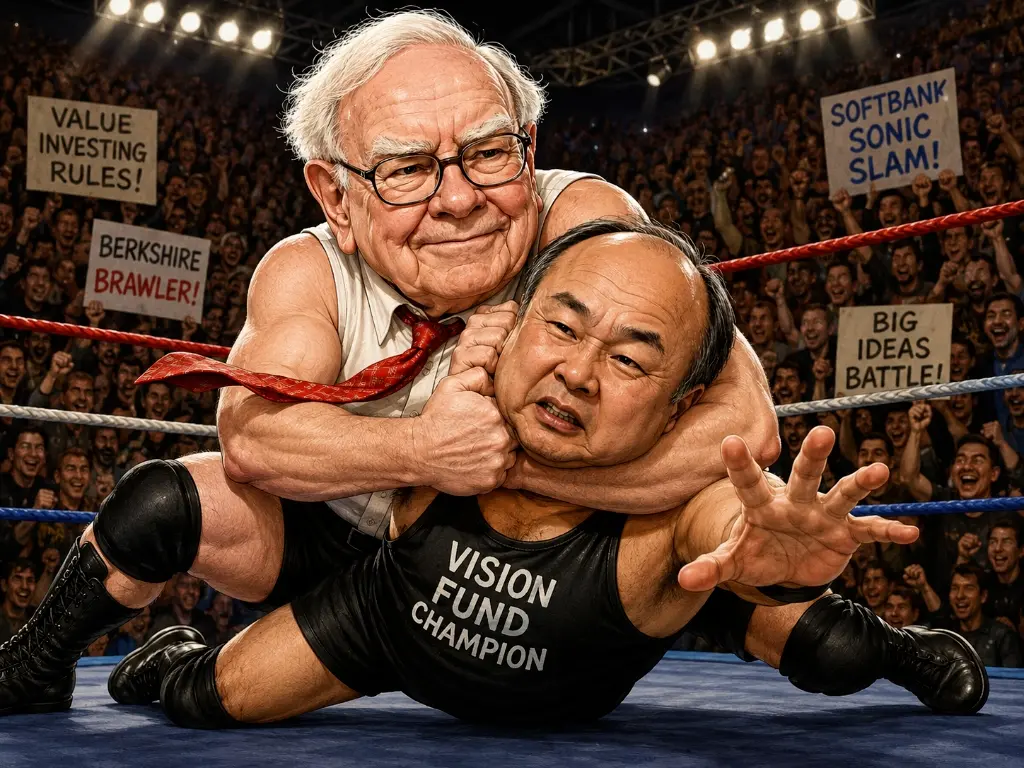
Berkshire Hathaway and SoftBank: One Must Die

Berkshire and SoftBank: A Tale of Two Extremes The article presents a speculative future (set in 2026) contrasting the investment philosophies and potential fates of Berkshire Hathaway and SoftBank Group. Under new CEO Greg Abel, Berkshire sits on a massive cash pile of nearly $400 billion, built by selling assets like Apple stock over many quarters. Buffett and now Abel deem the market overvalued and refuse to invest, leading to significant underperformance. The "disease" of too much cash poses an existential threat to Berkshire's identity as a capital allocator, potentially forcing a future breakup or special dividend if the bull market persists. Its "death" would be a slow, dignified fading of its legendary investment narrative. In stark contrast, SoftBank's Masayoshi Son is all-in on a high-stakes gamble. To fund a colossal $64.6 billion (and growing) investment in OpenAI, SoftBank has aggressively leveraged itself. It has sold core holdings like Nvidia, T-Mobile, and Alibaba, taken on over $100 billion in parent-level debt, and secured a record $40 billion bridge loan. The survival strategy hinges on a successful OpenAI IPO and the high valuation of its Arm holdings. However, this creates multiple interconnected risks: an OpenAI IPO delay, a correction in Arm's lofty valuation, or a credit market freeze. Any of these could trigger a liquidity crisis. SoftBank's potential "death" would be swift and dramatic. The core thesis is that in this speculative market, one extreme strategy—Berkshire's paralyzing caution or SoftBank's all-or-nothing leverage—will likely prove unsustainable. One may lose its soul, the other may face financial rupture.

链捕手05/08 06:14

Berkshire Hathaway and SoftBank: One Must Die

链捕手05/08 06:14

活动图片