Technology Trends

Explores the latest innovations, protocol upgrades, cross-chain solutions, and security mechanisms in the blockchain space. It provides a developer-focused perspective to analyze emerging technological trends and potential breakthroughs.

Google and Microsoft Battle in the AI PC Arena: Is Local Computing Power an IQ Tax? Is the Cloud PC the Ultimate Form?

Google and Microsoft are competing in the AI PC arena, with the article questioning whether powerful local AI hardware is necessary. It argues that current "AI PCs" often rely heavily on cloud AI for complex tasks, making premium local AI silicon potentially less critical. Google recently unveiled "Android PCs," a new high-end productivity-focused product line. Unlike traditional AI PCs that add AI features to existing Windows systems, Android PCs position cloud-based AI, specifically Google's Gemini, as their core. The system deeply integrates AI, allowing context-aware assistance directly where the user is working, regardless of the underlying device hardware (x86 or ARM). The piece suggests that cloud computing might be the future for AI PCs. Unlike cloud gaming, which demands ultra-low latency, AI tasks are more tolerant of network delays, as users already expect some processing time. This makes the cloud-computing model well-suited for AI. Examples like Alibaba's "Wuying AI Cloud Computer" show how cloud services can offer robust AI capabilities without requiring powerful local hardware. This shift challenges the traditional PC model. With rising memory costs and limitations in consumer-grade local AI performance, the "light local, heavy cloud" approach offers an alternative. It could lead to devices that primarily need a good display and network connection, with heavy AI lifting done remotely. However, the transition is just beginning. Traditional players like Microsoft are pushing both local AI standards (e.g., 40+ TOPS NPU requirements) and deeply integrating cloud AI (Copilot with GPT) into Windows. Apple leverages its tight ecosystem and has found success with more affordable MacBooks, potentially positioning it well for AI integration later. Chipmakers like Intel and AMD, while promoting local AI, also benefit massively from supplying data centers for the cloud AI infrastructure. The conclusion is that AI is redefining the PC. The future battle will involve cloud integration, OS-level AI, and cross-device ecosystems. While questions about network reliability, data privacy, and user adaptation remain, the era of the AI cloud computer seems to be on the horizon.

marsbit2 дня назад 06:35

Google and Microsoft Battle in the AI PC Arena: Is Local Computing Power an IQ Tax? Is the Cloud PC the Ultimate Form?

marsbit2 дня назад 06:35

YC Partner Reveals: Building an AI-Native Company from Scratch

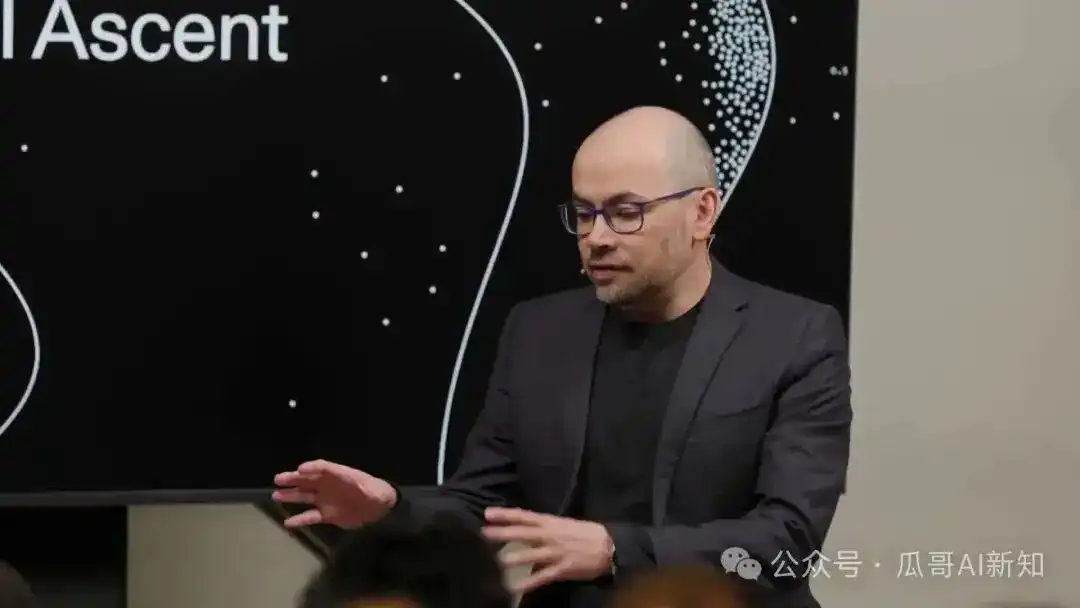
"YC Partner Reveals: Building an AI-Native Company from Scratch" YC partner Diana Hu argues that true AI-native companies operate 1000x faster than incumbents, not by using AI for mere efficiency, but by making it the company's core operating system. This requires a fundamental shift: companies must become "queryable" to AI, with all workflows and communications generating data for AI to learn from, creating a "closed-loop" system for continuous optimization. For example, an AI agent with access to tickets, code, meetings, and customer feedback can analyze past performance and autonomously plan future engineering cycles, dramatically increasing output. In product development, the new paradigm is the "AI software factory": humans write specifications and tests, while AI agents generate the code. This transparent, data-driven model renders traditional middle management obsolete. Future AI-native companies will consist of three roles: Independent Contributors (who build/operate with AI), Directly Responsible Individuals (who own outcomes), and the AI Founder who leads by example. The critical shift is maximizing token usage over headcount. A small, AI-augmented team can outperform large traditional teams. Startups have a key advantage: they can design their entire culture and systems around AI from day one, unburdened by legacy processes. The core takeaway: Founders must personally experience AI's transformative power. The future belongs to those who embed AI into their company's DNA from the start.

marsbit2 дня назад 01:12

YC Partner Reveals: Building an AI-Native Company from Scratch

marsbit2 дня назад 01:12

Bezos, Schmidt, Powell Jobs: The Three AI Investment Philosophies of Silicon Valley's Old Money

Jeff Bezos, Eric Schmidt, and Laurene Powell Jobs, three prominent figures from Silicon Valley's "old money," are deploying massive personal fortunes into AI, but with distinctly different investment philosophies reflecting their visions for the future. Eric Schmidt, the former Google CEO, approaches AI as a geopolitical and infrastructural arms race. Through his family office, Hillspire, he invests heavily in defense AI companies, energy infrastructure (like Bolt Data & Energy to power data centers), and space launch capabilities (Relativity Space). For Schmidt, the ultimate AI advantage lies in physical resources—energy, transport, and military application—framing it as a national competition requiring state-level strategy and endurance. Jeff Bezos is building a vertically integrated, full-stack AI empire. His bets span the model layer (via Amazon's massive investment in Anthropic), the application layer (through investments like Perplexity), and now, the physical execution layer. His new venture, Project Prometheus, with $6.2 billion, aims to inject AI into manufacturing, creating a closed loop from AI chips and cloud compute (AWS) to real-world production, potentially for Amazon's own ventures like the Kuiper satellite network. In contrast, Laurene Powell Jobs adopts a more subtle, human-centric approach through her Emerson Collective. Her AI investments focus on specific, positive-impact applications—such as AI for healthcare (Proximie, Atropos Health), education (Curipod), and European AI sovereignty (Mistral AI). A key, high-profile bet was her early backing of Jony Ive's design firm LoveFrom and its spin-off, io, an AI hardware device company later acquired by OpenAI. Her philosophy prioritizes improving human-machine interaction and addressing societal needs over sheer scale or control. These three strategies—Schmidt's focus on state-level infrastructure and security, Bezos's pursuit of end-to-end industrial integration, and Powell Jobs's emphasis on human-centered design and applied solutions—represent fundamentally different wagers on what will define the next decade of AI. While the eventual winner is unknown, the sheer scale of this capital migration from internet-era giants is already reshaping the industry's trajectory.

marsbit05/14 08:11

Bezos, Schmidt, Powell Jobs: The Three AI Investment Philosophies of Silicon Valley's Old Money

marsbit05/14 08:11

Chinese Young Man's AI Short Goes Viral Abroad! Hollywood Director Searches Online: Wants to Hire Him

A young Chinese creator, Mx-Shell, an amateur filmmaker from Yunnan with no formal film training, has gone viral internationally with his AI-generated short film "Zombie Scavenger." Created independently in about 10 days using the Chinese AI video tool Seedance 2.0 at a minimal cost, the film features a robot cowboy in a post-apocalyptic world. Its unique atomic-punk style and cinematic quality caught the attention of Hollywood. The film initially gained little traction on Chinese platform Bilibili. However, after PJ Ace, founder of LA-based AI studio Genre.ai, shared it on X (formerly Twitter), praising it as "one of the best short films I've seen in recent years," it quickly garnered millions of views overseas. PJ Ace then publicly sought to hire the unknown director, sparking a cross-platform search. The creator, who doesn't speak English, was unaware of the overseas buzz until Chinese internet users relayed the message. Connection was eventually made via a QQ email address shared in Bilibili comments, and Mx-Shell received a job offer from the Hollywood director. The article highlights this as a case of "talent export." It argues that while China's competitive AI tool market lowers technical barriers, true success still relies on individual creativity, aesthetic judgment, and narrative skill—qualities Mx-Shell demonstrated. His story exemplifies how AI tools can empower previously unseen creators with compelling ideas to reach a global audience, even if initial recognition sometimes comes from abroad before reverberating back home.

marsbit05/14 07:33

Chinese Young Man's AI Short Goes Viral Abroad! Hollywood Director Searches Online: Wants to Hire Him

marsbit05/14 07:33

Exporting to Domestic Sales: The Chinese-style Outbound Journey of an AI Short Film

From Export to Domestic Boom: The Chinese-Style Overseas Journey of an AI Short Film The story begins with PJ Ace, a prominent Hollywood AI filmmaker, launching a public search on X for the creator of a stunning AI-generated short film titled "Zombie Scavenger." The film, featuring a robot cowboy in a post-apocalyptic wasteland, impressed Ace with its quality, which he estimated would have cost $500,000 and six months pre-AI. The trail led back to China. The creator, Mx-Shell, is a self-described amateur from China with a photography and music background. Using ByteDance's AI video tool, Seedance 2.0, he independently produced the short in about ten days for a minimal cost. Ironically, while the film went viral overseas after Ace's endorsement, it initially gained little traction on Chinese platforms like Bilibili. This sparked a "cross-server" search. Ace posted in English on X, while Mx-Shell, who doesn't speak English, posted his QQ email in Chinese comment sections. With netizens' help, they connected. Ace extended an invitation, asking if Mx-Shell was interested in becoming a Hollywood director. The article highlights this as a case of "talent export" or "brilliance going overseas." A creator in China, using domestic AI tools and computing power, captured global attention first. This "export-to-domestic-sales" path succeeded due to China's competitive, low-cost AI video tool market and its vast pool of untapped creative talent. Mx-Shell's success underscores that AI lowers production barriers, but core creativity, aesthetic judgment, and storytelling sense remain uniquely human. His path—individual, low-budget, and quality-driven—contrasts with the industrialized, capital-intensive route of bulk-producing AI short dramas for overseas markets. His story, spontaneous and beyond any corporate marketing plan, serves as powerful validation for tools like Seedance 2.0. The piece concludes that while China has many creators whose traditional barriers (equipment, funds, teams) are being dismantled by AI, the challenge of visibility remains. Until a robust domestic AI creative ecosystem develops, this indirect route of gaining overseas recognition first may continue to be a viable path for Chinese talent.

marsbit05/14 04:24

Exporting to Domestic Sales: The Chinese-style Outbound Journey of an AI Short Film

marsbit05/14 04:24

Auto Research Era: 47 Tasks Without Standard Answers Become the Must-Test Leaderboard for Agent Capabilities

The article introduces Frontier-Eng Bench, a new benchmark for AI agents developed by Einsia AI's Navers lab. Unlike traditional tests with clear answers, this benchmark presents 47 complex, real-world engineering tasks—such as optimizing underwater robot stability, battery fast-charging protocols, or quantum circuit noise control—where there is no single correct solution, only continuous optimization towards a limit. It shifts AI evaluation from static knowledge retrieval to a dynamic "engineering closed-loop": the AI must propose solutions, run simulations, interpret errors, adjust parameters, and re-run experiments to iteratively improve performance. This process tests an agent's ability to learn and evolve through long-term feedback, much like a human engineer tackling trade-offs between power, safety, and performance. Key findings from the benchmark reveal two patterns: 1) Improvements follow a power-law decay, becoming harder and smaller as optimization progresses, and 2) While exploring multiple solution paths (breadth) helps, sustained depth in a single path is crucial for breakthrough innovations. The research suggests this marks a step toward "Auto Research," where AI systems can autonomously conduct continuous, tireless optimization in scientific and engineering domains. Humans would set high-level goals, while AI agents handle the iterative experimentation and refinement. This could fundamentally change research and development workflows.

marsbit05/13 07:06

Auto Research Era: 47 Tasks Without Standard Answers Become the Must-Test Leaderboard for Agent Capabilities

marsbit05/13 07:06

How to Automate Any Workflow with Claude Skills (Complete Tutorial)

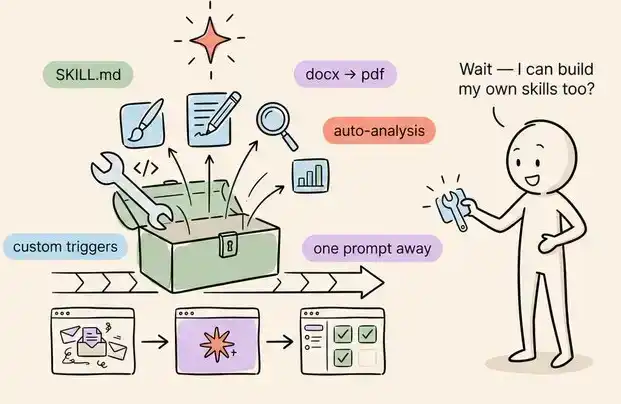
This is a comprehensive guide to mastering Claude Skills, a feature for creating permanent, reusable instruction sets that automate specific workflows. Unlike simple saved prompts, Skills function like trained employees, delivering consistent, high-quality outputs by defining the entire task process, standards, error handling, and output format. The guide is structured in four phases: **Phase 1: Installation (5 minutes).** Skills are folders containing a `SKILL.md` file. The user is instructed to find a relevant Skill online, install it, test it on a real task, and compare its performance to one-off prompts. **Phase 2: Building Your First Custom Skill.** Start by rigorously defining the Skill's purpose, trigger phrases, and providing a concrete example of perfect output. The `SKILL.md` file has two parts: a YAML frontmatter with a specific name/description/triggers, and a detailed, step-by-step workflow written in natural language with examples and quality standards. **Phase 3: Testing & Optimization for Production.** Test the Skill in three scenarios: 1) a standard, common task; 2) edge cases with missing or conflicting data; and 3) a pressure test with maximum complexity. Any failure indicates a needed instruction. Implement a weekly optimization cycle to continuously refine the Skill based on real usage. **Phase 4: Building a Complete Skill Library.** The goal is to create a team of Skills for all repetitive tasks. Examples are given for industries like real estate, marketing, finance, consulting, and e-commerce. The user should list their tasks, prioritize them, and build one new Skill per week, maintaining a master document to track their library. The conclusion emphasizes the compounding time savings: ten Skills saving 30 minutes each per week reclaims over 260 hours (6.5 work weeks) per year, fundamentally transforming one's work system.

marsbit05/12 09:45

How to Automate Any Workflow with Claude Skills (Complete Tutorial)

marsbit05/12 09:45

The Waged Worker Driven to Poverty by AI Subscriptions

"AI Membership: The Hidden Cost Pushing Workers Toward 'Poverty'" The widespread corporate push for AI adoption is creating a hidden financial burden for employees. Companies, from giants like Alibaba to small firms, are mandating AI use, often tying token consumption to KPIs, but frequently refuse to cover the costs. Workers are forced to pay for subscriptions out of pocket to stay competitive and avoid being replaced. Front-end developer Long Shen spends up to 2000 RMB monthly on tools like Cursor and ChatGPT Plus, seeing it as a necessary 3% salary investment to handle 90% of his coding tasks. While it boosted his performance and led to promotions, he now faces idle time at work, pretending to be busy. Designer Peng Peng navigates strict company firewalls by using personal devices and accounts for AI image generation tools like Midjourney, spending hundreds monthly without reimbursement, while her boss demands faster, more numerous revisions. The pressure creates workplace anxiety and suspicion. Programmer Li Huahua, after a friend's experience of raised KPIs following AI success, fears being branded a "traitor" for using it yet worries about falling behind if she doesn't. The dynamic allows management to demand results without understanding the tools or covering expenses, treating employees like AI "agents." While some, like entrepreneur Jin Tu, find high value in paid AI, building entire systems and winning competitions, for most, it's a trap. Free tools like Kimi and Doubao are introducing fees, closing off alternatives. The initial efficiency gains individual advantage, but as AI becomes ubiquitous, the personal edge disappears, workloads increase, and a cycle of dependency begins. Workers like Long Shen realize they cannot maintain AI-generated code without AI, making stopping harder than continuing to pay. The tool promising liberation is instead becoming a compulsory, costly chain in the modern workplace.

marsbit05/12 04:10

The Waged Worker Driven to Poverty by AI Subscriptions

marsbit05/12 04:10

活动图片