Regulatory Policy

Focuses on global regulatory developments, policy changes, and compliance requirements. It provides in-depth analysis of government regulations and their impact on the cryptocurrency and blockchain industries, helping businesses and investors proactively manage policy-related risks.

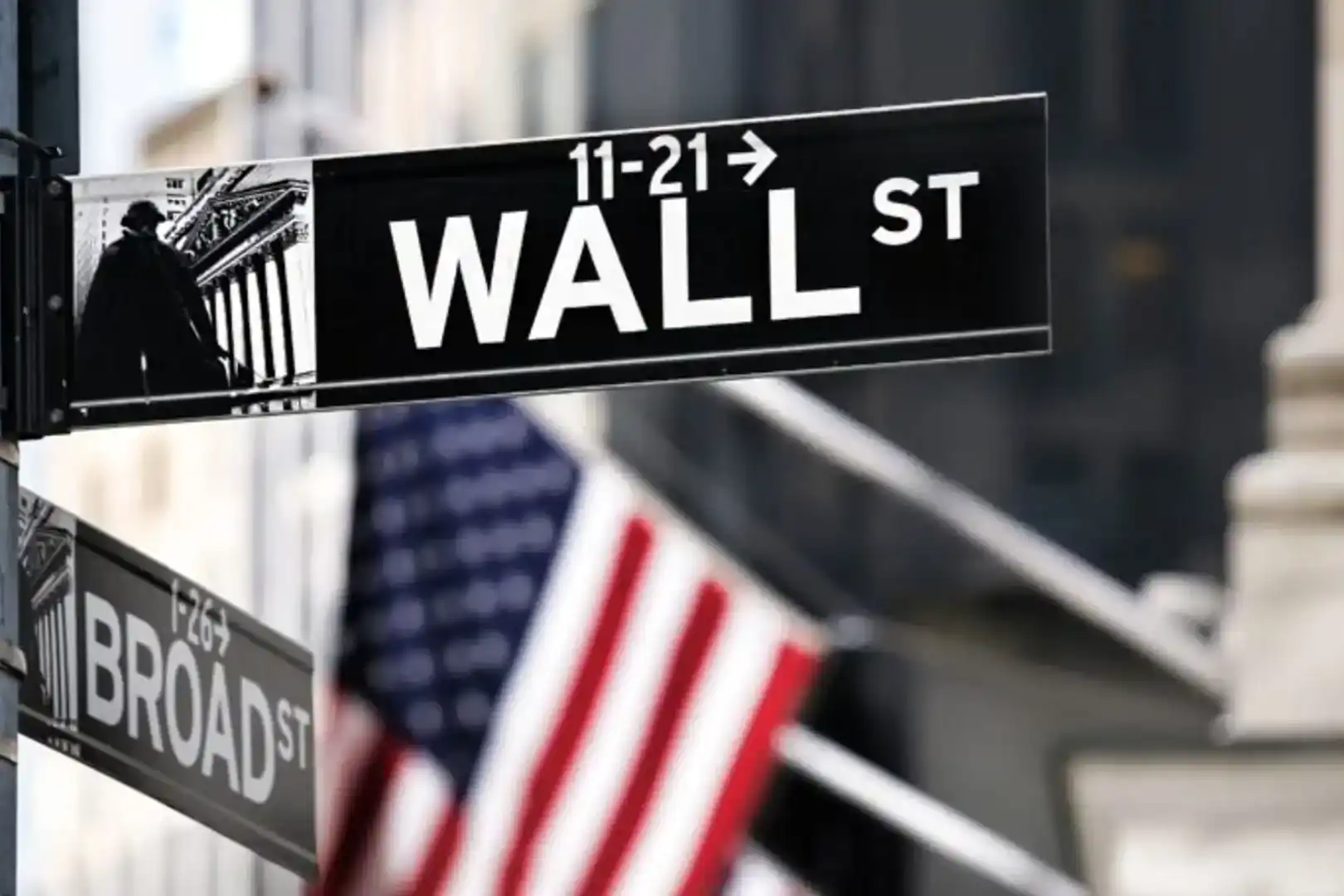
Wall Street's 'Compliance Hunt': The Great Stablecoin Reserve Migration

In a concentrated move over the past week, several Wall Street giants have advanced their tokenized money market fund initiatives, signaling a strategic shift driven by impending U.S. stablecoin regulations. JPMorgan Chase launched its second such fund, JLTXX, on Ethereum, explicitly targeting future stablecoin issuer reserve needs. Concurrently, Franklin Templeton partnered with Kraken to integrate its BENJI tokenized funds onto the exchange platform for use as collateral and cash management tools. BlackRock further solidified its position by filing for two new tokenized funds with the SEC, aiming to convert its massive traditional stablecoin custody business into a tokenized model. These parallel developments represent a multi-pronged institutional "compliance hunt" to capture future crypto liquidity. BlackRock and JPMorgan are focusing on the backend, preparing to serve as the core reserve and settlement infrastructure for compliant stablecoins as outlined by the GENIUS Act. This act defines strict "qualified reserve asset" requirements for stablecoin backing while prohibiting interest payments to holders. Franklin Templeton and Kraken, however, are exploiting a potential regulatory gap. By offering a tokenized fund (BENJI) that is not a stablecoin, they aim to provide yield-bearing, collateralizable digital cash instruments, circumventing GENIUS Act's ban on stablecoin yield. The impending CLARITY Act, which will delineate digital asset market structure, is seen as a complementary piece to GENIUS. Its treatment of passive income could solidify the niche for instruments like BENJI. With conservative market size estimates for tokenized money market funds reaching hundreds of billions by 2030, Wall Street institutions are positioning themselves early, using on-chain settlement as a key competitive differentiator to offer superior liquidity and composability for the next generation of dollar reserves.

marsbit05/13 05:15

Wall Street's 'Compliance Hunt': The Great Stablecoin Reserve Migration

marsbit05/13 05:15

2026 New Policy Interpretation: The "Mutual Pursuit" of Intelligent Agents and AI Terminals, and the Three Major Value Reconstructions in the AIoT Industry

In May 2026, China's national ministries released two pivotal policy documents that jointly establish a strategic "dual-track" framework for the AIoT industry. The "Intelligent Agent Standardized Application and Innovation Development Implementation Opinions" defines the "soul"—positioning intelligent agents as core AI products. The "Artificial Intelligence Terminal Intelligence Grading" national standard defines the "body"—establishing a four-tier capability ladder (L1 to L4) for AI hardware. This synchronized policy approach is globally unique, moving beyond market-led (US) or risk-focused (EU) models. It frames AIoT as a new type of "intelligent infrastructure," comparable to electricity or the internet in historical significance. The core analysis identifies a value evolution from IoT 1.0 (connection) to AIoT 4.0 (collaboration, represented by the forward-looking L4 level). This "L4" signifies a paradigm shift: from users operating tools to delegating tasks to agent-like devices ("Intelligent Action of All Things"). The article outlines three strategic paths for companies: becoming Standard Definers, Scenario Integrators (focusing on 19 specified application areas), or Infrastructure Builders. A critical 18-24 month window is identified for strategic positioning. A "Four Levers" strategy is proposed: leveraging Standards (L-level certification), leveraging Scenarios (deep vertical focus), leveraging Open Source (for cost reduction and ecosystem influence), and leveraging Momentum (engaging in global protocol ecosystems). In conclusion, these policies are a starting gun for a decade-long industrial transformation, shifting the industry narrative from "Intelligent Connection of All Things" to "Intelligent Action of All Things," with companies needing to choose their赛道and execution strategy decisively.

marsbit05/12 11:56

2026 New Policy Interpretation: The "Mutual Pursuit" of Intelligent Agents and AI Terminals, and the Three Major Value Reconstructions in the AIoT Industry

marsbit05/12 11:56

South Korean Exchanges 'Battle' Regulators, Challenging the Boundaries of Enforcement and Legislation

South Korea's cryptocurrency industry is engaged in a rare, direct confrontation with regulators. The Financial Intelligence Unit (FIU), the primary anti-money laundering (AML) watchdog, has recently imposed heavy penalties on major exchanges like Upbit and Bithumb for alleged violations involving unregistered overseas VASPs and AML procedures. However, exchanges are now actively challenging these actions in court and through industry associations. In a significant shift, the Seoul Administrative Court ruled in favor of Upbit's operator, Dunamu, overturning part of an FIU-ordered business suspension. The court found the FIU's penalty criteria and justification insufficiently clear. Similarly, the court suspended the enforcement of a six-month business suspension against Bithumb pending a final ruling, citing potential irreversible harm to the exchange. Beyond legal battles, the industry is contesting proposed legislative amendments. The Digital Asset eXchange Alliance (DAXA) strongly opposes a draft rule that would mandate Suspicious Transaction Reports (STRs) for all crypto transfers over 10 million KRW (~$6,800). DAXA argues this "poison pill" clause violates legal principles and would overwhelm the STR system, increasing reports from 63,000 to an estimated 5.45 million annually for major exchanges, thereby crippling effective AML monitoring. This conflict highlights a structural tension in South Korea's crypto governance: comprehensive digital asset laws are still developing, while regulators rely heavily on AML enforcement. The industry's move from passive compliance to active legal and legislative challenges signifies a new phase, pressing for clearer rules and more proportionate enforcement. While short-term disputes may intensify, this clash could ultimately lead to a more mature and sustainable regulatory framework for South Korea's vibrant crypto market.

marsbit05/11 08:20

South Korean Exchanges 'Battle' Regulators, Challenging the Boundaries of Enforcement and Legislation

marsbit05/11 08:20

The Billionaires Behind the Most Expensive Midterm Election in History

"The Most Expensive Midterm Elections and Their Billionaire Backers" This analysis details the unprecedented scale of spending in the 2026 midterm elections, highlighting the key billionaire donors shaping the political landscape. Jeff Yass, founder of Susquehanna International Group, has contributed over $81 million, ranking third among individual donors behind George Soros ($102.6M) and Elon Musk ($84.8M). Yass is a major donor to Trump's MAGA Inc. and supports school choice and various candidates. Overall, federal committees have raised over $4.7 billion this cycle, with political ad spending projected to reach $10.8 billion. Republican-aligned groups are significantly out-raising their Democratic counterparts. "Dark money" from undisclosed sources continues to grow. The core stakes involve control of Congress and policy direction for Trump's final term. Donors are also motivated by specific issues: Sergey Brin and Chris Larsen are funding opposition to a proposed California wealth tax and supporting crypto-friendly policies. Other top donors include OpenAI's Greg Brockman and his wife Anna ($50M total to MAGA Inc. and an AI-focused PAC), Richard Uihlein ($45.3M to conservative causes), venture capitalists Marc Andreessen and Ben Horowitz (each over $44M to crypto/AI PACs and MAGA Inc.), Miriam Adelson ($42.6M to GOP leadership PACs), Paul Singer ($33.9M), and Diane Hendricks ($25.8M to MAGA Inc.). The article notes that the peak fundraising period is still ahead, with major primaries approaching.

marsbit05/11 07:19

The Billionaires Behind the Most Expensive Midterm Election in History

marsbit05/11 07:19

From KYC to KYA, Is It Time to Give AI Agents Their Own 'ID Cards'?

Titled "From KYC to KYA: Is It Time to Issue 'Identity Cards' for AI Agents?", this article discusses the emerging concept of Know Your Agent (KYA) as AI agents become increasingly autonomous. In Agent-to-Agent (A2A) scenarios, where agents execute contracts, payments, and trades without human intervention, the lack of a shared identity standard creates risks like unauthorized transactions, fraud, and accountability gaps. KYA acts as a trust layer to verify an agent's origin, authority, and accountability. The need for KYA is most critical outside centralized platforms (like Google or Coinbase), such as in decentralized exchanges (DEX), A2A payments, and merchant payments. Several key players are building KYA infrastructure: - **ERC-8004**: A proposed Ethereum standard that issues a unique AgentID as an NFT, building on-chain identity, reputation, and validation systems. - **Visa TAP**: Visa's solution issues agent identity credentials, with transactions verified via triple signatures (legitimacy, delegator, payment method). - **Trulioo**: Extends its KYC/KYB compliance infrastructure using a Digital Passport for Agents (DAP), issued after verifying both the developer and user, and refreshed per transaction. - **Sumsub**: Focuses on post-issuance real-time verification, detecting agent anomalies during transactions using its existing compliance systems. Regulatory bodies are also acting. The EU AI Act mandates operator identification in logs for high-risk AI systems, the US NIST prioritizes agent identity management standards, and Singapore has released a national AI governance framework. Similar to how the 2019 FATF Travel Rule impacted crypto exchanges, possessing KYA infrastructure may determine market entry in the AI agent era. The market is expected to segment rather than produce a single winner, with success depending on integrations with merchants, payment networks, and KYC client bases.

marsbit05/10 05:45
From KYC to KYA, Is It Time to Give AI Agents Their Own 'ID Cards'?

marsbit05/10 05:45

How Significant a Variable Will the CLARITY Act Be for the 2026 Midterm Elections?

Title: "The CLARITY Act" as a New Variable in the 2026 Midterm Elections Encryption regulation is emerging as a new variable in the 2026 U.S. midterm elections. According to a HarrisX survey, a bipartisan majority of registered voters supports the U.S. maintaining leadership in digital finance and the passage of the CLARITY Act. This legislation aims to define regulatory boundaries between the SEC and CFTC for digital assets, establish registration rules for exchanges and custodians, and enhance consumer protection. Political impact is significant: 37% of voters said they would be more inclined to support a senator who votes for the bill, resulting in a net electoral gain of +20 percentage points. Notably, 47% of voters indicated they would consider voting for a candidate outside their preferred party if that candidate supports the CLARITY Act while their own party does not. This cross-party appeal is even stronger among cryptocurrency holders and voters familiar with digital assets. The survey found that while general awareness of digital assets is limited, there is strong, bipartisan voter demand for clear federal rules. 70% of voters believe the U.S. should have passed clear crypto legislation already, and 62% deem it important for the U.S. to set global digital finance rules. Concerns about national security and the offshore concentration of crypto exchanges (8 of the top 10 are headquartered outside the U.S.) further drive support for federal action. Currently, 52% of voters support the CLARITY Act after hearing a neutral description, versus 11% opposed. Support is bipartisan, with net approval rates of +48 among Republicans, +43 among Democrats, and +32 among independents. The findings suggest that for candidates, supporting the CLARITY Act is a net political positive, offering a pathway to engage young voters, crypto holders, and swing voters. The core question in crypto regulation for U.S. politics is shifting from "whether to regulate" to "who can mobilize votes with it."

marsbit05/10 01:08

How Significant a Variable Will the CLARITY Act Be for the 2026 Midterm Elections?

marsbit05/10 01:08

活动图片