Industry News

Tracks company news, strategic changes, funding activities, and personnel adjustments across the blockchain and crypto industries, delivering a full-spectrum industry overview for our users.


$30 Billion DeFi Capital Exodus: LayerZero Stumbles, Chainlink Feasts

Following the major DeFi security incident involving Kelp DAO, a significant migration of funds is underway from the cross-chain protocol LayerZero to Chainlink's CCIP (Cross-Chain Interoperability Protocol). Over $30 billion in Total Value Locked (TVL) from protocols like Kelp DAO, Solv Protocol, Re, and Tydro has moved to Chainlink in the past week, driven by security concerns. LayerZero is facing a severe trust crisis after the attack. Initially denying responsibility, LayerZero Labs has now issued a public apology, acknowledging management oversights. These include a vulnerable "1/1" single-node configuration for its Decentralized Verification Network (DVN) and past misuse of a multi-signature wallet by a team member. The protocol's weekly bridge volume has slumped to near-historic lows of around $470 million. In contrast, Chainlink is experiencing a surge in adoption and activity. Its independent active addresses recently hit multi-month highs, and whales have been accumulating LINK tokens. Beyond DeFi, Chainlink is securing partnerships with traditional finance giants like DTCC, European stock exchange operator SIX Group, and asset manager Amundi. While LayerZero has announced security upgrades—such as migrating to stronger multi-signature configurations and developing a second DVN client—and contributed to a rescue fund, the event underscores that security is becoming a decisive competitive factor as DeFi matures.

marsbit05/13 09:40

$30 Billion DeFi Capital Exodus: LayerZero Stumbles, Chainlink Feasts

marsbit05/13 09:40

The $13 Trillion Repo Market Is Quietly Being Rewritten by Blockchain

The $13 trillion repurchase agreement (repo) market, a crucial artery for global short-term funding, is experiencing a significant transformation through blockchain technology. After years of limited impact in finance, blockchain is finding substantial adoption in repo transactions. Major institutions like JPMorgan Chase, HSBC, and Broadridge are deploying tokenized repo platforms, with daily volumes already reaching tens of billions of dollars. Traditional repo markets operate with fixed hours, rely on intermediaries, and involve manual, time-consuming processes. Tokenized repos, by contrast, use blockchain to create digital tokens representing cash and securities collateral. This enables near-instantaneous settlement, 24/7 trading, automated execution, and enhanced auditability. The key drivers for adoption include maturing technology, more receptive regulators, and growing client recognition of tangible benefits like reduced operational friction and capital efficiency. Analyses, such as one from Broadridge, indicate that moving a portion of repo activity onto blockchain can significantly reduce a bank's required liquidity buffers, potentially freeing up billions in capital. The infrastructure is also seen as foundational for a future of round-the-clock trading for traditional assets. Challenges remain, including the existence of fragmented blockchain networks, the need for stress testing under extreme market conditions, and the loss of operational flexibility compared to manual processes. However, the industry consensus is that these are implementation hurdles. Tokenized repo has moved beyond pilot stages to become one of blockchain's most concrete and impactful applications in traditional finance, marking a pivotal shift in how a core market functions.

marsbit05/13 09:40

The $13 Trillion Repo Market Is Quietly Being Rewritten by Blockchain

marsbit05/13 09:40

Altman Drops Bombshell While Musk is Away: He Once Wanted His Children to Inherit OpenAI

In a California court, Sam Altman testified for the first time in the ongoing legal battle between Elon Musk and OpenAI. Altman made a striking claim: Musk once suggested that control of OpenAI could one day be passed down to his children. This statement reframes the long-standing conflict not as a simple governance dispute but as a foundational power struggle. Altman sought to counter the narrative that OpenAI betrayed its original non-profit, idealistic mission. He argued that from the beginning, it was Musk who sought increasing control over the organization, including a larger equity stake and ultimate decision-making authority. Altman opposed this, citing OpenAI's core principle that AGI should not be controlled by any single individual. He also addressed the key point of contention about OpenAI's shift to a for-profit structure, claiming Musk was aware of and initially supportive of exploring such a model to secure the massive funding needed for advanced AI research. Altman framed the change as a practical necessity, not a betrayal. Further testimony revealed internal concerns after Musk left OpenAI's board, with worries he might take retaliatory action. Altman critiqued Musk's management style as unsuitable for a research lab, damaging morale and culture. Throughout his testimony, Altman's focus appeared to shift from technological idealism to the realities of organizational governance and resource requirements. Regarding his brief ouster in 2023, Altman stated he seriously considered joining Microsoft but ultimately returned because OpenAI was too important to abandon.

marsbit05/13 04:11

Altman Drops Bombshell While Musk is Away: He Once Wanted His Children to Inherit OpenAI

marsbit05/13 04:11

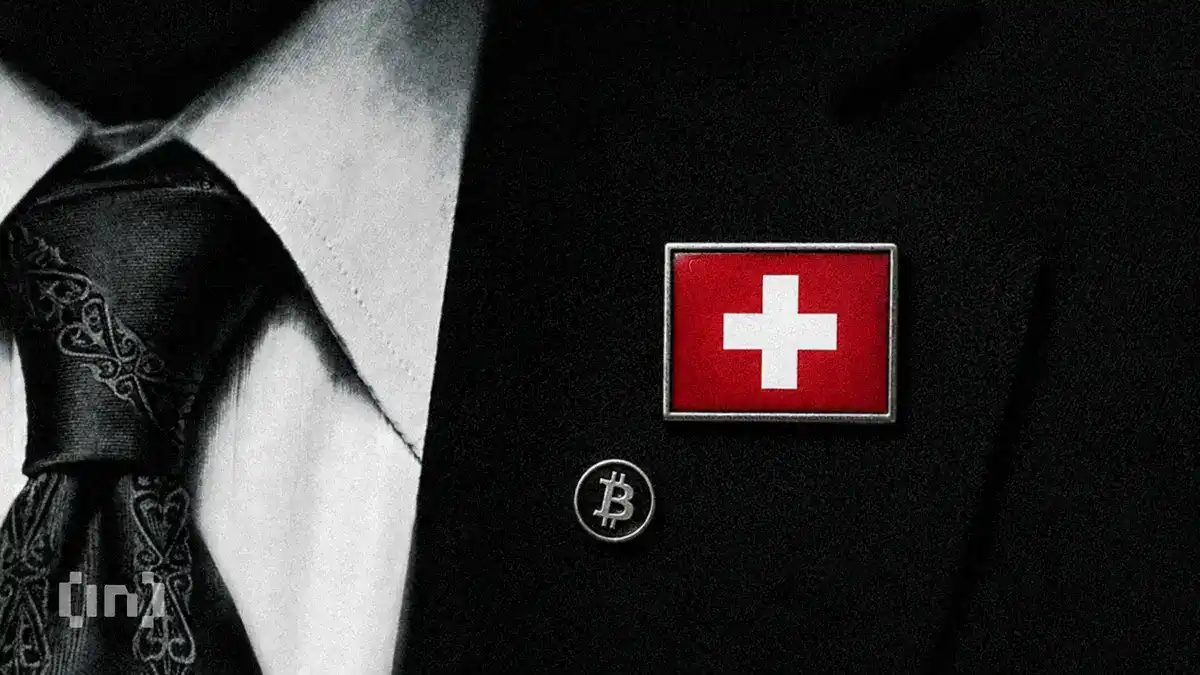
UBS Enters the Fray, 20 Swiss Banks Now Offer Crypto Trading, Covering 2.5 Million Accounts

Global wealth management giant UBS has entered the cryptocurrency market, offering Bitcoin and Ethereum trading to select private banking clients in Switzerland as of January 2026. This move is part of a broader trend in Switzerland, where approximately 20 banks now provide crypto services, collectively covering over 2.5 million accounts. Client data from Zurich Cantonal Bank (ZKB) challenges the stereotype of crypto being solely for the young, revealing that the average buyer is aged 30-50 and predominantly male. Notably, over 40% of these clients previously held no investment portfolio, indicating crypto is activating dormant capital. The business case is proving substantial. For several Swiss banks, crypto-related activities already contribute a significant and disproportionate share of profits, with unit economics often outperforming traditional banking services. This institutional adoption in Switzerland reflects a global trend, with a recent survey showing 73% of institutional investors planning to increase crypto allocations in 2026. Switzerland's early regulatory clarity through its DLT Act and established custody infrastructure have provided a foundation for this growth. However, upcoming challenges include the implementation of the OECD's Crypto Asset Reporting Framework (CARF) in 2027 and ongoing reforms by Swiss regulator FINMA. The final shape of these regulations will be crucial in determining whether Switzerland can maintain its leading position in the global banking crypto sector.

marsbit05/13 02:40

UBS Enters the Fray, 20 Swiss Banks Now Offer Crypto Trading, Covering 2.5 Million Accounts

marsbit05/13 02:40

18-Year-Old Hacker's Boastful Discord Display Leads to Uncovering of $19 Million Theft Case

An 18-year-old hacker from the U.S., Dritan Kapllani Jr., has been exposed by on-chain investigator ZachXBT for his alleged involvement in multiple cryptocurrency social engineering attacks, with total funds stolen estimated at $19 million. The case gained attention after Dritan inadvertently revealed his involvement during a Discord voice call in April 2026, where he screen-shared his Exodus wallet containing approximately $3.68 million to show off his wealth during a "Band 4 Band" argument. Tracing this wallet address led investigators to uncover its connection to a major theft from March 14, 2026, where 185 Bitcoin (worth around $13 million at the time) was stolen. Approximately $5.3 million from that heist was funneled into Dritan’s wallet. Further analysis linked the same wallet to over $5.85 million from other social engineering attacks dating back to 2025. While Dritan has not yet been formally charged, he is identified as "Co-Conspirator 1" in recently unsealed court documents related to the 185 Bitcoin theft case. Another individual, Meme coin KOL yelotree, is also implicated for allegedly assisting with money laundering through a car rental business. Dritan, who had been living a lavish lifestyle and was previously seen as untouchable within hacking circles, turned 18 recently, making him legally accountable. His previous "immunity" has ended as law enforcement closes in.

Odaily星球日报05/13 00:45

18-Year-Old Hacker's Boastful Discord Display Leads to Uncovering of $19 Million Theft Case

Odaily星球日报05/13 00:45

活动图片