2026-05-18 Понедельник

Новостной центр - Страница 16

Получайте криптоновости и тенденции рынка в режиме реального времени с помощью Новостного центра HTX.

Wall Street Bets Big on RWA: BlackRock, Franklin Templeton, Morgan Stanley Are Moving Financial Markets On-Chain

Wall Street is fully embracing Real World Assets (RWA), with giants like BlackRock, Franklin Templeton, and JPMorgan Chase actively moving traditional financial markets onto the blockchain. The global RWA market has now surpassed $30 billion. BlackRock continues to expand its tokenization efforts, recently filing a new structure with the SEC that integrates blockchain-based fund shares directly into the regulated U.S. fund registry system, bridging the gap between on-chain and traditional finance. Its BUIDL fund, launched with Securitize, has grown to approximately $2.3 billion in assets. Franklin Templeton has partnered with Kraken's parent company to explore tokenizing traditional financial products, including stocks and yield-generating instruments. This shift highlights traditional finance's growing acceptance of blockchain as a core component of the future financial system, not just a niche market. JPMorgan Chase is advancing its on-chain dollar liquidity system by filing for a second tokenized money market fund (JLTXX) on Ethereum. This move aims to create a complete on-chain USD ecosystem where digital dollars can earn yield, moving beyond simple stablecoin payments. The trend signals a broader shift in crypto from speculative assets to building new financial infrastructure. RWA tokenization is enhancing efficiency through real-time settlement, transparency, and 24/7 global markets, positioning blockchain for a foundational role in the future of global finance.

marsbit05/14 02:51

Wall Street Bets Big on RWA: BlackRock, Franklin Templeton, Morgan Stanley Are Moving Financial Markets On-Chain

marsbit05/14 02:51

Introducing a 'Paid Subscription' in the Chinese Market, What's Doubao Thinking?

Chinese AI assistant "Doubao" (from ByteDance) has announced it will launch a paid subscription service alongside its free version, with plans priced at 68, 200, and 500 yuan per month. This move follows its achievement of over 345 million monthly active users and 1.8 billion daily interactions. The paid tiers aim to serve professional users with advanced features for complex tasks like PPT generation and data analysis, while basic functions remain free. The timing is strategic: user growth from free services is plateauing, and the market is now more receptive to paying for high-value AI tools. ByteDance leverages its technical edge in model efficiency and cost control to support this shift. However, significant challenges remain. The Chinese market is characterized by low long-term subscription loyalty, with users often paying only for immediate needs. Doubao's premium features face competition from free alternatives offered by rivals. Furthermore, the core business model of AI subscriptions struggles with scalability—more paying users mean higher compute costs, potentially creating a cycle where revenue fails to cover expenses. Intense price competition from rivals could also force difficult choices between maintaining premium pricing or engaging in a race to the bottom. In summary, while Doubao's massive user base ensures short-term subscription uptake, its long-term success depends on creating uniquely valuable, "sticky" services within ByteDance's ecosystem and solving the fundamental industry dilemmas of low renewal rates and unsustainable cost structures. The outcome will serve as a critical test case for the viability of premium C-end AI subscriptions in China.

marsbit05/14 02:50

Introducing a 'Paid Subscription' in the Chinese Market, What's Doubao Thinking?

marsbit05/14 02:50

EASY Residency Season 3 Graduation List Released: Which Tracks is YZi Lab Focusing On?

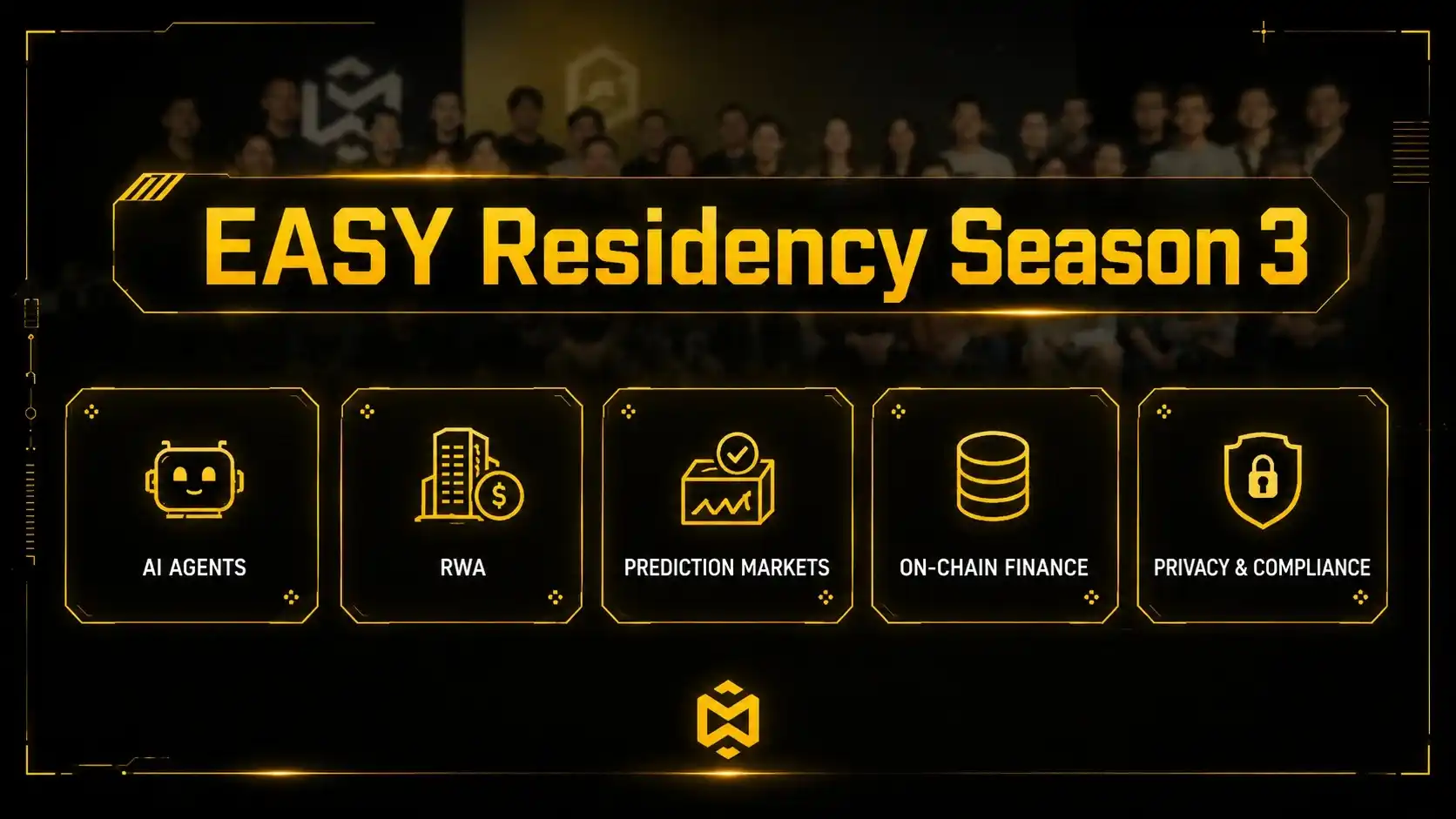
YZi Labs has announced the 25 graduating projects from the third season of its flagship incubation program, EASY Residency. This cohort is focused on key Web3 sectors including the reconstruction of on-chain financial market structures, AI agents, tokenized real-world assets (RWA), prediction markets, and privacy/compliance infrastructure. The selected projects span a wide range of applications. In the AI and infrastructure domain, Bank of AI provides identity and payment infrastructure for AI agents on BNB Chain, while Cournot focuses on making AI probabilistic outputs verifiable. Functor addresses self-custody authorization for AI agent workflows. For decentralized finance (DeFi) and trading, several projects aim to enhance liquidity and user experience. LunarBase offers CEX-level on-chain liquidity, Möbius is building a unified margin layer, and Nemesis is a permissionless margin trading protocol. Others like LayerV and Vibe.fun are working on structured products and exotic derivatives. The RWA and asset tokenization category includes Renaiss, which provides liquidity infrastructure for physical collectibles, and Openstocks, a platform for tokenized private market exposure. Prediction markets and novel financial primitives are represented by Polysights (automation infrastructure for prediction markets) and PokerFi (an on-chain poker skill-games options market). Privacy and compliance are addressed by projects like 0xBow.io, which offers compliance-oriented privacy infrastructure, and SilentSwap, a cross-chain privacy swap protocol. The list also features projects targeting specific niches or improving core processes, such as Isaac, a non-interest stablecoin neobank for the Muslim market, Brief Tech, an AI-powered legal evidence indexing tool, and Flap, a programmable token launch infrastructure. Overall, this cohort reflects YZi Labs' investment thesis in foundational infrastructure layers, AI integration, sophisticated DeFi products, and real-world asset tokenization, aiming to advance the usability and capability of the on-chain ecosystem.

marsbit05/14 02:09

EASY Residency Season 3 Graduation List Released: Which Tracks is YZi Lab Focusing On?

marsbit05/14 02:09

EASY Residency Season 3 Graduation List Announced: Which Sectors is YZi Lab Eyeing?

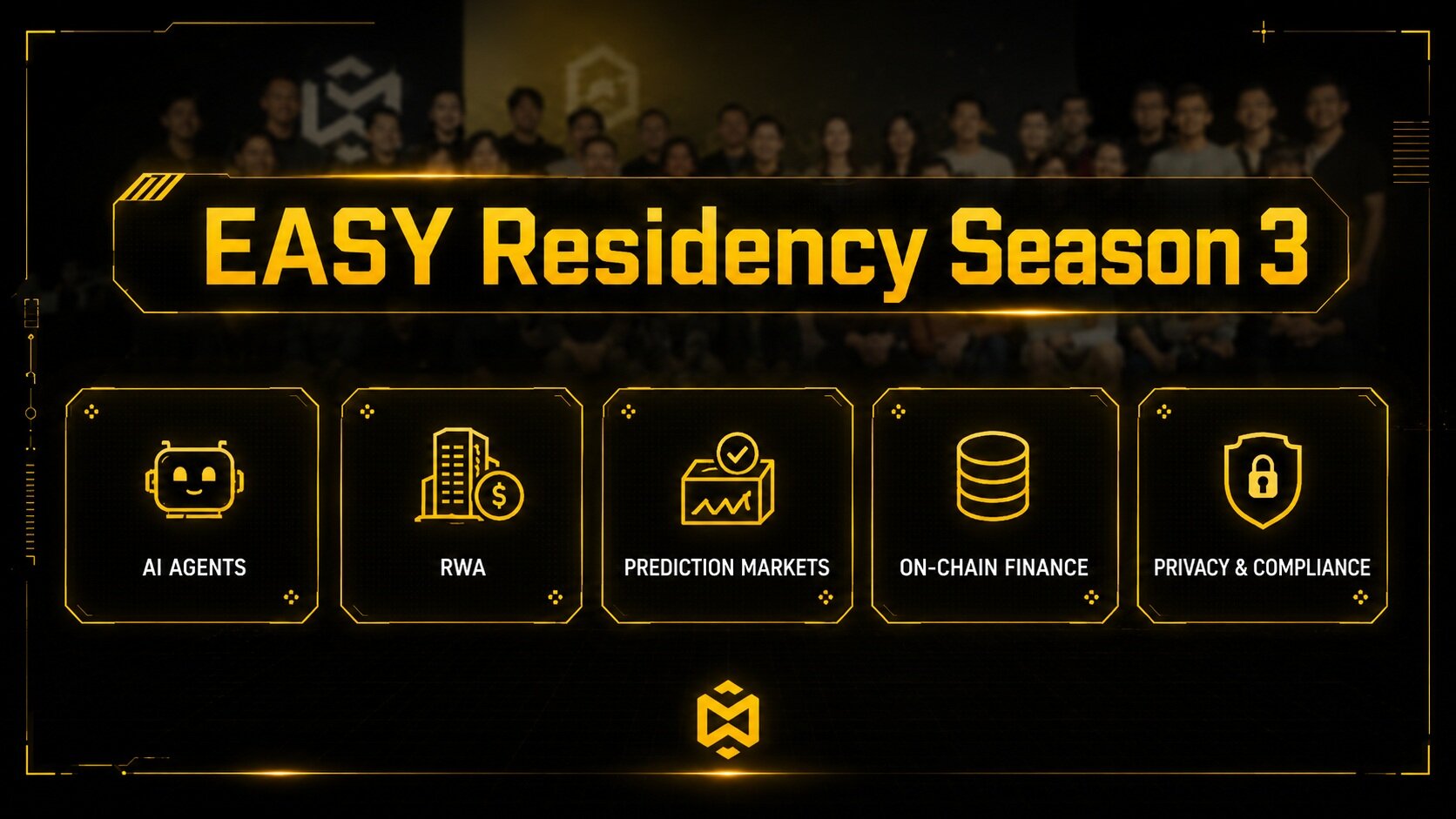
YZi Labs has announced the 25 projects graduating from the third season of its flagship incubation program, EASY Residency. The cohort focuses on key areas such as rebuilding on-chain financial market structures, AI agents, tokenized real-world assets (RWA), prediction markets, and privacy/compliance infrastructure. Notable projects include: Bank of AI, building AI Agent identity and payment infrastructure for BNB Chain; Cournot, creating a verifiable reasoning platform for AI probability outputs; and LunarBase, a liquidity platform aiming for CEX-like execution quality on Base and BNB Chain. Other highlights are: Flap, a programmable token launch infrastructure; GEMINT, a marketplace for collectibles and IP assets; and Renaiss, providing liquidity infrastructure for physical collectibles as RWAs. In DeFi, projects like Möbius (unified margin layer), TermMax (fixed-rate lending), and LayerV (on-chain options) aim to enhance sophistication and capital efficiency. Several projects tackle AI automation, such as Newsliquid (automating news-based trading) and Taco AI (AI agent trading). Privacy and compliance are addressed by 0xBow.io (privacy infrastructure with compliance proofs) and SilentSwap (private cross-chain swaps). The selection reflects YZi Labs' focus on foundational infrastructure across AI, DeFi, tokenization, and next-generation financial primitives, supporting early-stage projects that aim to advance these critical sectors.

Odaily星球日报05/14 02:02

EASY Residency Season 3 Graduation List Announced: Which Sectors is YZi Lab Eyeing?

Odaily星球日报05/14 02:02

AI Agents Can Be Verified, But Who Protects Their Privacy?

As AI Agents evolve from automated tools into active participants in on-chain economies, a critical challenge emerges: establishing trust while preserving privacy. While standards like ERC-8004 aim to provide verifiable identity and reputation for agents, their public nature could expose sensitive operational strategies, user preferences, and business relationships in fields like DeFi, governance, and prediction markets. The proposed ACTA (Anonymous Credentials for Trustless Agents) framework addresses this by adding a privacy layer. It allows agents to cryptographically prove they meet certain criteria (e.g., having passed an audit or possessing sufficient reputation) without revealing the underlying sensitive data, using zero-knowledge proofs. This shifts trust from "public identity" to "policy-based proof." This shift is crucial because agents act dynamically on behalf of users, making their behavior a potential proxy for user intent. ACTA would enable verification of an agent's legitimacy or authorization without creating a permanent, public map of all its activities and relationships. ACTA remains a research direction with open challenges, including scalability, decentralization of credential issuers, and implementation costs. However, it highlights a fundamental need: a robust Agent economy requires not just mechanisms for verification, but also for protecting the privacy of agents, their users, and the protocols they interact with.

marsbit05/14 01:27

AI Agents Can Be Verified, But Who Protects Their Privacy?

marsbit05/14 01:27

Suzerain State: Anthropic

Anthropic, a five-year-old AI lab dubbed a "suzerain," has rapidly gained unprecedented influence by securing massive financial and computational commitments from tech giants, positioning itself at the center of AI infrastructure power dynamics. In May 2026, it announced securing over 300 MW of computing power from SpaceX's Colossus 1 data center, on top of earlier multi-billion dollar deals with Amazon and Google, effectively locking in over 20 GW of future compute. These investments are tied to reciprocal spending commitments on the investors' cloud platforms, resembling infrastructure pre-sales. This "suzerain" status is fueled by explosive growth. By May 2026, Anthropic's annualized revenue reportedly surged to over $44 billion, with Claude surpassing OpenAI in LLM market share. Its high-revenue-per-user efficiency and flagship product Claude Code have secured a strong enterprise foothold. However, its pre-IPO status faces scrutiny. OpenAI challenged Anthropic's accounting, alleging its reported revenue includes gross payments shared with cloud partners, unlike OpenAI's net revenue reporting. The resolution of this debate is critical as both companies approach public listings. Currently, Anthropic holds unique leverage as the only top-tier model available across AWS, Google Cloud, and Microsoft Azure, inverting traditional vendor-customer dynamics. Yet, its suzerainty is considered a time-limited game, dependent on converting its current advantages into sustainable, audited profitability and navigating the complex web of strategic dependencies with its powerful patrons.

marsbit05/14 00:41

Suzerain State: Anthropic

marsbit05/14 00:41

Tian Yuandong Announces Startup Venture After Leaving Meta

After leaving Meta, Tian Yuan Dong has announced his new venture. The startup Recursive_SI has officially launched with a list of founders including Tian Yuan Dong. The founding team also comprises Richard Socher (CEO), Tim Rocktäschel, Jeff Clune, Tim Shi, Caiming Xiong, and Alexey Dosovitskiy, among others. These members have experience building AI research labs at companies like Salesforce and Uber, and have held leadership roles at OpenAI, DeepMind, Google Brain, and Meta. Recursive_SI aims to develop artificial intelligence capable of conducting experiments autonomously and safely improving itself through an open-ended, automated scientific discovery process. This is seen as a promising path toward superintelligence. The company has raised $650 million at a valuation of $4.65 billion, led by GV (Google Ventures) and Greycroft, with significant investments from AMD Ventures and NVIDIA. The team has grown to over 25 members, including new additions like Zhuge Mingchen. Zhuge, a Founding Member, holds a Ph.D. in Computer Science from KAUST under Professor Jürgen Schmidhuber. His research focuses on Coding Agents, Recursive Self-Improvement (RSI), and next-generation machine paradigms, with contributions including early RSI systems like GPTSwarm and work on agentic AI frameworks. The founders shared their vision on X: building AI that can automatically discover knowledge and recursively self-improve, fundamentally changing the way science and technology advance. The team is recognized as a leader in core areas of recursive self-improving AI, with past breakthroughs in open-ended algorithms, AI-generated algorithms, automated testing, world models, Vision Transformers, RAG, and AI scientists. There is high anticipation for Recursive_SI's future research.

marsbit05/14 00:26

Tian Yuandong Announces Startup Venture After Leaving Meta

marsbit05/14 00:26

活动图片