2026-05-17 Domingo

Centro de Notícias - Página 5

Obtém notícias cripto em tempo real e tendências de mercado com o Centro de Notícias da HTX.

Cross-Border Payment Giant Wise Lands on NASDAQ

Fintech company Wise has successfully listed its A-class shares on the Nasdaq stock exchange under the ticker "WSE," while maintaining its secondary listing on the London Stock Exchange. This move, more of a primary listing transfer to the US than a traditional IPO, reflects Wise's strategic shift to be closer to a key growth market, attract a broader investor base, and support its business evolution. Founded in London by two Estonians to solve personal pain points with costly and opaque international bank transfers, Wise initially grew as TransferWise by offering faster, cheaper, and more transparent currency exchange and cross-border payments. It has since expanded beyond a simple transfer tool into a comprehensive global financial services platform, offering multi-currency accounts, business services, debit cards, and the Wise Platform, which provides its infrastructure to banks and other institutions. Wise's latest fiscal year data highlights its scale: $243 billion in cross-border transaction volume, $39 billion in customer balances, and nearly 19 million customers. The company continues to emphasize its low average fee of 0.52% and fast transaction speeds, with 75% of payments arriving within 20 seconds. The Nasdaq listing aligns with Wise's ambitions in the US market, where it aims to grow its consumer and business user base and, critically, deepen partnerships with American banks through Wise Platform. To further strengthen its US operations, Wise is reportedly seeking a national trust bank charter and a Federal Reserve master account to gain more direct control over USD payment flows. The transition also involved corporate governance discussions, as the move was approved alongside an extension of its dual-class share structure, which grants founders enhanced voting rights. In summary, Wise's Nasdaq debut marks its transition from a disruptive money transfer startup into a major global payments network player. Its future growth will be tested on its ability to scale its platform business, execute its US strategy, and maintain profitability and governance standards under the scrutiny of public markets.

marsbitOntem 01:18

Cross-Border Payment Giant Wise Lands on NASDAQ

marsbitOntem 01:18

Cross-Border Payments Giant Wise Lists on NASDAQ

Cross-border payment giant Wise has successfully transitioned its primary listing to Nasdaq (ticker: WSE), retaining a secondary listing in London. Starting trading on May 11, 2026, the company opened at $15.40, up approximately 6.21%. With a market valuation around $15.5 billion, this move signifies Wise's evolution from a low-cost international money transfer tool into a comprehensive global financial services platform. Founded by Taavet Hinrikus and Kristo Käärmann to solve personal frustrations with expensive and opaque bank fees, Wise (formerly TransferWise) pioneered transparent, low-cost foreign exchange and transfers. For its fiscal year ending March 31, 2026, Wise reported $243 billion in cross-border transaction volume, $39 billion in customer balances, $1.9 billion in transaction revenue, and $2.5 billion in net revenue, serving nearly 19 million personal and business customers. The strategic shift to a US primary listing aims to deepen investor reach, enhance liquidity, and align with the United States as a critical growth market. It supports Wise's broader business narrative, which now encompasses multi-currency accounts, business solutions, debit cards, and especially its B2B offering, Wise Platform. This platform allows banks and financial institutions like Itaú and Nubank to integrate Wise's payment infrastructure, with a long-term goal for it to drive over 50% of cross-border volume. Concurrently, Wise is strengthening its US operational capabilities, including applying for a national trust bank charter and a Federal Reserve master account to gain greater control over USD payment flows. While Wise facilitates payments into China via partners like Alipay, outbound RMB services rely on collaboration with licensed local payment institutions, adhering to regional regulations. The listing process included a controversial proposal to extend a dual-class share structure, highlighting governance challenges as the company balances founder influence with public market accountability. Moving forward, Wise must demonstrate to US investors that its low-fee model is sustainable and scalable, that Wise Platform can drive significant growth, and that its global compliance and network infrastructure can support its ambition to become an integral part of the worldwide money movement landscape.

链捕手Ontem 01:15
Cross-Border Payments Giant Wise Lists on NASDAQ

链捕手Ontem 01:15

Sam Altman in Conversation with Stripe CEO: The Era Where Ideas Are More Valuable Than Code Has Arrived!

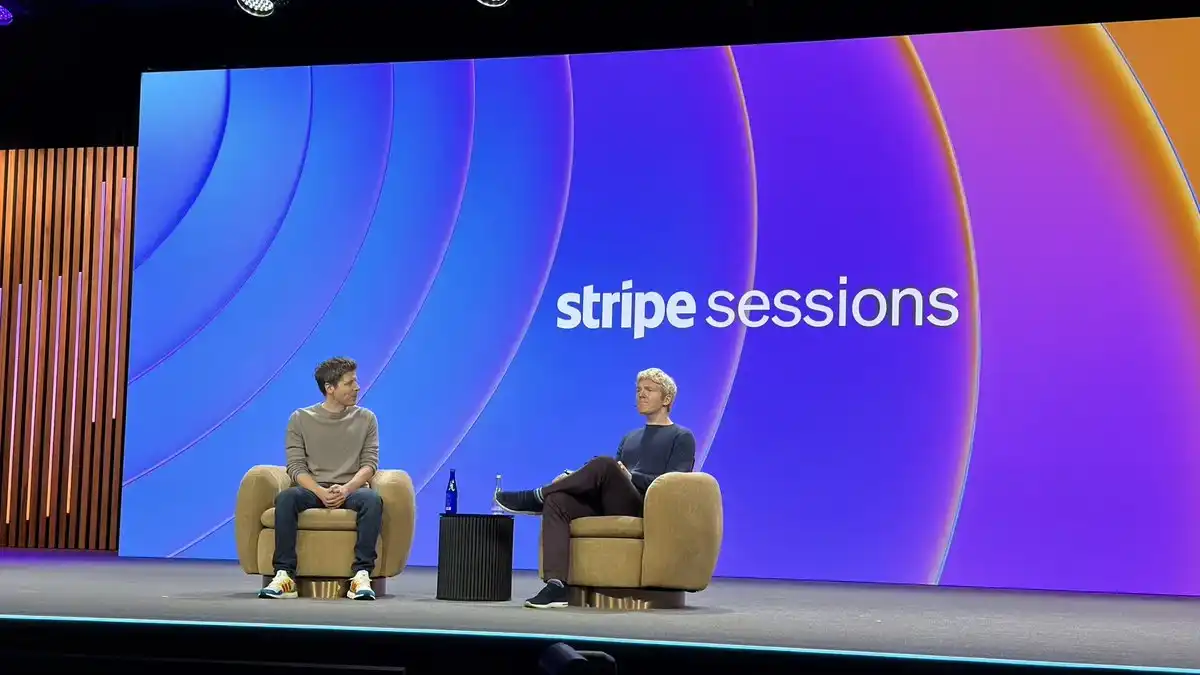
At Stripe's 2026 annual conference, OpenAI CEO Sam Altman joined Stripe CEO Patrick Collison for a fireside chat. Altman shared key insights on the AI revolution, emphasizing that we are in a period of rapid takeoff, with AI capabilities advancing weekly. He outlined OpenAI's evolution from a research lab to a product company and now a large-scale "token factory" – a low-margin, utility-like provider of intelligence. Altman stressed that the most successful AI adopters have CEOs who personally automate workflows, driving organizational change. A significant shift is the rise of the "idea person." Altman now actively invests in founders with deep product insight but no coding skills, as AI tools enable them to build. He advocates for "suspension of disbelief" in investing, planning long-term (e.g., 20-year infrastructure deals) while focusing on a clear 2-year product roadmap. Beyond products, Altman is most excited about AI accelerating scientific discovery, shortening decade-long research cycles in complex diseases and driving breakthroughs in materials science and energy. He predicts the first profitable fusion reactor could emerge within five years, spurred by AI's compute demands. Finally, Altman defended OpenAI's philosophy of iterative public deployment over elite control, believing democratizing AI access is crucial to avoid centralized power and unlock global innovation.

marsbitOntem 13:52

Sam Altman in Conversation with Stripe CEO: The Era Where Ideas Are More Valuable Than Code Has Arrived!

marsbitOntem 13:52

活动图片