# Policy Articles associés

Le Centre d'actualités HTX fournit les derniers articles et analyses approfondies sur "Policy", couvrant les tendances du marché, les mises à jour des projets, les développements technologiques et les politiques réglementaires dans l'industrie crypto.

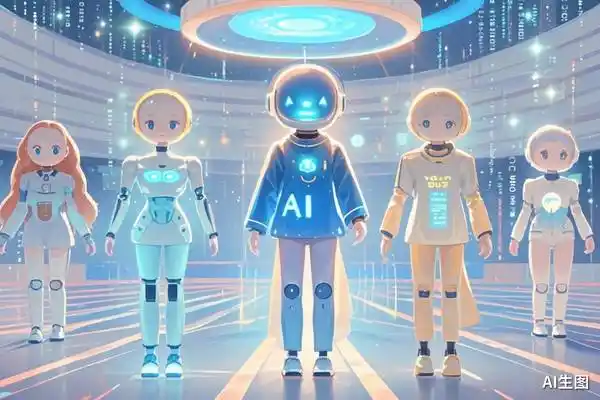
2026 New Policy Interpretation: The "Mutual Pursuit" of Intelligent Agents and AI Terminals, and the Three Major Value Reconstructions in the AIoT Industry

In May 2026, China's national ministries released two pivotal policy documents that jointly establish a strategic "dual-track" framework for the AIoT industry. The "Intelligent Agent Standardized Application and Innovation Development Implementation Opinions" defines the "soul"—positioning intelligent agents as core AI products. The "Artificial Intelligence Terminal Intelligence Grading" national standard defines the "body"—establishing a four-tier capability ladder (L1 to L4) for AI hardware. This synchronized policy approach is globally unique, moving beyond market-led (US) or risk-focused (EU) models. It frames AIoT as a new type of "intelligent infrastructure," comparable to electricity or the internet in historical significance. The core analysis identifies a value evolution from IoT 1.0 (connection) to AIoT 4.0 (collaboration, represented by the forward-looking L4 level). This "L4" signifies a paradigm shift: from users operating tools to delegating tasks to agent-like devices ("Intelligent Action of All Things"). The article outlines three strategic paths for companies: becoming Standard Definers, Scenario Integrators (focusing on 19 specified application areas), or Infrastructure Builders. A critical 18-24 month window is identified for strategic positioning. A "Four Levers" strategy is proposed: leveraging Standards (L-level certification), leveraging Scenarios (deep vertical focus), leveraging Open Source (for cost reduction and ecosystem influence), and leveraging Momentum (engaging in global protocol ecosystems). In conclusion, these policies are a starting gun for a decade-long industrial transformation, shifting the industry narrative from "Intelligent Connection of All Things" to "Intelligent Action of All Things," with companies needing to choose their赛道and execution strategy decisively.

marsbit05/12 11:56

2026 New Policy Interpretation: The "Mutual Pursuit" of Intelligent Agents and AI Terminals, and the Three Major Value Reconstructions in the AIoT Industry

marsbit05/12 11:56

Why Does the Term 'Year of AI Computing Power Realization' Have Pitfalls? —Understanding the Four Hurdles from Policy Signals to Actual Orders in One Article

This article critiques the phrase "The First Year of AI Computing Power Cashing In," arguing it oversimplifies a complex, multi-stage process. It proposes a "Four Gates" framework to assess the true commercialization of domestic AI computing power (like Huawei's Ascend chips): 1. **Policy Procurement:** Widely open in 2026. Significant government funding and large bulk orders from tech giants like Alibaba and Tencent exist. However, purchasing hardware is not the same as deploying it for real use. 2. **Real Deployment:** A crack has opened. The key evidence is DeepSeek V4, a top-tier AI model fully migrating from NVIDIA's CUDA to domestic computing platforms. This proves the capability for real, high-level tasks, but widespread adoption beyond leading tech firms is still nascent. 3. **Mature Software Ecosystem:** A narrow crack has opened. While frameworks like Huawei's CANN are progressing, they lag far behind NVIDIA's vast, established CUDA ecosystem in terms of supported models and developer ease-of-use. Building this middle-to-downstream developer environment is estimated to need 1-2 more years. 4. **Scalable Replication:** Essentially closed. This final gate, where thousands of mid-sized enterprises across various industries can easily adopt the technology without major migration costs, is not expected before 2027-2028. The core risk is conflating these stages. While 2026 marks a real turning point in policy-driven procurement and proving technical viability (Gates 1 & 2), the phrase "cashing in" is premature for the full industry. True, large-scale value realization depends on the later, slower-to-open gates of software maturity and scalable replication to the broader market. DeepSeek V4's shift is identified as the most critical 2026 signal, changing the narrative from "can it work?" to "when will supply meet demand?"

marsbit05/08 11:34

Why Does the Term 'Year of AI Computing Power Realization' Have Pitfalls? —Understanding the Four Hurdles from Policy Signals to Actual Orders in One Article

marsbit05/08 11:34

活动图片