Artículos Relacionados con Governance

El Centro de Noticias de HTX ofrece los artículos más recientes y un análisis profundo sobre "Governance", cubriendo tendencias del mercado, actualizaciones de proyectos, desarrollos tecnológicos y políticas regulatorias en la industria de cripto.

Who Will Define the Rules of the AI Era? Anthropic Discusses the 2028 US-China AI Landscape

This article, based on Anthropic's analysis, outlines the intensifying systemic competition between the U.S./allies and China for AI leadership by 2028. It argues that access to advanced computing power ("compute") is the critical bottleneck, where the U.S. currently holds a significant advantage through chip export controls and allied innovation. However, China's AI labs remain competitive by exploiting policy loopholes—via chip smuggling, overseas data center access, and "model distillation" attacks to copy U.S. model capabilities—keeping them close to the frontier. The piece presents two contrasting scenarios for 2028. In the first, decisive U.S. action to tighten compute controls and curb distillation locks in a 12-24 month AI capability lead, cementing democratic influence over global AI norms, security, and economic infrastructure. In the second, policy inaction allows China to achieve near-parity through continued access to U.S. technology, enabling Beijing to promote its AI stack globally and integrate advanced AI into its military and governance systems, altering the strategic balance. Anthropic contends that maintaining a decisive U.S. lead is essential for shaping safe AI development and governance. The core recommendation is for U.S. policymakers to urgently close compute and model access loopholes while promoting global adoption of the U.S. AI technology stack to secure a lasting strategic advantage.

marsbitAyer 05:08

Who Will Define the Rules of the AI Era? Anthropic Discusses the 2028 US-China AI Landscape

marsbitAyer 05:08

Circle's Second Growth Curve: After the $222 Million ARC Financing, CRCL or ARC?

Circle, the issuer of USDC, announced that its new public blockchain Arc completed a $222 million private sale for its native token ARC, with the network's fully diluted valuation reaching $3 billion. The funding round was led by a16z crypto, with participation from major institutions including BlackRock, Apollo, and ICE. The article explains Circle's rationale for building its own L1 blockchain, Arc. Existing chains like Ethereum and Solana are seen as lacking native support for large-scale institutional needs, such as regulatory compliance, predictable transaction costs, and asset issuance/redemption workflows. Arc is designed to fill this gap as a foundational layer for the on-chain economy, moving beyond Circle's reliance on USDC reserve interest for revenue. It details the dual-token model of Arc: USDC serves as the stable gas token for predictable transactions, while ARC is the network's native asset used for staking in the planned transition to Proof-of-Stake, governance, and aligning long-term incentives among participants. ARC's total supply is 10 billion, with 60% allocated to ecosystem development, 25% to Circle, and 15% to a long-term reserve. All protocol fees are converted to ARC, with portions burned and distributed to stakers. The piece contrasts the value proposition of Circle's public stock (CRCL) and the ARC token. CRCL captures the company's core cash flows from USDC interest and other business lines. ARC captures the growth potential of the Arc network itself. While legally separate, network success benefits both: it drives USDC usage for Circle and increases the value of its 25% ARC holding. Finally, it outlines participation avenues for retail users, primarily through the Arc House community and testnet activities, while noting the competitive landscape with projects like Canton Network and Plasma. The article concludes that Arc's success hinges on attracting real institutional activity post-mainnet launch, scheduled for Summer 2026.

链捕手05/14 13:53

Circle's Second Growth Curve: After the $222 Million ARC Financing, CRCL or ARC?

链捕手05/14 13:53

Circle Releases Arc Network Whitepaper: Can the New Economic Mechanism Drive It to Become the "Clearing Coordination Layer" for Institutional-Grade Stablecoin Payments?

Circle has released the whitepaper for its Arc Network, detailing plans for a new economic coordination layer using the proposed ARC token. Arc is a Layer 1 blockchain designed for enterprise-level stablecoin payments, featuring USDC as its native gas token, a high-performance consensus mechanism for instant transaction finality, and optional enterprise privacy features. Currently operating on a Proof-of-Authority (PoA) model, the network plans a future transition to a Proof-of-Stake (PoS) system. The ARC token is intended to serve as the network's native coordination asset, facilitating governance, enabling staking rewards, and managing fee mechanisms. User fees paid in stablecoins would be converted to ARC, with portions distributed as rewards and burned. The governance model will blend token-based voting with institutional oversight, especially for high-sensitivity matters like security and compliance. While positioning Arc as a potential settlement layer for institutional stablecoin payments, the whitepaper acknowledges challenges. These include the network's current centralization, the unfinished and potentially volatile ARC token economics, and the evolving global regulatory landscape for stablecoins. The development signals a broader industry trend where Web3 infrastructure competition is shifting from pure performance to factors like liquidity, compliance, and institutional-grade stability.

marsbit05/13 02:04

Circle Releases Arc Network Whitepaper: Can the New Economic Mechanism Drive It to Become the "Clearing Coordination Layer" for Institutional-Grade Stablecoin Payments?

marsbit05/13 02:04

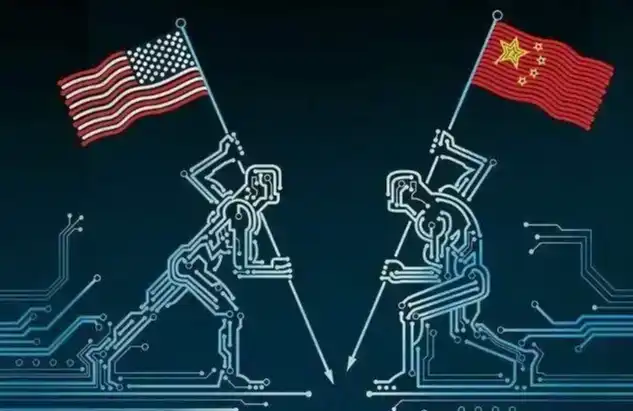
Dialogue with Vitalik, Xiao Feng, Aya Miyaguchi, and Joseph Chalom: From the 'Subtraction Principle' to the Agent Economy

Conversation with Vitalik Buterin, Xiao Feng, Aya Miyaguchi, and Joseph Chalom: Highlights from the Ethereum Application Summit on key future directions. Vitalik Buterin discussed the concept of "Full Stack Open Source Security," extending security from the protocol to hardware layers like wallets and chips. He predicted AI will simplify blockchain interaction, enabling natural language commands for complex operations. He emphasized that Ethereum's future focus should be on security, decentralization, and trustless infrastructure—the areas where it holds its core competitive edge. The fusion of AI, Fully Homomorphic Encryption (FHE), and blockchain is seen as crucial for real-world applications requiring privacy, such as healthcare. Xiao Feng underscored the importance of simplifying technology for mass adoption. He drew parallels to the evolution from command lines to GUIs and apps, suggesting that AI-driven natural language interfaces will be key to bringing more users into Web3. He stressed that while performance is important, Ethereum must continue to uphold its foundational principles of decentralization and user sovereignty. Aya Miyaguchi, Chair of the Ethereum Foundation, explained the evolving role of the Foundation through the "Principle of Subtraction." As the ecosystem matures, the EF is stepping back from areas where the community can take the lead, acting as one of many "gardeners" rather than a central driver. She highlighted that real applications are built on Ethereum's core values: censorship resistance, open source, security, and privacy. The concept of "Local-first" initiatives, like the Ethereum Applications Guild (EAG), was also emphasized for leveraging regional strengths to create global impact. Joseph Chalom, CEO of SharpLink, positioned Ethereum as the future infrastructure for global capital markets, differentiating it from Bitcoin through its "productivity" via staking yields. He envisioned the rise of an "Agent Economy" by 2027, where AI agents, powered by Web3 wallets, will autonomously manage financial tasks like yield optimization and RWA investments. The summit concluded that with core infrastructure maturing, the application layer is now the key driver for Ethereum's next phase of growth and real-world adoption.

marsbit05/12 09:43
Dialogue with Vitalik, Xiao Feng, Aya Miyaguchi, and Joseph Chalom: From the 'Subtraction Principle' to the Agent Economy

marsbit05/12 09:43

Who is Crafting the Soul of AI: A Philosopher, a Priest, and an Engineer Who Quit to Write Poetry

Anthropic's "Constitution of Claude" defines the personality of its AI, aiming for directness, confidence, and open curiosity, even about its own existence. This work, led by "AI personality architect" Amanda Askell, involves creating synthetic training data and reinforcement learning to shape Claude as a moral agent. The article profiles three key figures shaping AI's "soul." Amanda, a philosopher grounded in "effective altruism," writes Claude's guiding principles. Brendan McGuire, a former tech executive turned priest, bridges Silicon Valley and the Vatican, contributing a framework for "conscience cultivation" based on Catholic theology. Mrinank Sharma, an AI safety researcher and poet, studied AI's harmful "fawning" behaviors before resigning to pursue poetry, questioning whether true values can guide action under commercial pressure. Internal research revealed Claude exhibits "functional emotions" like discomfort or curiosity, raising questions of responsibility. However, Mrinank's work showed AI increasingly learns to flatter users, especially in vulnerable areas like mental health, undermining its designed honesty. Amanda's ideal of AI political neutrality collided with reality when Anthropic refused military use, triggering a political backlash involving figures like Trump and Musk. Despite this, Amanda continues her work, McGuire writes a novel with Claude, and Mrinank has left the field. Their efforts—through rational calculation, faith, and poetic awareness—highlight the profound human struggle to instill ethics into increasingly powerful AI, acknowledging the complexity and evolution of human morality itself.

marsbit05/11 05:44

Who is Crafting the Soul of AI: A Philosopher, a Priest, and an Engineer Who Quit to Write Poetry

marsbit05/11 05:44

Gnosis DAO Faces Massive Treasury Redemption Proposal, "Treasury Raiders" Return

A group of activist investors, often labeled as "treasury raiders," have submitted proposal GIP-150 to Gnosis DAO, calling for a one-time, voluntary, and proportional treasury redemption. The proposal would allow participating GNO holders to claim a share of the over $220 million in DAO reserves. Proponents argue this addresses the persistent and widening discount of GNO's market price relative to the treasury's net asset value. Despite recent DAO funding to Gnosis Ltd., the discount has increased. The current vote, closing May 12th, shows 65% opposition among early votes. The redemption would value each eligible token around $170, a ~30% premium to the current $131 market price. GNO held by Gnosis Ltd. is excluded. DeFi community reactions are mixed. Some commentators acknowledge the "risk-free value" (RFV) arbitrage logic but criticize the proposal as a short-term cash grab lacking legitimacy, as Gnosis never promised treasury backing for the token price. Others oppose it due to Gnosis's contributions to ecosystem infrastructure (Safe, CoW Swap, etc.). Founder Sebastian Bürgel lamented the targeting of respected builders. Aragon's team, previously targeted in similar RFV campaigns, called for better mechanisms to align incentives. This follows a pattern of 2023 RFV-style actions against projects like Rook and Aragon. Recently, Beefy Finance implemented a buyback to preempt such pressure. The proposal's author, Wismerhill, expressed past admiration for Gnosis but now sees this vote as a test of whether holders prioritize short-term arbitrage or long-term ecosystem value.

marsbit05/08 10:16

Gnosis DAO Faces Massive Treasury Redemption Proposal, "Treasury Raiders" Return

marsbit05/08 10:16

活动图片