# Shorting Related Articles

HTX News Center provides the latest articles and in-depth analysis on "Shorting", covering market trends, project updates, tech developments, and regulatory policies in the crypto industry.

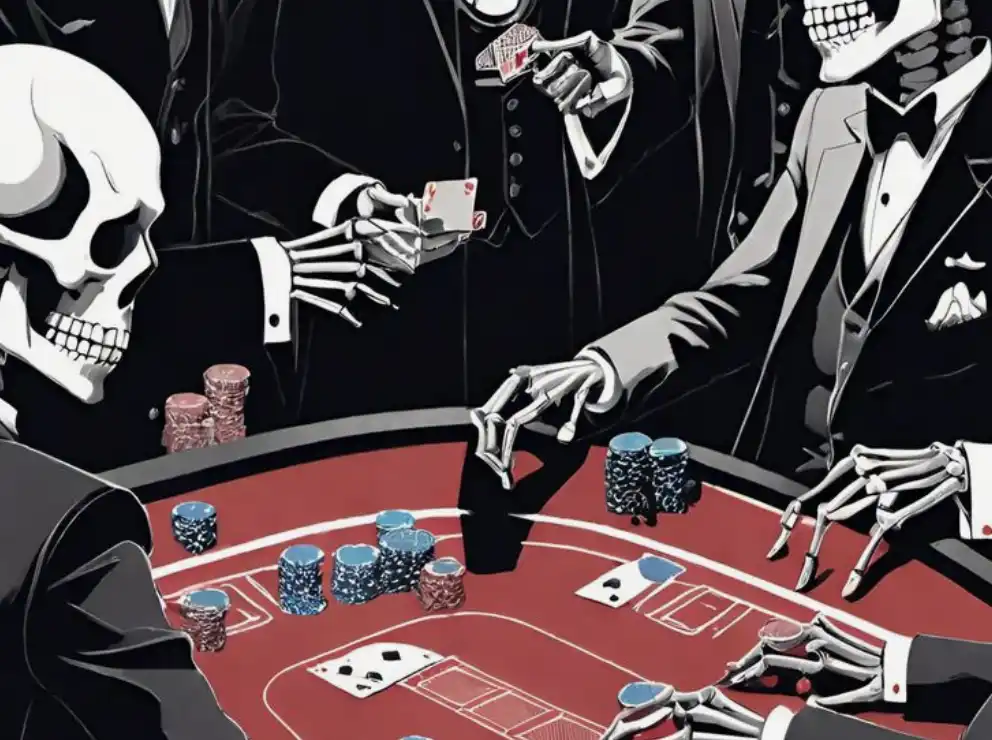
When the Bubble Comes, How to Short "Smartly"?

Title: When the Bubble Comes, How to "Smartly" Short? Author: Campbell (Macro Analyst) Summary: Amid the heated debate over whether the current AI-driven market is in a bubble, analysts are divided. While some, like Dan Niles and Paul Tudor Jones, argue that the AI boom has further to run, Michael Burry warns of similarities to the dot-com bubble. The author explores practical strategies for navigating and potentially shorting a bubble without being crushed by its momentum. Key challenges in shorting a bubble include the exponential risk from parabolic price increases and the high cost of options due to extreme volatility. Instead of directly shorting the bubbly asset, the author proposes three approaches: 1. **Find the "Wedge"**: Identify external factors that could pop the bubble, such as rising interest rates. By betting on trends that could undermine the bubble (e.g., inflation or higher rates), investors can hedge without timing the bubble's collapse. 2. **Short the "Victims"**: Target assets adjacent to the bubble that are highly vulnerable to its burst, such as over-leveraged companies or sectors with "negative convexity." These assets may have cheaper options and suffer disproportionately when the bubble stalls. 3. **Wait for Confirmation**: Exercise discipline and wait for clear signals of a breakdown, including deteriorating fundamentals, exhausted buying sentiment, and decisive breaks in trendlines. Only then should investors take substantial short positions. The author shares their recent actions, including shorting SPX and high-yield bonds while buying short-term put spreads, and emphasizes avoiding direct shorts on vertically rising assets. The core takeaway: Hedge, identify wedges, wait for confirmation, and only then commit heavily.

marsbit05/14 08:57

When the Bubble Comes, How to Short "Smartly"?

marsbit05/14 08:57

How Can an Average Person Identify if a Token Has a Whale Behind It in 10 Minutes?

This article argues that identifying whether a token has a "whale" (a large, controlling holder) is the wrong question, as all successful tokens have them. The key is determining the whale's current phase: accumulation, markup (pumping), distribution (dumping), or having already exited. It provides a framework using on-chain and off-chain signals to identify these phases. Key on-chain metrics include: analyzing linked wallets to find true concentration, not just top holders; checking if trading volume is real or fake based on volume/holder ratio; monitoring DEX liquidity pool changes; analyzing trade volume concentration and net buy volume; and comparing price action to holder growth rates to pinpoint the whale's phase. The core thesis is that whales are not a bug but a fundamental feature of the market; concentrated筹码 (chips/tokens) and capital are prerequisites for a pump. The structural disadvantage for retail is being "long-only"—entering at high prices with no safety net, making them vulnerable. The article proposes that decentralized shorting mechanisms could be a solution, allowing retail to profit from correctly identifying distribution phases and breaking the whale's monopoly on price control. However, shorting carries extreme risks like unlimited losses and being squeezed. It is framed not as a guarantee of profits but as a necessary tool for "symmetrical armament," allowing retail to participate in two-way betting and transition from being "prey" to a "hunter" on the playing field.

marsbit04/09 02:11

How Can an Average Person Identify if a Token Has a Whale Behind It in 10 Minutes?

marsbit04/09 02:11

Post-Mortem of the Venus THE Attack: How to Profit in a Fleeting Window?

Approximately two hours ago, Venus Protocol's THE token was exploited using a classic Mango Markets-style price manipulation attack. The attacker targeted THE, a low-liquidity collateral asset, by depositing it, borrowing other assets, and using those to buy more THE, artificially inflating its price. Once the time-weighted average oracle updated, the inflated price allowed further leveraged borrowing. To bypass THE's borrowing cap, the attacker performed a "donation attack" by transferring THE directly to the vTHE contract, increasing the recognized collateral value. After the first manipulation phase, THE's price stabilized around $0.50. The attacker attempted to further amplify gains by continuing to buy THE, but mounting sell pressure limited price increases and pushed their health factor near 1.0, risking liquidation. The collateral, nominally valued around $30M, had extremely low liquidity, making large-scale liquidation at inflated prices impossible. Recognizing the situation, the writer opened a short position on THE with high leverage, anticipating a price collapse due to overvaluation, illiquidity, and forced selling. After liquidation, THE price plummeted to ~$0.24, below its pre-attack level, resulting in a ~$15K profit for the writer. Venus Protocol was left with ~$2M in bad debt. The attacker likely gained little or lost funds, though may have profited from off-chain positions. The event highlights that nominal collateral value in DeFi does not equal realizable value during liquidity crises.

marsbit03/16 08:37

Post-Mortem of the Venus THE Attack: How to Profit in a Fleeting Window?

marsbit03/16 08:37

WLFI's Deletion Sparks Crash Speculation: Trust Crisis in a Bear Market

Amid a bearish market sentiment, the deletion of a tweet by Eric Trump, co-founder of World Liberty Financial (WLFI), triggered widespread speculation and panic. On February 23, Eric Trump retweeted and then deleted a post about Binance listing more USD1 trading pairs. This action led to a temporary depegging of USD1 to 0.9802 against USDT and a nearly 10% drop in WLFI’s price, though both later recovered. The incident fueled FUD (fear, uncertainty, and doubt) on social media, with rumors suggesting Eric had purged all crypto-related tweets or that internal issues plagued the Trump family. WLFI quickly responded, claiming it was a coordinated attack where hackers breached multiple co-founders’ accounts, spread panic, and attempted to profit by shorting WLFI. They later clarified that only X accounts were compromised, not WLFI or USD1 contracts. However, skepticism arose. Observers noted that only one retweet was removed—not a mass deletion—and no significant shorting activity was detected. Some linked the event to an upcoming major investigation announcement by on-chain detective ZachXBT, though market data did not strongly tie it to WLFI. Critics also questioned WLFI’s narrative, suggesting the “hack” claim might be a cover-up or misdirection. The event highlights the crypto community’s heightened sensitivity and distrust during bear markets, where minor actions can spark exaggerated reactions and conspiracy theories.

比推02/24 15:15

WLFI's Deletion Sparks Crash Speculation: Trust Crisis in a Bear Market

比推02/24 15:15

活动图片