One Article to Understand $UORE: The V4 Hook Project That Packs Mining, Lottery, and NFT Into a Single Transaction
An In-Depth Look at $UORE: The V4 Hook Project Packing Mining, Lotteries, and NFTs into a Single Transaction
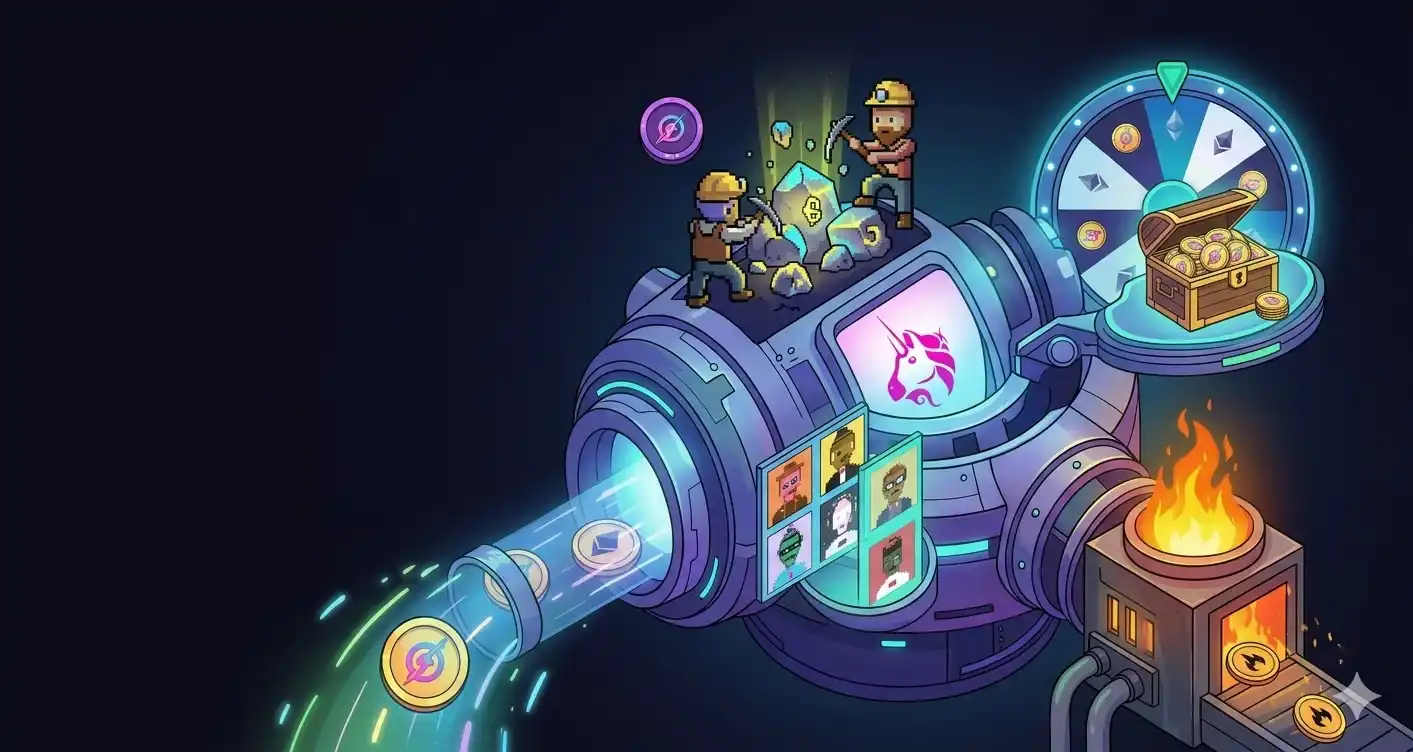
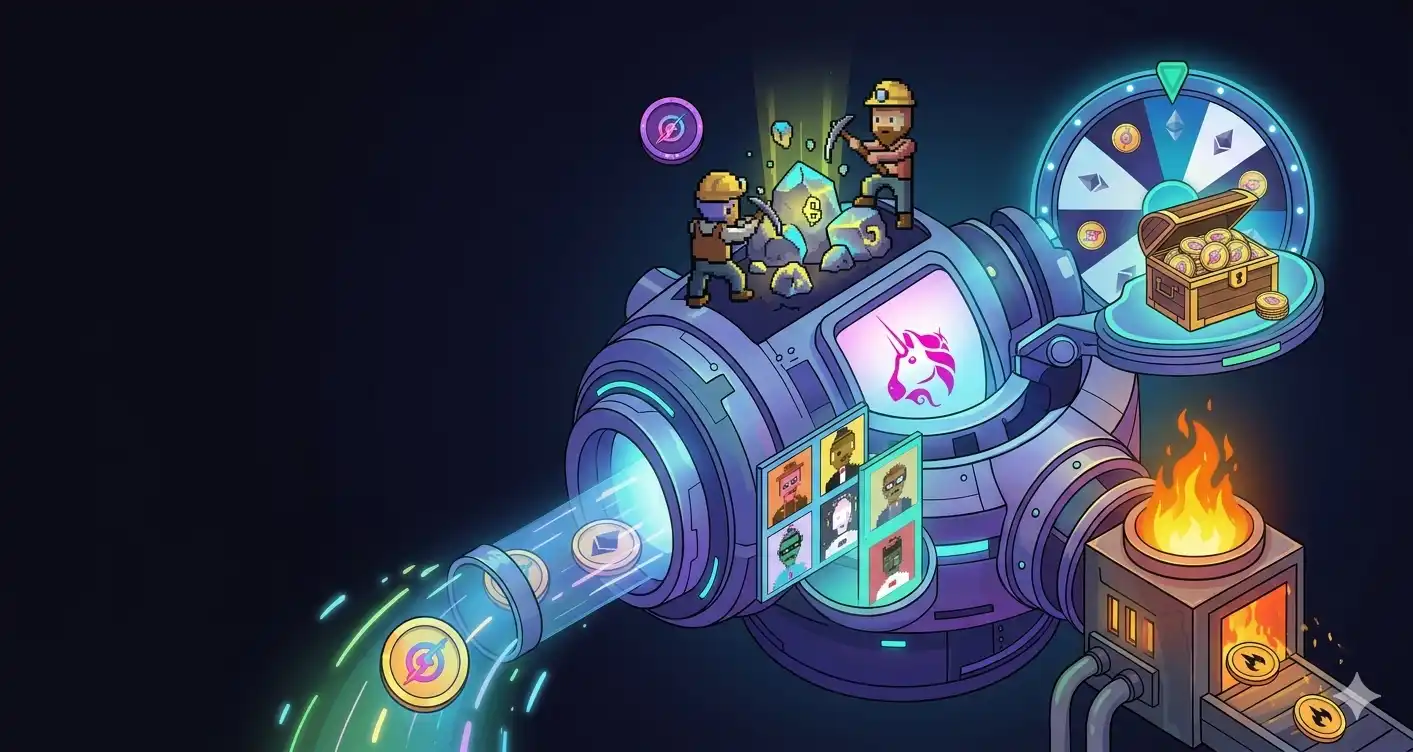
$UORE is the latest project leveraging the Uniswap V4 Hook mechanism, following in the footsteps of projects like SATO, uPEG, and Slonks. It distinguishes itself by integrating multiple functions—on-chain mining, a buy-to-enter lottery, auto-generated pixel NFTs (Orelings), and a deflationary burn mechanism—all within a single Uniswap V4 liquidity pool transaction. This complexity results in transaction gas fees that are 2-3 times higher than a standard swap.
The project's tokenomics are intricate. Each whole $UORE token held automatically mints a corresponding Oreling NFT, a 32x32 pixel miner character with random traits determined by the next block's hash. Each Oreling has a Class (rarity) and Hash value, which combine to form its Mining Power for staking rewards. Rewards are distributed daily from an emission that decays by 1% daily, with an 80/20 split between stakers and a Motherlode lottery pool. A "refined-ore boost" mechanism taxes early reward claims, redistributing 10% to remaining stakers.
The Motherlode lottery awards tickets for buys of ≥0.1 ETH, with winning chances scaling up to 1% for 1 ETH purchases. Wins split the pool 50% to the buyer and 50% to a random staker. A 1% buy tax is burned, and a 1% sell tax funds an automatic buyback-and-burn mechanism triggered at 0.1 ETH.
The project's code is a fork of uPEG, with claimed fixes for NFT duplication and flash loan attacks. Its creator, Noah, describes it as a fusion of Solana's ORE mining concept with uPEG's V4 Hook framework.
Key challenges noted include high gas costs, the narrowing attention window for V4 Hook narratives as it's the fourth such project, and significant complexity that creates a high barrier to understanding for users. The project's whitepaper notably advises users to "Read the contracts and understand the mechanics before deploying capital," underscoring its complex and fast-moving nature within a trend where the "alpha" lifespan for new projects appears to be shrinking rapidly.
marsbit05/09 02:23