Winter for Crypto IPOs: Consensys and Ledger Withdraw Applications

marsbitОпубликовано 2026-05-16Обновлено 2026-05-16

Введение

The crypto IPO window is tightening significantly in 2026, marked by prominent companies delaying or pausing their public listing plans. Following a successful 2025 "harvest year" that saw Circle, Bullish, and Gemini go public amidst a bull market, the tide has turned. Consensys, developer of MetaMask, recently postponed its IPO until at least fall 2026. Hardware wallet leader Ledger also suspended its planned US listing due to unfavorable market conditions, with Kraken having previously delayed its own plans. This shift is driven by a cooling market in 2026, characterized by a significant Bitcoin price correction, declining trading volumes, and reduced investor risk appetite for crypto stocks. The poor post-IPO performance of 2025 listings like Circle and Bullish, which saw major share price declines, has heightened investor caution. This contrasts sharply with the current AI sector, where companies like SpaceX, OpenAI, and Anthropic are commanding massive valuations and investor enthusiasm based on narratives of stable, exponential growth. Crypto companies now face pressure to transition from hype-driven models to demonstrating reliable cash flows and robust compliance. While the paused IPO plans may lead to valuation resets and affect ecosystem liquidity, they also accelerate industry consolidation toward stronger, more compliant infrastructure players. A potential recovery in Bitcoin's price and clearer regulations could reopen the IPO window in the latter half of 2026.

Author: Ma Ke, Foresight News

On May 14th, Consensys, the developer of MetaMask wallet, temporarily postponed its IPO to at least the Fall of this year. Meanwhile, crypto hardware wallet giant Ledger also suspended its US IPO plan on May 13th. Previously, the exchange Kraken had repeatedly delayed its listing plans. This series of IPO postponements and suspensions signals a significant narrowing of the 2026 IPO window following the 2025 boom in crypto company listings.

2025 was considered a "bumper year for IPOs" in the industry: stablecoin issuer Circle successfully listed on the NYSE, and several companies including Bullish and Gemini completed their listings, initially opening an exit channel for crypto VCs. Crypto-related IPOs in 2025 raised approximately $14.6 billion, and VC deal volume soared to $19.7 billion. BTC price once surged to a record high of $126,000, institutional capital flowed in, the regulatory environment was relatively friendly, and multiple crypto stocks saw strong first-day performance.

Entering 2026, Bitcoin's price corrected significantly, trading volume declined, and investor risk appetite for crypto stocks cooled rapidly. BitGo, as the first crypto IPO of 2026, priced at $18 in January for its listing. Although it briefly rose on its debut, it subsequently fell back, once dropping to $7, and has now recovered to $11.9.

Specifically, the listing pace of several leading companies has clearly slowed. Payward, the parent company of Kraken, confidentially filed an S-1 form in November 2025, originally planning to proceed in Q1 2026 with a valuation target once aiming for $20 billion. On March 18th this year, the company paused its plans due to "difficult market conditions." Co-CEO Arjun Sethi stated that although the valuation dropped to $13.3 billion in a recent funding round, the IPO filing remains valid, awaiting the optimal window.

Arjun Sethi

Ledger's suspension was more abrupt. Known for its hardware wallets and enterprise-grade infrastructure, reports in January 2026 indicated it had hired investment banks to prepare for a US listing targeting a $4 billion valuation. Citing sources familiar with the matter, unfavorable market conditions led Ledger to decide to pause, without initiating the formal filing process. A company spokesperson declined to comment but suggested the possibility of turning to private financing to sustain growth.

Notably, just in March, Ledger appointed former Circle executive John Andrews as CFO and opened a New York office to strengthen its US business layout. This expansion shows its business strategy remains unchanged; the IPO pause is more due to external factors.

Meanwhile, MetaMask parent company Consensys also joined the wait-and-see ranks. The company had hired JPMorgan and Goldman Sachs as underwriters, originally planning to submit an S-1 form around the end of February with a target to list in 2026. However, due to market weakness, Consensys has postponed its IPO to at least this Fall.

Behind these crypto companies' IPO suspensions are, of course, the combined result of multiple factors.

The stock performance of the first wave of crypto IPOs in 2025 has intensified market caution toward the 2026 listing window.

This year, Circle's stock price has fallen from a high of $300 to below $50, Bullish dropped from $118 to below $25. Even BitGo, the first crypto IPO of 2026 opening the year, couldn't escape—after pricing at $18 and listing in January, it briefly rebounded but then fell all the way to near $7 at its lowest.

This year's performance collectively confirms that crypto-related stocks are prone to capital chasing at the tail end of a bull market but struggle to withstand valuation resets during cyclical downturns. Traditional institutional investors' required risk premium for "cycle-bound" assets has significantly increased.

In stark contrast to the "cooling-off period" for crypto IPOs, the AI sector in 2026 is in the midst of a dual boom in IPOs and fundraising.

SpaceX has begun IPO preparations, targeting a staggering valuation of $1.75 to $2 trillion, becoming one of the world's most anticipated tech listing projects.
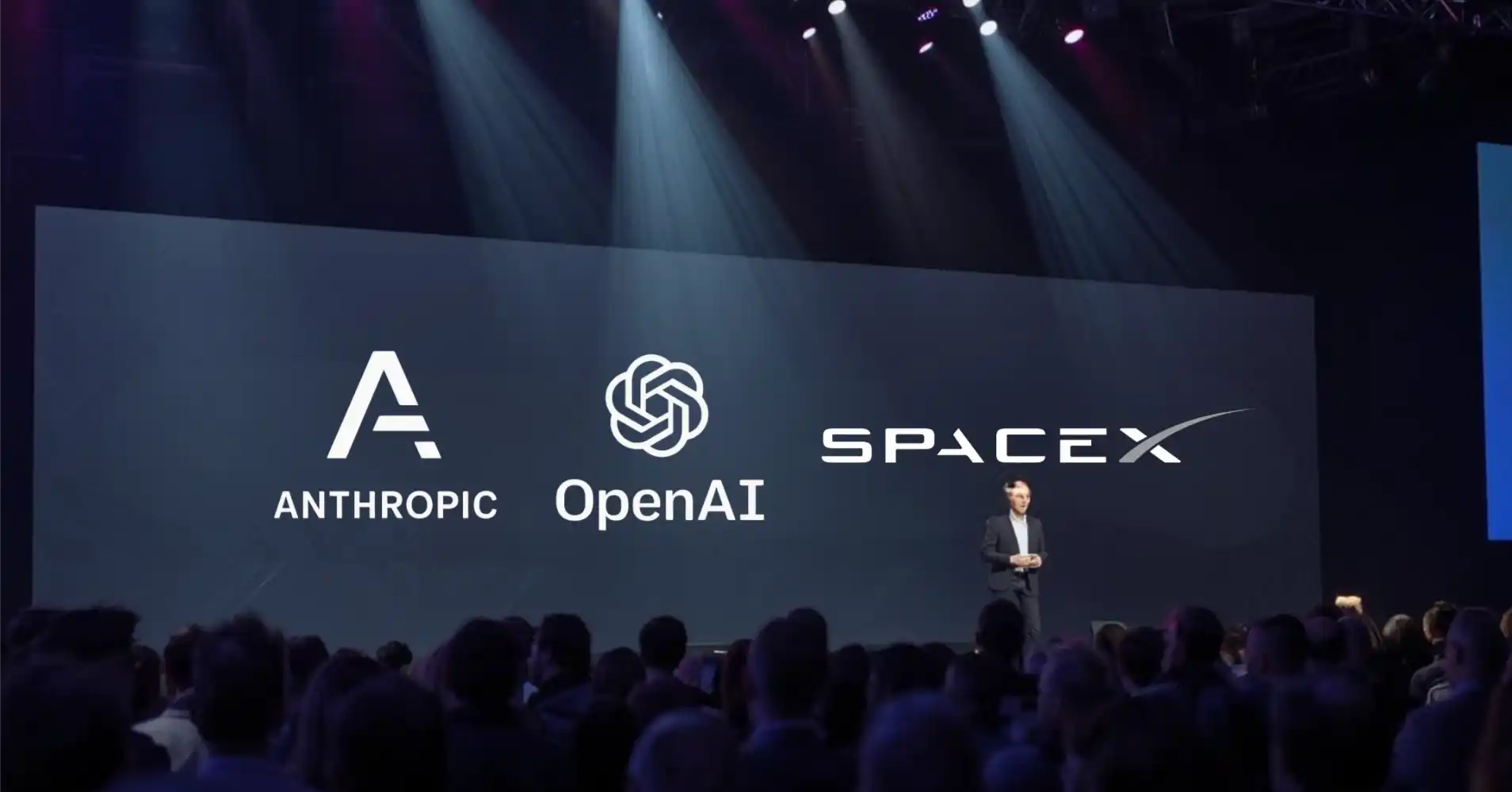
OpenAI's valuation is approaching $1 trillion and is in close communication with several investment banks regarding its listing path; Anthropic's valuation has neared $900 billion and is also actively preparing IPO materials. The AI narrative, with its promise of a "productivity revolution," has attracted a massive influx of long-term capital. Even in an environment of macro uncertainty, AI-related IPOs can garner a much higher risk appetite than crypto assets.

In comparison, crypto companies are highly dependent on Bitcoin prices and trading volumes, with stronger revenue volatility, making it difficult to offer the "exponential growth" certainty promised by AI companies. This cross-sectoral divergence between hot and cold further amplifies investor wait-and-see sentiment towards crypto IPOs, also forcing crypto companies to accelerate their transition from "storytelling" to "telling cash flow stories, telling compliance stories."

Furthermore, crypto companies are shifting towards more pragmatic strategies: although private financing has shrunk in scale, it can still provide a buffer; some companies choose to first optimize product lines, expand into stablecoins or institutional services, and wait for Bitcoin to stabilize at a higher range and for market conditions to improve before proceeding with a listing.

The implications of this phenomenon for the industry warrant deeper thought.

On one hand, it accelerates survival of the fittest. Weaker projects face increased fundraising difficulty, and resources concentrate towards companies with strong compliance and solid infrastructure, such as Ledger's institutional-grade platform and Kraken's custody business. On the other hand, it highlights the crypto industry's transition from narrative-driven to performance-driven. Companies truly capable of weathering cycles are building anti-volatility cash flows and enhancing transparency to win long-term trust. However, in the short term, the narrowing IPO window may lead to valuation resets and affect confidence and liquidity across the entire ecosystem.

Looking ahead, if Bitcoin returns to $90,000 or higher, and regulatory bills are further enacted, the second half of 2026 may usher in a second wave of IPO windows.


Связанные с этим вопросы

QWhich two major crypto companies have recently postponed or paused their IPO plans, and what is the timeline for one of them?

AConsensys, the developer of MetaMask, and Ledger, the hardware wallet giant, have both postponed or paused their IPO plans. Consensys has temporarily delayed its IPO until the earliest this fall.

QWhat was the total amount raised by crypto-related IPOs and the total VC deal volume in the year 2025, as mentioned in the article?

AIn 2025, crypto-related IPOs raised approximately $14.6 billion, and the total VC deal volume surged to $19.7 billion.

QWhat key factor is cited as contrasting with the crypto IPO 'cooling-off period' in 2026, and name one prominent example company in that sector?

AIn contrast to the crypto IPO 'cooling-off period', the AI sector is experiencing a dual climax of IPOs and financing in 2026. A prominent example is SpaceX, which has initiated IPO preparations with a target valuation of $1.75 to $2 trillion.

QAccording to the article, why are investors showing more caution towards crypto IPOs in 2026 compared to AI companies?

AInvestors are more cautious towards crypto IPOs because crypto companies are highly dependent on Bitcoin price and trading volume, resulting in stronger revenue volatility and an inability to provide the 'exponential growth' certainty promised by AI companies. AI's 'productivity revolution' narrative attracts long-term capital.

QWhat potential future developments could lead to a second wave of IPO opportunities in the second half of 2026, as per the article's outlook?

AAccording to the article's outlook, if Bitcoin returns to $90,000 or higher and regulatory legislation further materializes, the second half of 2026 could see a second wave of IPO opportunities.

Похожее

MY Group Completes Web4.0 First Stock Listing Layout, SEC Officially Discloses Form 8-K Announcement

MY Group has completed the listing layout for the "Web4.0 First Share," with the U.S. Securities and Exchange Commission (SEC) formally disclosing a Form 8-K report. According to the filing, the company's board has officially appointed Mr. Zhang Dingwen as Chief Executive Officer (CEO) and Executive Director, marking a significant upgrade in management and the entry into a new phase of its global capital market strategy. The disclosure of Form 8-K, used for reporting major corporate events, coincides with market information indicating the company is advancing several key capital market initiatives. These include a global brand system upgrade, corporate strategic restructuring, and a change of its stock ticker symbol. These moves are viewed by industry experts as signals of accelerated internationalization and enhanced global market presence. Concurrently, MY Group's proposed "Web4.0 Ecosystem" is garnering market attention. The company is integrating core capabilities across social traffic portals, global payment systems, public blockchain infrastructure, digital asset trading, and AI-powered financial systems. Analysts suggest that by closing this ecosystem loop, MY Group has the potential to become a next-generation platform merging Web2 user scale with Web3 asset frameworks and AI financial capabilities. With the management upgrade finalized, the global brand strategy launched, and the stock ticker change pending, MY Group is positioning itself as a focal point in the global technology capital market as a potential leading Web4.0 platform enterprise.

marsbit5 ч. назад

MY Group Completes Web4.0 First Stock Listing Layout, SEC Officially Discloses Form 8-K Announcement

marsbit5 ч. назад

3 People with 100 AI Programmers, Burning Through $1.3 Million a Month! OpenAI: I'll Foot the Bill

In a striking demonstration of AI-powered development, Peter Steinberger (creator of OpenClaw) shared that his three-person team spent $1.3 million in one month to run approximately 100 AI agents (primarily Codex instances). OpenAI covered the cost. The expenditure consumed 6.03 trillion tokens across 7.6 million requests. Steinberger argues that, with "fast mode" disabled, the cost falls below that of a single engineer while providing significantly greater output. This "cloud programmer army" handles core but tedious software engineering tasks: reviewing pull requests, finding security vulnerabilities, deduplicating issues, fixing bugs, monitoring benchmarks, and even generating PRs after meetings. This shifts AI's role from merely writing code to maintaining the entire collaborative fabric of a project. Steinberger's tool, CodexBar (a macOS menu bar app), tracks usage and costs across various AI coding services, highlighting how token consumption is becoming a key metric—a new "means of production." The experiment poses a profound question: if token cost ceases to be a barrier, how will software development transform? As model prices fall, the capability for small teams to leverage large numbers of AI agents could become commonplace, fundamentally altering the scale and speed of development. The future, Steinberger suggests, is arriving rapidly.

marsbit6 ч. назад

3 People with 100 AI Programmers, Burning Through $1.3 Million a Month! OpenAI: I'll Foot the Bill

marsbit6 ч. назад

Торговля

Спот
Фьючерсы
活动图片