Compiled & Translated by: Deep Tide TechFlow
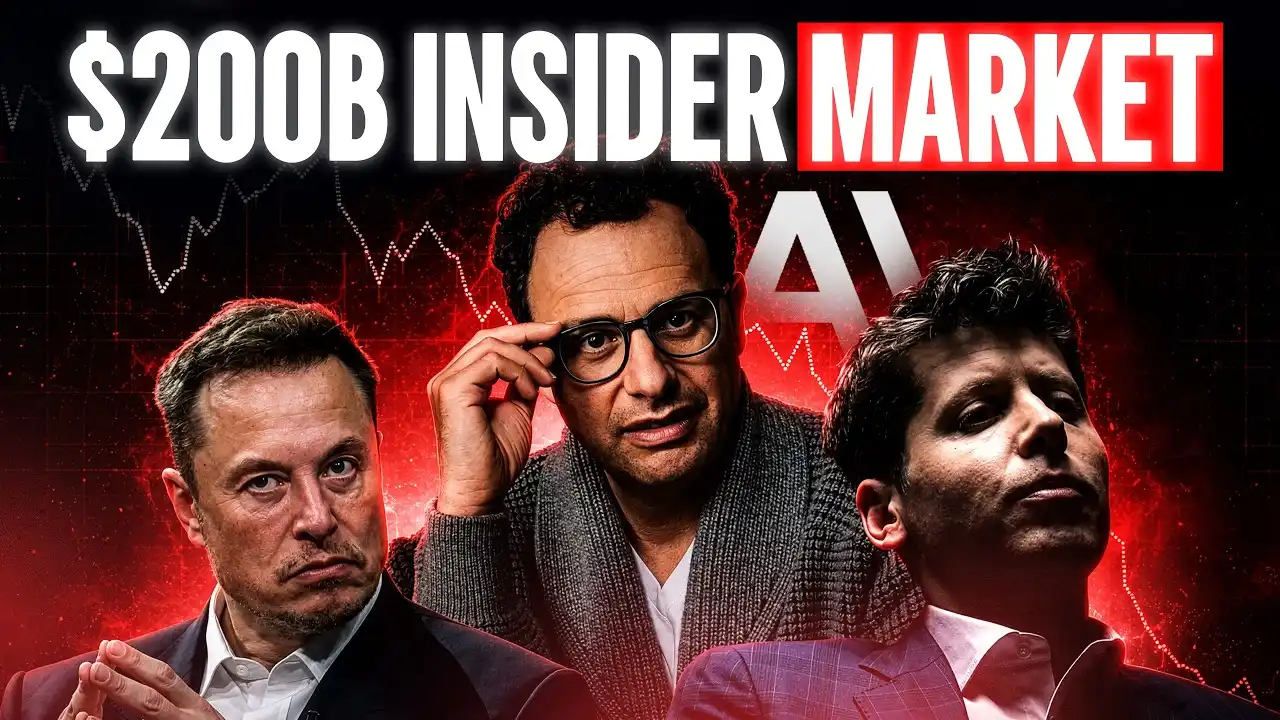
Guest: Dio Casares, Founder of Patagon
Podcast Source: Bankless
Broadcast Date: May 14, 2026
Editor's Guide
In this podcast, Patagon founder Dio Casares unveils the inside story surrounding secondary market transactions for star companies like Anthropic. Patagon is a company focused on digital asset investment and private secondary market matching. Dio Casares states that secondary transactions related to Anthropic alone (where 'secondary' here refers to a primary-like secondary market, i.e., shareholders or employees privately transferring equity to others; a detailed explanation is provided later in the text; all mentions of Anthropic's secondary transactions in this article refer to this meaning) involve hundreds of billions of dollars, with single transaction fees as high as 10%. Approximately 10%-20% of completed transactions involve fraud or counterfeit equity, and even fund professionals have earned more money from these types of trades than from their primary investment business.
Even more alarming are nested SPV (Special Purpose Vehicle) structures, 'forward contract'-type employee equity, and 'tokenized' private equity. Once Anthropic IPOs, distribution delays for multi-layer SPVs within the DTCC system, decisions by GPs at each layer on whether to hold, and potential invalidation of some equity at the company level will trigger a wave of lawsuits lasting several years.
Key Quotes
Market Structure and Arbitrage Opportunities
- "You can't just walk up to Anthropic and say, 'I want to buy $1 million worth of stock in this round.' This is a market built on internal connections."
- "Some people have shares and sell shares; some have buyer resources and sell those resources. A few people do both. That's the structure of this market."
- "Even people within funds are making more money from these secondary trades than from their main investment business, so a lot of people are moving into this market."
Market Size and Fee Structure
- "Private market financing has surpassed IPO fundraising in recent years. Secondary market transactions on record, plus financing rounds, exceed $200 billion."
- "For many Anthropic deals we see, there's a one-time 10% fee plus long-term carry. If $10 billion comes in through such channels in a round, the fees alone create a $1 billion pie."
Company-Approved vs. Unapproved Secondary Trading
- "Anthropic generally supports direct trades—company-approved, recorded on the shareholder register, then distributed through partner funds."
- "Companies particularly dislike platforms like Hive and Forge. They see a large block of shares and email tens of thousands of unverified people on their platform saying, 'I have discounted shares.' This directly disrupts Anthropic's current fundraising."
- "OpenAI and Anthropic recently offered employee tender programs, allowing employees to sell up to $30 million at the current round's valuation. This is essentially the company 'intercepting' sellers who would have otherwise gone to the gray secondary market."
Fraud and Bad Debt
- "In deals we've reviewed, about 10%-20% involve fraud. Stock certificates can be forged; it's direct fraud."
- "More common than pure fraud is someone claiming to have shares but actually doesn't, taking the money first and then trying to find the shares, often failing."
- "Under the US legal system, you're 'innocent until proven guilty.' So the issue is, if a position goes from $1 million to $50 million, and suing to get it back costs $10 million, they might just default, netting $40 million anyway."
Nested SPVs and Post-IPO Settlement Hell
- "Why are there second and third-layer SPVs? Because buyers and sellers rarely 'match perfectly.' An $8 million seller might face three buyers piecing it together."
- "Anthropic specifically named Sidecar, believing their due diligence is insufficient, basically approving anything that 'looks okay' on paper."
- "The real chaos post-IPO is this: the first-layer SPV gets the shares, which takes days to two weeks. Then it asks LPs if they want cash or stock, then passes it to the second layer, third layer... If any GP in the middle decides to hold and lock up the shares instead of distributing, everyone downstream gets stuck."
- "Post-IPO, companies largely stop pursuing problematic shares. They won't do more private rounds, so the game-theoretic incentive to maintain market order disappears."
Advice for Small Buyers
- "If you're a small buyer with $100k to $1 million in some 'tokenized version of Anthropic' or similar vehicle, most of the time you can't fully lift the lid to see the underlying assets. At most, you see the vehicle your money went into, which is usually the second or third layer."
- "I trust intuition. If your gut feeling about this position is very bad, you should get out."
The Real Mechanics of Anthropic Secondary Market Trading
Host: There are many questions about the Anthropic secondary market and the broader private market. To start, can you introduce yourself and why you have a unique perspective on the Anthropic secondary market?
Dio Casares: Patagon has two core business lines: proprietary investing and client-facing services. We've invested in secondary trades ourselves and also offer secondary trading as a product for clients, helping them find access to shares.
Host: So, as a service for clients, you go to the market to find hot secondary shares, package them, and sell them to clients.
Dio Casares: Exactly.
Host: That puts you in the front row for observing this market. Currently, the hottest pool of capital is the secondary market, especially for Anthropic, SpaceX, and OpenAI. Can you walk listeners through what's happening here? Most people have no idea.
Dio Casares: Broadly speaking, there are two types of secondary. The first is a primary-like secondary. The name itself is a bit contradictory. It means that instead of a fund investing directly, someone in the market sets up an SPV (Special Purpose Vehicle), with SPVs on top of SPVs, and then invests the money. This is actually new money for the company; the company does get the financing.
Employee stock sales also fall into this category because they are company-approved. The company got value from issuing stock to employees, and now allows them to cash out.
The second type is true secondary. You're buying shares from someone who already bought them from the company. This category has historically been more troublesome. The traditional view was that VC exits happen via IPO or M&A. But now, financing rounds are in the tens of billions, far exceeding the $10 billion companies used to raise at IPO. The liquidity timeline has completely changed. When FTX went bankrupt, a large chunk of Anthropic shares was forced to be sold, driven by the bankruptcy process.
So, a secondary market needed to be built, but it's also viewed with a lot of suspicion by management, who see it as potentially competing with their own equity sales for fundraising.
Host: So besides Anthropic's inherent appeal, two structural inputs drive this phenomenon: first, the market itself is huge, with even larger amounts of capital; second, these companies stay private longer, giving the secondary market time to mature and attract more participants.
Dio Casares: Yes, I agree.
Host: Let's first talk about the normal scenario. Anthropic knows the secondary market exists, and some of it is company-approved. How does an Anthropic-approved secondary transaction happen?
Dio Casares: A more accurate term might be the SPV market. Some people in the market simply want to buy into Anthropic. They're not in funds, have no special loyalty to the company, purely in it for profit. Anthropic is generally supportive of direct trades—company-approved, on the shareholder register, then distributed through partner funds that make money by helping the company raise capital.
Anthropic is currently doing this for its current round with several large PE (Private Equity) firms. These firms are low-profile but are indeed connecting many people to shares. They aren't on Anthropic's published 'unauthorized entities' list, so they're essentially company-approved.
The other category is what management really hates. These companies often send them cease-and-desist letters directly. Platforms like Hive and Forge. Their play is: they see a large block of shares and email hundreds of thousands of unverified people on their platform saying, 'I have discounted shares.' This directly disrupts Anthropic's current fundraising. They are in the 'scavenging' business: trying to find shares cheaper than the current secondary market price or the round's valuation.
The result is that family offices and large clients approach Anthropic saying, 'Hive/Forge says I can get a 20% discount, so why should I invest directly in this round?' This makes fundraising harder for Anthropic. Worse is the psychological aspect: a clear 'bid-ask spread' in the market often signals illiquidity, a bad signal the company wants to eliminate.
OpenAI and Anthropic recently offered employee tender programs, allowing employees to sell up to $30 million at the current round's valuation. This is essentially the company 'intercepting' sellers who would have otherwise gone to the gray secondary market. Many who wanted to sell have sold enough in the tender offer and won't sign those 'I'll buy your stock in a year' private contracts.
Host: So, Anthropic-approved trades fall into two categories: first, non-competitive ones where the company is fundraising, and money goes to the company; second, trades that improve future market structure by letting employees or ecosystem participants sell before IPO, releasing selling pressure. These are benign, positive-sum trades aligning with Anthropic's interests. The bad kind involves a bunch of middlemen 'extracting rent,' giving the company no benefit and making it look bad.
Dio Casares: Right. In the US, there's a rule for unregistered securities: a six-month holding period. So some of these 'tokenized private equity' products you see, theoretically, if someone can trade them back and forth continuously, each trade might violate this law. Maybe they have some backend workaround, but historically US regulators tend to claim jurisdiction if the asset has any US connection. Another thing Anthropic doesn't want is regulators accusing them of 'knowing but not acting.'
Host: So legally, Anthropic doesn't have the luxury of 'looking the other way.' Once they know about these markets, they must act.
Dio Casares: Yes.
Host: How big is this market? Hundreds of billions just for Anthropic? What percentage is unhealthy dark market versus the total market?
Dio Casares: This is basically all of the private side. Private deals come in many forms: a few family offices pooling money to invest, versus brokers or firms like us raising funds and charging fees—completely different. Plus, brokers have layers. A first-layer broker knows many buyers and also knows another broker who actually has the shares. So the market structure is complex, and there's a lot of money.
An interesting data point: private financing now exceeds IPO fundraising, has for several years. Secondary market transactions on record, plus financing rounds, are over $200 billion. Considering fees aren't a few basis points but the kind we see for Anthropic deals—one-time 10% plus long-term carry—if $10 billion comes in through such channels in a round, the fees alone create a $1 billion pie.
Host: I recently saw two social media posts reflecting the market's craziness. One was a San Francisco guy's Hinge profile saying, 'I know people at Anthropic, zero commission for dates,' using Anthropic stock shares to attract dates. Another was a woman tweeting, 'I just brokered one Anthropic secondary trade and made more than my entire 20s salary combined. This is insane.' This is the state of San Francisco's social elite gaming Anthropic shares in the social scene. How did this happen?
Dio Casares: I actually spoke with the person who tweeted that. From a buyer's perspective, you want to buy Anthropic, but the company's charter and agreements aren't public, hard to get. You can't just walk up to Anthropic and say, 'I want to buy $1 million in stock this round, thanks.' So it's a market built on internal connections. Some people have shares and sell shares; some have buyer resources and sell those resources. A few do both. That's its market structure.
Even people within funds make more money from these secondary trades than from their main investment business, so many are shifting into this market.
Host: So people see Anthropic equity as a gold mine, and a bunch of people are selling picks and shovels.
Dio Casares: Yes, and competition is much fiercer now, which is good. A few months ago, there was no real competition; most people were just middlemen, not directly connecting sellers. Now, more people can find both sides and handle the entire process, becoming more professional. But at the same time, the fees they can charge are coming down.
Another risk many don't realize: sometimes you can't get shares from investors, so you end up buying employee forward contracts. This recently blew up. A well-known firm sold forward contracts on an xAI employee. That employee was later named in xAI's lawsuit against OpenAI, accused of corporate espionage, and all his shares were clawed back by the company. Result: money paid, fees collected, but a total mess. All buyer brokers were left hanging. That firm's attitude was, 'If you paid a fee, that's your problem, not ours. We can only refund the original principal.' I think these 'fake SPVs' will proliferate. In the future, this will become a game of reputation—seeing who can create investment vehicles that don't blow up.
10-20% of Trades Involve Fake Stock Certificates
Host: Let's talk about why an investment vehicle might blow up. I understand there are nested SPVs, second, third, fourth layers, each taking fees. Each layer down increases uncertainty about whether the corresponding equity actually exists.
Dio Casares: Second and third-layer SPVs exist because of 'mismatched buyer-seller intentions.' An $8 million seller rarely faces a single $8 million buyer; it might be three buyers piecing it together. Most people in this space aren't licensed brokers who can charge fees in the middle and pass them on. But if you set up a fund, you can charge a front-end management fee for managing the fund; the fee is levied at the SPV level.
Host: Does Anthropic like these funds or explicitly oppose them?
Dio Casares: Better than having none at all. Because at least you have tax filings, if managed properly. Anthropic is also publicly stating which fund administrators they approve. They specifically named Sidecar, interestingly, because others are brokers for funds or SPVs, while Sidecar is just a fund administrator. Naming Sidecar is because Anthropic believes their due diligence is insufficient, basically approving anything that 'looks okay' on paper.
Back to the risks you mentioned. First, the equity isn't real at all. Stock certificates can be forged; that's direct fraud. We've seen at least 10 such cases. After checking share transfer records, you can confirm they're fake, but there's little you can do besides whistleblowing. Sometimes you can't tell if they forged it themselves or are reselling a fake. There is a fair amount of fraud, but I don't think it's as widespread as rumored—maybe 10%-20% of closed deals are fraudulent. More common than fraud is claiming to have shares but not actually having them, taking the money first and then trying to invest in the company, often failing.
Host: Is there 'unintentional fraud,' where people try hard but, because the market is like this, don't actually get the promised assets? Is there a gray area?
Dio Casares: That's called 'gross negligence.' There's not much gray area. PitchBook, the shareholder register, and other resources for due diligence should be used when dealing directly with sellers. Not doing due diligence on your buyer or client is negligence; it shouldn't happen. If you buy from a reputable seller with access to the shareholder register, have reviewed the documents, and they still do something shady, that's different. But the market has reputations; unreliable people are known in the circle.
Potential Lawsuits and Locked Stock Disputes Post-IPO
Host: Post-Anthropic IPO, how does this speculative market 'collapse'—not in a bad way, but settle, distribute shares, transfer cash?
Dio Casares: Mainly two things: first, DTCC-level broker accounts and AML procedures; second, each fund's distribution terms. Some funds have full discretion on when to distribute; others mandate distribution in-kind or cash once the IPO happens and shares are tradable.
Imagine a three-layer SPV: the first layer gets the shares, then asks its LPs if they want shares or cash; all second-layer LPs say they want shares, so it's passed up. Depending on DTCC, normally days, with banks maybe two weeks—that's a two-week delay. Then the second layer asks its LPs for cash or shares, passes to the third layer, another 3 days to two weeks.
If at any middle layer, the distribution rules allow the GP discretion—say, after Anthropic opens and the stock soars, the first-layer GP says, 'I have long-term carry, I want to let it ride'; or conversely, if it crashes, they don't want to deliver immediately, wanting to hold for months. In such cases, everyone downstream doesn't get the shares. Also, some people hedge their long positions in the public market, technically a gray area. You might have thought delivery in 6 months, but it takes another month. Many lawsuits will emerge here.
Host: Sounds like Anthropic itself doesn't care much, because for them, once shares are issued, it's done. The upper SPVs handle it themselves.
Dio Casares: Yes. Post-listing, the company no longer needs a private transfer agent; they only use one for the initial issuance, then everything goes through DTCC, and they largely step back. But many brokers and banks might look at these trades and say, 'Anthropic declared this invalid; we need to check if we can sell for you.' That could be messy.
But from a game theory perspective, post-IPO, companies largely stop pursuing problematic shares. They won't do more private rounds, so the original incentive to maintain market order disappears.
Host: How big could this get? How many lawsuits? How many dollars involved? How long to clean up?
Dio Casares: Lawsuits will take years; some cases will definitely drag on for years. The total amount? I can't say for sure; I don't think anyone can. But this will be the market's 'wake-up call.'
I spoke with someone from a small European family office recently; it was quite sad. I believe they invested in that problematic trade I mentioned earlier; the money was eventually returned. But I believe the GP didn't tell the LPs and wanted to keep the returned money to keep playing, betting on Anthropic's appreciation. This is common: using returned money as trading capital to bet on appreciation. Unless he can generate a 500% return, he can't fill the hole. I'm not optimistic he can. That loss will have to be borne by the fund itself.
Host: Your concern is: some people subjectively want to do well but mess up, e.g., buying fake equity. But why would client money still be involved after a mess-up?
Dio Casares: Yes, or negligence occurs. My intuition is that the fee structure for that large block was heavy, the GP took the money, and in the end, there's no money to return to LPs; or for some reason, he thinks he can't return it. But that's not how finance works. When something goes wrong, someone must come out and say, 'I'm very sorry this didn't work out, here's your money back.'
Host: So the path to failure is: you raise money from friends/family, set up an SPV with money in it; you get a verbal promise from someone else to deliver shares. Then you have two choices: do nothing, leave the money in the SPV waiting for shares; or you count your chickens early, 'I just made a huge profit, buy a house, a Porsche,' then on delivery day find out no shares were delivered, but the money is spent, nothing to return.
Dio Casares: Exactly.
Host: Let's zoom out. The private market is huge. Companies IPO later, capital changes hands privately, gradually becoming its own internal market—the exact opposite of public markets, yet the coolest companies now stay in this market longer. How will this market evolve?
Dio Casares: Saying 'completely unregulated' isn't entirely fair; there's actually quite a bit of regulation, but it's 'wild' and not strictly enforced. Unless there's obvious fraud, regulators mostly don't bother; they can't keep up. Would FINRA go after someone for not filing correctly or for illegal fundraising? Most would say go after illegal fundraising. Sometimes it's the same people doing both.
The market keeps repeating similar patterns. This is similar to that phase in crypto with low float, high FDV—limited supply creates manic runs, making it easier for companies to raise. There's real technology behind this round; I use Claude myself, and their revenue is already substantial.
Interestingly, established large institutions—banks have their own secondary departments or partner with them—are very cautious and can't keep up with this market's pace. So you see a wave of new firms filling the gap. At the same time, large funds also do SPVs, just structured differently, only for their own LPs. The trend is capital moving from 'give to a fund for unified management' to 'directly managed capital.' I think this will continue for a while, until this cycle ends. A group of people will buy what amounts to 'locked-up tokens' in vehicles and lose a lot, then say, 'Okay, I'll put my money back into VC funds.' This wave of hot money will go elsewhere, but the US secondary market will become more professional.
Patagon's Strategy and Philosophy
Host: Back to what you're doing at Patagon. Based on your experience and insights in the secondary market, can you introduce Patagon's strategy and philosophy?
Dio Casares: Initially, we only did proprietary investing, getting into trades. Then once, a friend paid me a fee, and I asked why. He told me another broker was charging two to three times more; what he paid me was part of what he saved. That made me realize: I grew up in the Bay Area, know many people, know who to call, how to do background checks. Many of my friends have international backgrounds, not as connected in San Francisco. I started doing this part-time, then slowly realized it could be a business, especially regarding brand and process.
Look at platforms like Forge, Hive. They don't verify if shares are real, don't vet buyers, don't collect KYC (talking about their marketplace business here; their direct investment opportunities are different). But they still charge 3.5%. Just for an introduction, a fake order book, you still have to negotiate via email, and they take 3.5% on the trade. We thought that was outrageous.
What we do: we source deals ourselves, set up investment vehicles ourselves, do our own due diligence; ensure equity is real, structure is compliant. Clients can invest in these deals directly on the platform—no need to negotiate first, then ask for vehicle docs, sign, email back and forth about wiring. Everything in one place. Ultimately, we also let clients use their positions for credit financing. We want to provide value far beyond 'get you in and leave you.'
We've done some complex deals, like one for a crypto company, all employee forward contracts. During due diligence, we background-checked each employee—gambling issues, negative references from people they know. We found one problematic and didn't work with that person; the rest were fine, and the whole deal went through smoothly.
Host: This, in turn, builds your credibility. When you want Anthropic secondary or other company shares, you can say, 'Our client base is quality-screened.'
Dio Casares: Exactly. We can also tell clients, 'We've handled difficult deals.' For that trade, there was no other authorized channel in the market. We got clients into a deal others couldn't. Clients appreciate that, and naturally come to you next time.
Legal Risks of Tokenized Equity and Pre-IPO Perpetual Contracts
Host: If listeners have already bought Anthropic secondary or other secondaries but know nothing about the underlying authenticity, what advice or action do you suggest?
Dio Casares: Hard to generalize; market structures vary too much. Some people now hold perpetual contracts. While I don't recommend them personally, ironically, perps are derivatives, falling under a completely different legal subclass, so the risks aren't as obvious. Funding rates can be aggressive, but that's the price you pay for it to align with the IPO opening price.
If you're a small buyer with $100k to $1 million in some 'tokenized version of Anthropic' or similar vehicle, most of the time you can't fully lift the lid to see the underlying. At most, you see the vehicle your money went into, which is usually the second or third layer. I'd suggest not adding more; if your gut feeling about this position is very bad, generally I trust intuition, get out.
Host: Regarding tokenized perpetual contracts you mentioned, do they have a real claim on underlying equity, or are they just predictions/subjective mappings?
Dio Casares: Several institutions are doing this now. While mechanisms differ, the idea is once these go live, the funding rates for something like a pre-IPO perpetual contract will be insane. Pre-IPO perps are different from regular perps because market makers already have underlying trades as hedges, but the hedging method differs from the US equity market structure. Ultimately, it converges to a real stock, allowing arbitrage. So as IPO nears, the perpetual contract price and funding rates will move towards 'normal market' levels.
Host: Any topic I haven't asked about?
Dio Casares: I think we covered it quite comprehensively.