Indepth Research

Provide in-depth research reports and independent analysis, leveraging data, technology, and economic insights to deliver a comprehensive examination of the blockchain ecosystem, project potential, and market trends.

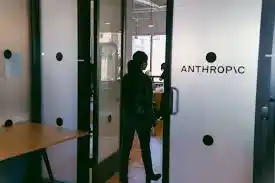
Conversation with Patagon Founder: Revealing the Inside Story of Anthropic's Secondary Market

**Summary: Inside Anthropic's Massive, Opaque Secondary Market** In a revealing interview, Patagon founder Dio Casares pulls back the curtain on the booming, high-risk secondary market for shares in companies like Anthropic. This private market, fueled by companies staying private longer and massive funding rounds, is estimated to involve hundreds of billions of dollars. Casares distinguishes between two types of "secondary" trading: 1. **Company-approved SPV (Special Purpose Vehicle) sales:** Where new capital flows into the company, often facilitated by select private equity firms. Anthropic supports this to manage liquidity and pre-IPO selling pressure. 2. **The "gray" market:** Platforms like Hive and Forge that match buyers and sellers, often creating pricing confusion and competing with official funding rounds. These intermediaries are widely disliked by companies. The market structure is complex and fragmented, relying heavily on personal connections. Brokers connect buyers and sellers, often layering multiple SPVs to pool capital, with single transaction fees as high as 10%. Strikingly, some finance professionals earn more from this trading than from their primary investment roles. **Key risks highlighted include:** * **High Fraud Rates:** An estimated 10-20% of transactions involve fake stock certificates or sellers who take payment without having the shares. * **Complex, Risky Structures:** Nested SPVs, "forward contracts" on employee equity, and tokenized private equity create layers of opacity. This is exemplified by a recent incident where an xAI employee's shares were revoked after an espionage allegation, leaving buyers empty-handed. * **Post-IPO "Settlement Hell":** After an IPO, delays in distributing shares through multiple SPV layers and decisions by fund managers to hold onto shares could trigger years of lawsuits as downstream investors are locked out. **For small investors** holding positions through tokenized vehicles or layered SPVs, it's often impossible to verify the underlying asset. Casares advises caution: if the investment feels wrong, consider exiting. As the private market now surpasses IPO fundraising, this "wild west" ecosystem faces a looming reckoning. While it will likely professionalize, the post-IPO period for a company like Anthropic could unleash a wave of disputes, exposing the vulnerabilities built into this frenzied, largely unregulated marketplace.

marsbit9 ч. назад

Conversation with Patagon Founder: Revealing the Inside Story of Anthropic's Secondary Market

marsbit9 ч. назад

Is Elon Musk Actually the Victim?

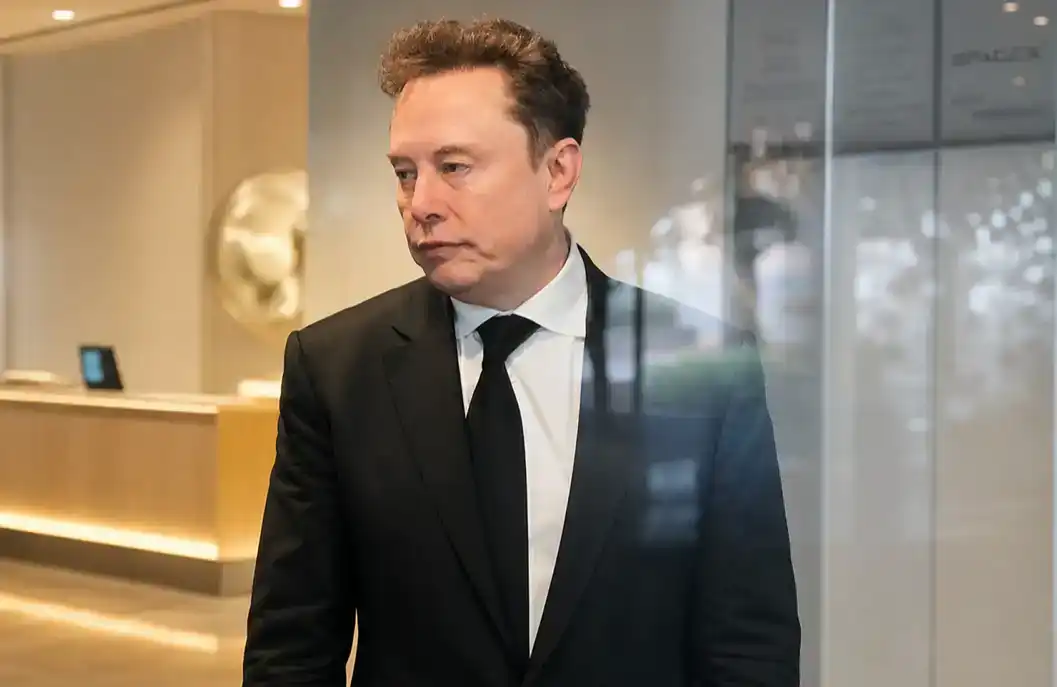
"Victim or Vindicator? Inside the OpenAI Trial That Shattered the Myth." In May 2026, the federal court in Oakland became the stage for deconstructing the carefully curated narrative of OpenAI. The trial revealed a complex reality far removed from its founding ideals. The core dispute centered on whether OpenAI, founded in 2015 as a non-profit dedicated to benefiting "all of humanity," had betrayed its mission by shifting towards a lucrative commercial structure, particularly after its 2019 capped-profit affiliate (OpenAI LP) was established and Microsoft invested $13 billion. Elon Musk, a co-founder and early funder, sued, claiming the organization was "stolen" and turned into a de facto Microsoft subsidiary for private gain. OpenAI countered that Musk's funds were unconditional donations and his lawsuit was driven by a desire for control and regret after leaving to found his own AI venture, xAI. The trial exposed early fractures. Evidence from 2017, years before ChatGPT's success, showed the founders were already grappling with the immense financial demands of pursuing Artificial General Intelligence (AGI). Musk himself had proposed having Tesla fund OpenAI. The court scrutinized whether the founders knowingly crossed a moral line. Greg Brockman's personal diary, entered as evidence, contained entries about wealth goals and anxieties over the company's revenue path, alongside self-reminders about the moral bankruptcy of "stealing" the non-profit. Brockman later testified his OpenAI stake was worth nearly $30 billion. The character of CEO Sam Altman was a key battleground. Musk's legal team cited five individuals, including co-founder Ilya Sutskever and former board members, who had described Altman as dishonest. This highlighted a recurring "trust debt" within OpenAI's leadership, exemplified by the chaotic 2023 boardroom coup and subsequent reinstatement. Altman defended his position, arguing Musk sought to absorb OpenAI into Tesla and that commercial success amplified OpenAI's charitable impact. Testimony from Microsoft CEO Satya Nadella underscored how commercial realities now dominated. While framing Microsoft's massive investment as a way to enlarge the non-profit's funding "pie," texts revealed Nadella pressuring Altman to launch ChatGPT's paid version quickly. Nadella also revealed that during the 2023 crisis, Microsoft was prepared to hire Altman and his team, showcasing the board's diminished power against the gravity of capital, talent, and infrastructure. Ultimately, the trial depicted OpenAI not as a singular act of betrayal but as a gradual, systemic transformation. Its grand AGI mission required a "heavier machine" to sustain it—a machine of computing power (largely from Microsoft), capital, and commercial obligations that inevitably reshaped its priorities. The non-profit board, tasked with guarding the mission, found itself unable to control the commercial juggernaut it had enabled. For the public, the proceedings served as a sobering window into the making of a foundational technology. The AI tools increasingly integrated into daily life—from writing and coding to customer service—are not born from a transparent, purely altruistic process. They emerge from a tangled web of personal ambitions, private negotiations, control struggles, and cloud computing bills. The trial's legacy is the stark realization that as AI becomes societal infrastructure, its steering wheel remains in very few, and very human, hands.

marsbit2 дня назад 09:06
Is Elon Musk Actually the Victim?

marsbit2 дня назад 09:06

A Century Before Swift and Blockchain, China Built Its Own Cross-Border Financial Network

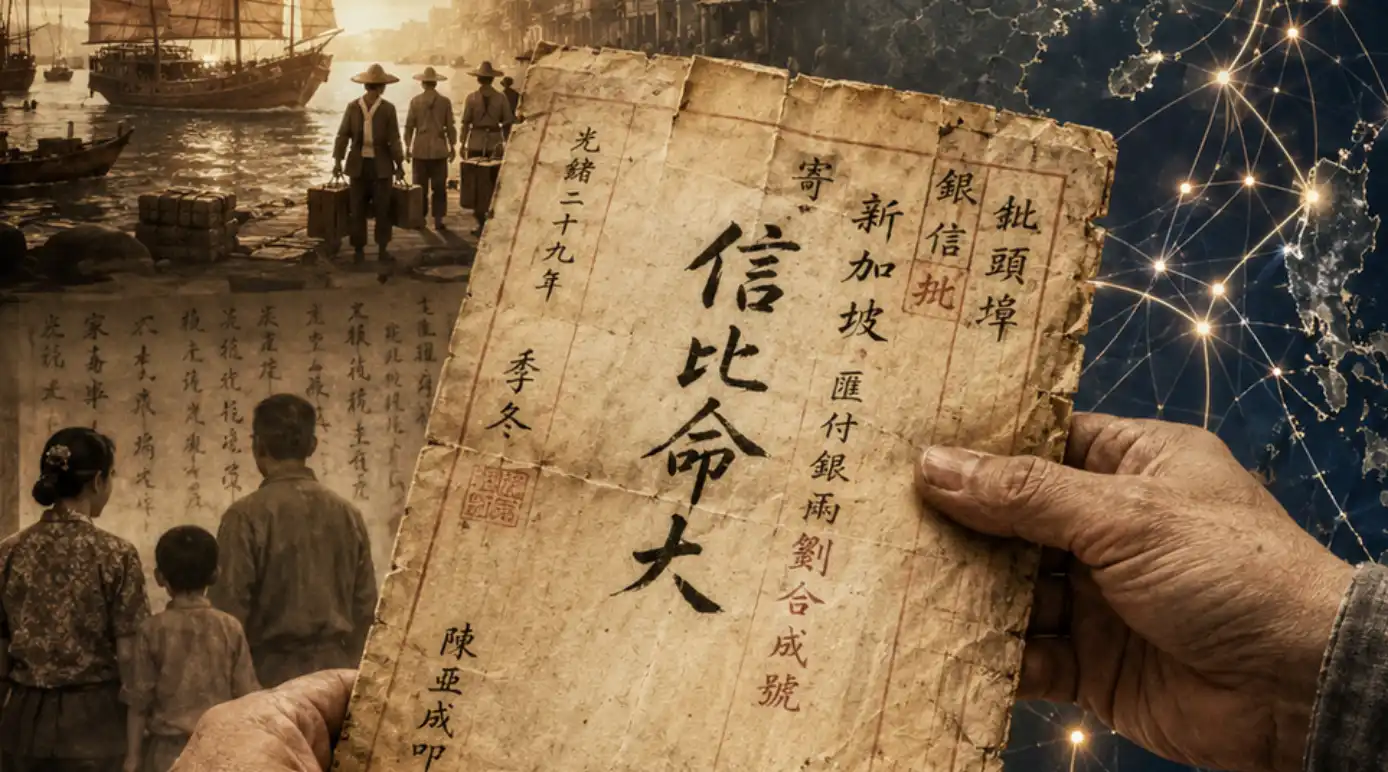
A century before Swift and blockchain, China's cross-border financial miracle: The Qiaopi Network. Driven by the phrase "a promise is greater than life," the Qiaopi (overseas Chinese remittance letter) system was a remarkable, entirely private financial network. Operating for over a hundred years until 1979, it facilitated billions in remittances, at one point constituting over 50% of China's foreign exchange during WWII—all without central banks, official clearing, or government backing. It began with "Shuike" (water guests), couriers who carried cash and letters personally between Southeast Asia and Chinese villages like Chaozhou. Their operation was peer-to-peer, identity-verified through kinship, and had a near-zero default rate, as trust was their sole collateral. This evolved into "Piju" (remittance houses), creating an institutional network. They ingeniously used currencies like the Hong Kong Dollar for settlement and practiced netting clearance, offsetting remittance flows against trade payments to minimize physical cash movement. Its resilience shone in wartime. When Japanese forces cut off main routes, the network forged an underground "Dongxing Remittance Path" through Vietnam. It used coded messages ("a bag of rice" for a sum of silver) to evade interception, reliably delivering funds critical for survival and even clandestine support for the war effort. Unlike Swift (built on state cooperation) or blockchain (relying on cryptography), Qiaopi was founded on clan,乡土 (native place), and human trust—a cultural consensus where违约 meant social death. Modern finance compensates for this lost trust with complex collateral and regulation. The Qiaopi network, powered only by sailing ships, familiar accents, and profound integrity, achieved a feat of decentralized, cross-border finance that remains unparalleled—a poignant story of信用 (trust/credit) in its purest form.

marsbit2 дня назад 04:04

A Century Before Swift and Blockchain, China Built Its Own Cross-Border Financial Network

marsbit2 дня назад 04:04

Circle's Second Growth Curve: After the $222 Million ARC Financing, CRCL or ARC?

Circle, the issuer of USDC, announced that its new public blockchain Arc completed a $222 million private sale for its native token ARC, with the network's fully diluted valuation reaching $3 billion. The funding round was led by a16z crypto, with participation from major institutions including BlackRock, Apollo, and ICE. The article explains Circle's rationale for building its own L1 blockchain, Arc. Existing chains like Ethereum and Solana are seen as lacking native support for large-scale institutional needs, such as regulatory compliance, predictable transaction costs, and asset issuance/redemption workflows. Arc is designed to fill this gap as a foundational layer for the on-chain economy, moving beyond Circle's reliance on USDC reserve interest for revenue. It details the dual-token model of Arc: USDC serves as the stable gas token for predictable transactions, while ARC is the network's native asset used for staking in the planned transition to Proof-of-Stake, governance, and aligning long-term incentives among participants. ARC's total supply is 10 billion, with 60% allocated to ecosystem development, 25% to Circle, and 15% to a long-term reserve. All protocol fees are converted to ARC, with portions burned and distributed to stakers. The piece contrasts the value proposition of Circle's public stock (CRCL) and the ARC token. CRCL captures the company's core cash flows from USDC interest and other business lines. ARC captures the growth potential of the Arc network itself. While legally separate, network success benefits both: it drives USDC usage for Circle and increases the value of its 25% ARC holding. Finally, it outlines participation avenues for retail users, primarily through the Arc House community and testnet activities, while noting the competitive landscape with projects like Canton Network and Plasma. The article concludes that Arc's success hinges on attracting real institutional activity post-mainnet launch, scheduled for Summer 2026.

链捕手2 дня назад 13:53

Circle's Second Growth Curve: After the $222 Million ARC Financing, CRCL or ARC?

链捕手2 дня назад 13:53

From Gas Limit to Keyed Nonces: How to Understand the Next Stage of Ethereum's Scalability?

From Gas Limits to Keyed Nonces: Understanding the Next Phase of Ethereum Scalability This article explores how recent Ethereum developments focus on moving complexity away from end-users, wallets, and DApps to the protocol layer. It discusses the consensus around significantly increasing the Gas Limit to 200 million, a change aimed at reducing fees and improving network capacity. However, it emphasizes that this increase is part of a holistic approach that includes mechanisms like enshrined Proposer-Builder Separation (ePBS) and Block-Level Access Lists to manage state growth and maintain node decentralization. The piece also delves into Keyed Nonces (EIP-8250), a proposed upgrade to Ethereum's transaction ordering. It explains how moving from a single, linear nonce queue per account to multiple independent nonce domains ("channels") can enable parallel transaction streams for different use cases. This is particularly crucial for privacy protocols and smart wallets, reducing transaction conflicts and unlocking new design possibilities. Ultimately, the article argues that these technical upgrades—alongside native account abstraction and cross-L2 interoperability—are converging towards a singular goal: enhancing the overall user experience. This means making on-chain interactions smoother, safer, and more cohesive, with wallets serving as the critical interface translating complex protocol improvements into intuitive user actions.

marsbit2 дня назад 13:43

From Gas Limit to Keyed Nonces: How to Understand the Next Stage of Ethereum's Scalability?

marsbit2 дня назад 13:43

The Semiconductor Century: Investment Roadmap Amidst the 2026 AI Surge

The Semiconductor Century: Investment Roadmap in the 2026 AI Surge This analysis outlines the pivotal role of semiconductors in the 2026 AI-driven landscape. With the global semiconductor market projected to reach ~$9.75 trillion in 2026, AI infrastructure spending by hyperscalers is a primary growth driver, fundamentally shifting demand from consumer electronics to strategic technology assets. The report breaks down the industry into four key segments: 1) Designers (e.g., Nvidia, AMD) who own high-margin IP; 2) Foundries, led by TSMC which manufactures ~90% of the world's most advanced chips; 3) Equipment makers like ASML, the sole producer of critical EUV lithography machines; and 4) Memory specialists such as SK Hynix, crucial for supplying high-bandwidth memory (HBM) for AI servers. It highlights significant companies: Nvidia (dominant in AI GPUs and CUDA software), TSMC (critical but geopolitically concentrated foundry), ASML (monopoly in advanced lithography), AMD (key alternative to Nvidia), Broadcom (leader in custom AI chips), and SK Hynix (leading HBM supplier). For diversified exposure, semiconductor ETFs like SMH, SOXX, and SOXQ are presented. Key investment risks are emphasized: over-reliance on AI demand, acute geopolitical and supply chain concentration in Taiwan, policy uncertainty around export controls, the cyclical nature of memory markets, and high valuations for leaders like Nvidia and Broadcom. Critical 2026 catalysts include the industry's push toward a $1 trillion annual sales milestone, the ramp-up of TSMC's Arizona factory, the deployment of Nvidia's next-generation Vera Rubin platform, AMD's market share progress, and HBM4 supply dynamics. The conclusion advises investors to balance the sector's extraordinary growth against its very real risks—geopolitical concentration, AI dependency, memory cyclicality, and valuation—to make informed decisions.

marsbit05/14 10:40

The Semiconductor Century: Investment Roadmap Amidst the 2026 AI Surge

marsbit05/14 10:40

活动图片