Author: Zen, PANews
In recent years, prediction market platforms led by Polymarket and Kalshi have turned political, macroeconomic, crypto, entertainment, and sports events into tradable markets. Users express probabilistic judgments and earn profits by buying and selling event outcomes. Especially after entering the sports arena, these platforms have seen substantial and sustained growth in trading volume, making sports a pillar of their revenue structure.
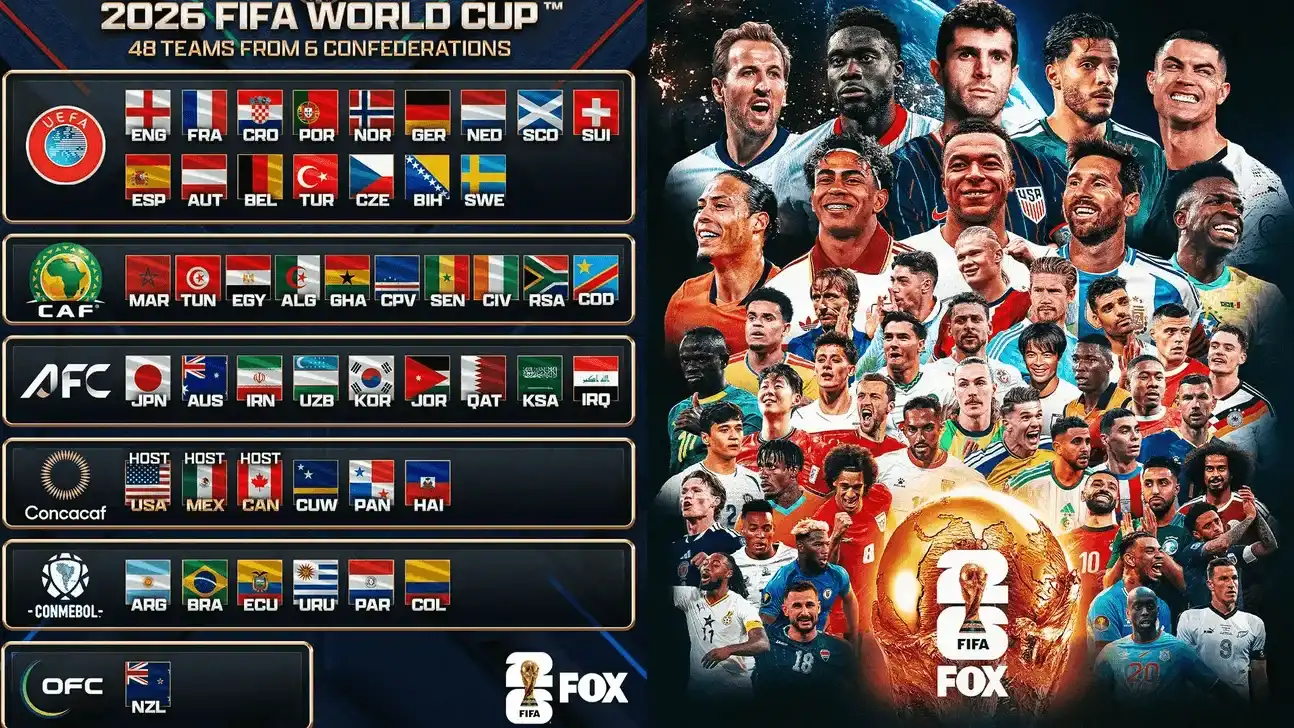
In this major sports year, particularly the 2026 FIFA World Cup—co-hosted by the USA, Canada, and Mexico, and expanded for the first time to 48 teams—will represent the most significant public stress test for sports prediction markets to date. It compresses sports competition, cross-border event organization, the betting ecosystem, and global user traffic into a single market scenario, significantly amplifying both risk dimensions and external scrutiny.
In such a high-density, globalized, cross-jurisdictional sporting event, the combination of insiders and tradable prediction markets means that any information asymmetry regarding injuries, starting lineups, referees, or even internal governance could be rapidly converted into pricing advantages.
In this sense, the 2026 World Cup is not only an opportunity for prediction markets to compete for sports traffic but also a public examination of their ability to safeguard sports integrity.
From Obscurity to the World Cup Spotlight: FIFA's Prediction Market Partner Faces Multiple Queries
In April of this year, FIFA (Fédération Internationale de Football Association) announced its official prediction market partner for the 2026 World Cup. Surprisingly, the brand announced was neither Polymarket nor Kalshi, but a little-known platform—ADI Predictstreet.
Just as people were wondering who ADI Predictstreet was, this company placed at the center of the world's largest sporting event began to face public skepticism due to the negative history of its executives, the speed of its licensing, and the immaturity of its product.
The first layer of controversy surrounding Predictstreet involves executive integrity. When ADI Predict Street was announced as FIFA's betting partner, the company's Chief Council Member, Ajay Bhatia, represented the company on stage. He was photographed with FIFA President Gianni Infantino, both holding up a jersey bearing the ADI Predict Street logo.
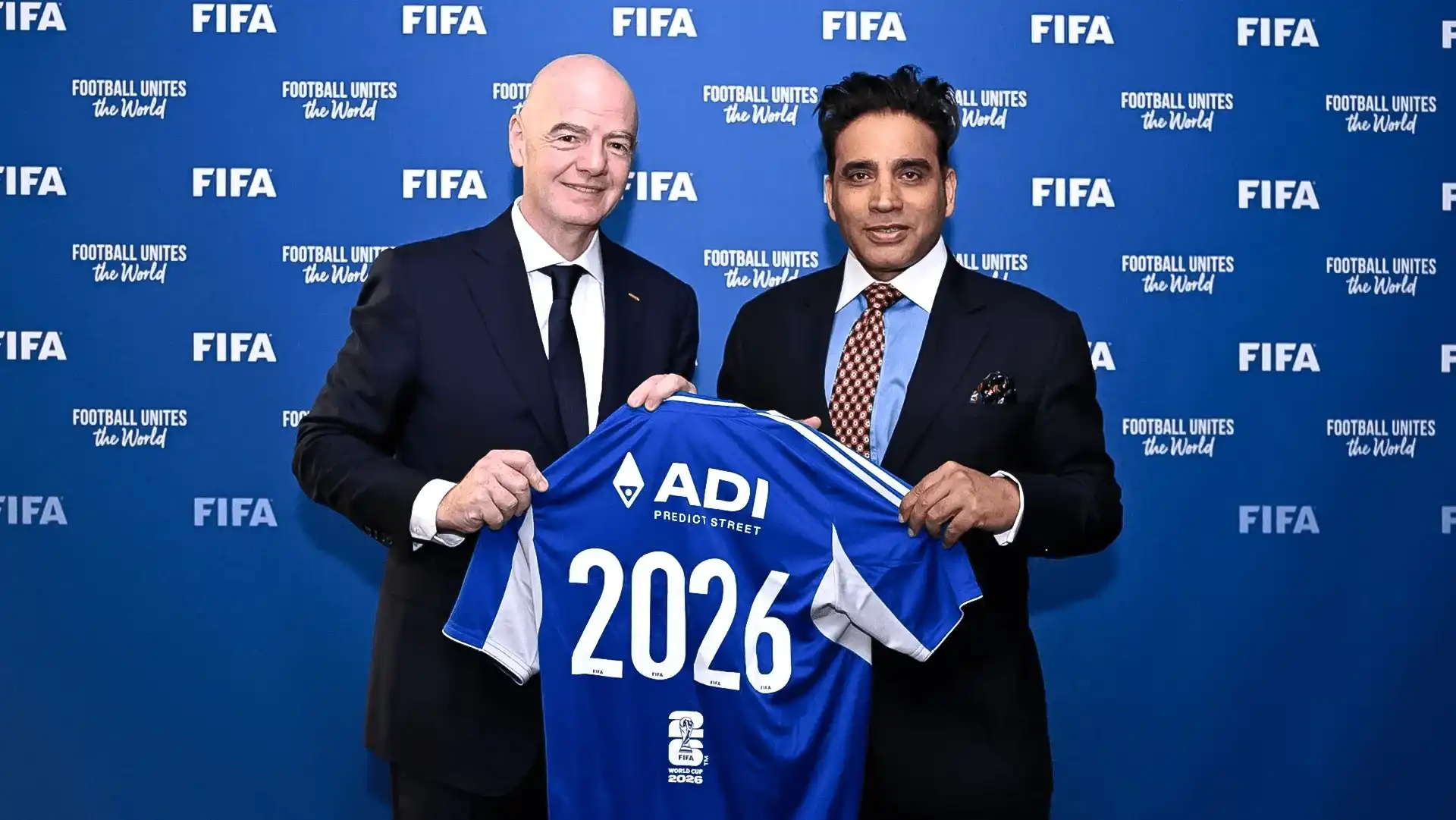
Bhatia is the CEO and Managing Director of QuantLase Lab, a subsidiary of IHC (International Holding Company), which is chaired by a member of the Abu Dhabi royal family and Vice President of the UAE. On the other hand, ADI Predictstreet falls under Finstreet, which is a subsidiary of Sirius International Holding, which is also part of IHC.
According to Norwegian football news outlet Josimar, Bhatia was embroiled in an insider trading scandal in 2025. He was accused of purchasing shares in the Indian energy giant Adani Group before IHC publicly announced it would invest in it. The case was settled for approximately $150,000 in September 2025, with Bhatia not admitting guilt.
Shortly after Josimar disclosed Bhatia's past, ADI Predictstreet announced that Dimitrios Psarrakis would assume the role of CEO. However, Psarrakis's resume also appears questionable. He previously served as an assistant to former European Parliament Vice President Eva Kaili, who was a central figure in the European Parliament's Qatar corruption scandal (also known as Qatargate).

Kaili allegedly accepted benefits from Qatar and Morocco in exchange for promoting their interests within the EU. While the legal and ethical risks associated with Kaili cannot be directly equated to Psarrakis, his professional connection to a figure at the heart of a scandal is sufficient to raise questions about reputation and due diligence.
Beyond executive credibility issues, the speed at which ADI Predictstreet obtained its license is also noteworthy. Just days before being announced as the official prediction market partner for the 2026 World Cup, ADI Predictstreet announced it had secured a license in Gibraltar. Officials claimed the approval speed "set a record" and that the entire process was very rigorous.
However, although the ADI Predictstreet website domain was registered in January and it obtained its license by the end of March, its actual product is still not live. The real-money trading experience remains unknown. As the official prediction market platform FIFA has thrust into the World Cup spotlight, the outside world still cannot assess whether its actual trade matching, settlement, risk control, anti-manipulation, and user protection mechanisms have undergone stress testing.
Therefore, with these multiple layers of uncertainty, the World Cup's partnership with ADI Predictstreet began with a deficit of trust.
FIFA's Historical Baggage and Gamblification Controversy
Beyond the questionable credibility of the ADI Predictstreet platform, FIFA itself, often criticized for corruption, struggles to gain inherent trust in this matter.
In 2015, the U.S. Department of Justice brought widespread corruption charges against numerous FIFA officials and sports marketing executives. Then-U.S. Attorney General Loretta Lynch described the corruption as "rampant, systemic, and deep-rooted." This historical backdrop makes it difficult for FIFA to convince the public through official statements alone in any cooperation involving betting, data, or prediction markets.
In recent years, FIFA's ties to the betting and data industries have also deepened, fueling concerns about match integrity at a similar pace.
Shortly before the 2022 Qatar World Cup, FIFA struck a deal with betting operator Betano; the following year, FIFA signed an agreement with New Zealand lottery company TAB for the Women's World Cup; in early 2026, FIFA commercialized its streaming platform FIFA+ through a deal with data company Stats Perform, bringing more lower-tier matches into the betting market.
From a commercial perspective, this can be interpreted as FIFA developing its data assets and fan engagement. But from a sports integrity viewpoint, it also means the World Cup is being embedded deeper into the betting and trading ecosystem. As the event becomes increasingly enamored with the commercial value brought by this ecosystem, a major question arises: can it remain sufficiently independent to control risks?
In response, FIFA has taken some measures to address betting-related threats. In 2024, FIFA relocated its legal department and integrity unit to Miami (resulting in the loss of many experienced staff) and also formed an integrity task force, with members including institutions like Interpol, the U.S. Federal Bureau of Investigation, and representatives from the betting industry.
In February 2026, FIFA announced that U.S.-based integrity and compliance monitoring company IC360 would join this task force and use its ProhiBet software to monitor betting-related threats, including whether players and match officials bet on their own games.
However, this mechanism seems more like a screening tool for regulated markets rather than a complete defense line covering the global betting and prediction market risks of the World Cup. For an event involving parties worldwide and extremely long information chains, truly dangerous insider trading often doesn't occur in the places most visible to regulators.
Insider Trading Concerns Rise, Prediction Market Leaders Tighten Rules
Traditional betting monitoring typically relies on information sharing between betting companies, data providers, leagues, and regulators. Prediction markets, however, may involve crypto wallets, offshore platforms, cross-border accounts, proxy trading, and decentralized settlement. Even if official partner platforms are regulated, other platforms may still open World Cup markets outside FIFA's official system.
If anomalous trading occurs on non-partner platforms, among non-U.S. users, via crypto wallets, or through proxy accounts, it remains an unproven question whether FIFA's traditional integrity tools can penetrate these layers.
In sports prediction markets, risks of insider manipulation for outcomes like World Cup winner, group stage advancement, or a team's progression are typically low, as they are difficult for a single participant to manipulate.
But more micro and granular markets are entirely different. Whether a specific player starts, a player is injured, a red card occurs in a match, a team gets a penalty, a specific referee officiates, or a VAR controversy happens—these events are more susceptible to influence by a few insiders and easier to price based on non-public information.
The U.S. Commodity Futures Trading Commission (CFTC), as the sole regulator of prediction markets, recognized this early. One of its key guidelines for sports prediction markets is to remind regulated exchanges to focus on contracts related to individual player performance, prop bets, and micro-markets vulnerable to manipulation. The CFTC also encourages platforms to share data with sports leagues and strengthen contract settlement and market surveillance.
In response, prediction market platforms in the U.S. have adapted their management. Following Congressional pushes to limit prediction market legislation, Kalshi and Polymarket quickly updated their rules. Kalshi stated it would prohibit sports personnel from trading contracts related to areas they participate in or are employed in. Polymarket also updated its rules, banning users from trading contracts if they possess confidential information or can influence the event outcome.
However, the complexity of the World Cup far exceeds that of a single U.S. professional league. Leagues like the NBA and MLB have clear league, team, player union, referee, and official data structures. The World Cup involves a vast array of entities: FIFA, six continental confederations, 48 national teams, clubs, agents, medical teams, referee committees, broadcasters, and data suppliers. Who qualifies as an "insider," how to identify them, and whether they can trade via family, friends, proxy wallets, or third-party accounts? These questions are much harder to answer in the World Cup context.
Furthermore, prediction markets face not just sports integrity issues but also global regulatory legitimacy. In April this year, the Brazilian government blocked 27 prediction market platforms and tightened derivatives rules, prohibiting derivatives based on sports, online games, politics, elections, culture, and social outcomes. Dozens of other countries also reject the argument that "event contracts are not gambling."
In such a climate, FIFA's choice of a platform riddled with question marks and with a product not fully validated as its official World Cup prediction market partner has itself pushed the sports integrity issue to the forefront ahead of time.
Of course, the 2026 World Cup will not determine the survival of prediction markets, but it will likely define the boundaries of their mainstream integration into the global sports industry: will they become a regulated event-trading infrastructure, or just another gambling risk entry point amplified by global sports traffic?