【研报精选】BTC二层也有大机会?BTC扩展再引关注

MarsBitPublicado a 2023-03-01Actualizado a 2023-03-01

Resumen

BTC 生态对于 DeFi 的承接,很大程度上将由交易环节打开,在叙事空间不断放大的同时,基于闪电网络/ L2 的 BTC 生态交易平台的发展值得关注。当然,目前的 BTC-Fi 中,链上标的总交易量有所上涨,但总规模仍然较小,这是一个需要时间和周期的板块。

长期以来,BTC 作为“数字黄金”,普遍被视为非应用型资产,不过,让 BTC 加入 DeFi 乐高的构思由来已久,目前的搭建方案主要在于 BTC 的 L2,将 BTC 与 DeFi 进行桥接。

相当长的一段时间内,比特币二层的性能尚不成熟,市场仍在等待新技术或新模型的突破。

自 BTC taproot 升级之后,开发人员可嵌入资产元数据,让 BTC 具备成为数据平台的可能。着促使了一些创新的不断涌现:例如,前段时间风靡一时的 Nostr 、以及 Dumas 应用带来的 BTC 打赏功能,让闪电网络及 BTC 二层概念脱颖而出。2 月份,基于 Ordinal 协议的 BTC NFT ,给市场带来了 BTC 原生生态及序数 NFT 概念,由社区自下而上催生热度,BTC 生态再度受瞩。

虽然基于 Ordinal 协议的 NFT 在社区伴有争议,该生态已从最初的场外订单簿交易、逐渐发展出 NFT 钱包、二级交易市场、NFT 发行工具等配套设施,虽然这种“占赛道式”的设施尚不成熟,但不难看出,市场对 BTC-Fi 的预期已经抬头。

BTC 二层仍然是 BTC-Fi 预期的重要实现基建。大多数的 BTC-Fi,其设计思路仍是延用以太坊 L2 及侧链,保持主链作为数据状态和安全基础层。其中,侧链是较容易实现的方式,但安全性始终无法媲美主链和 L2,制约了侧链的发展速度;作为 BTC 二层的闪电网络,历经几年发展,数据保持着一定的增长趋势,在比特币支付这一落地场景中更为占优。

依据生态发展情况,将比特币二层生态主要参与者大致归为:

闪电网络:

OmniLab

Lightning Labs

RGB

Portal

侧链:

RSK

Stacks(原 Blockstack)

Liquid Network (由 Blockstream 开发)

这包括了当前 BTC 生态的主要市场热点:

Lightning(闪电网络):一个用于在比特币上进行扩展支付的层。专注于以最小化信任的方式实现速度更快、成本更低的支付。通过特定渠道在链下支付,并在比特币主链进行最终结算。没有执行环境或全局账本。

Stacks:一个专注于智能合约的比特币层。有一个完整的执行环境(即任何可构建在以太坊等链上的应用程序可构建在 Stacks 层上)。

如何进一步挖掘 BTC-Fi ?

在公链或者 L2 生态在扩张进程中,整个生态系统的流动性至关重要,DEX 占据了非常重要的橘色。参照以太坊与 Uniswap :市场对于 Uniswap 出现之后的以太坊,预期是完全不同的。

在这个方向,我们更倾向于 Layer2/BTC 交易协议,倘若闪电网络的快捷性再加以 Dex 的优势,交易量规模将再度扩大。

以 Cabin VC Portfolio 的 Portal 为例:Portal 是一个基于 Fabric 技术的 BTC 二层,并从功能性上划分出不同的层:
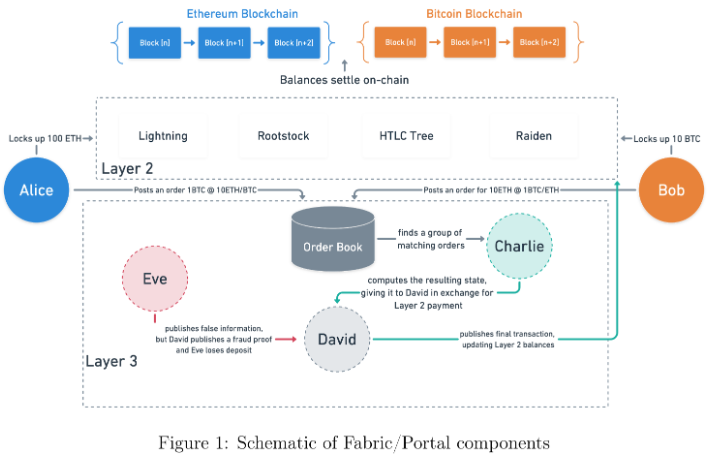
底层协议:Fabric(Fabric 是基于比特币的区块链、无需信任的应用层,提供类似操作系统的功能),继承比特币 L1 的安全性。并作为其他两层的底层协议提供支持,以能够进行原子交换;Layer2:闪电网络; Layer3:订单簿;

Portal 进一步展开了原子交换(Atomic swaps)的关键叙事:

* 基于 HTLC(Hashed Timelock Contract,哈希时间锁)的原子交换:用户 A 生成随机密码 a, 用户 B 生成随机密码 b, 双方各自将 ab 计算哈希并互相发送,哈希值相匹配则意味着转账方授权了接收方来提现,双方将收到彼此的 Token ,实现去信任化的资产跨链。

在原子互换的基础上,Portal 构建了订单簿(Order Book)结构,以链上的无信任托管及跨链原子交换,访问订单簿,交易订单统一匹配来自聚合中心化 /去中心化金融平台中交易员的流动性,以最佳执行路径进行链下计算与报价。

Portal 的两层结构中,用户提出交易需求、将交易 Token 交由链上期权类智能合约保证交易的顺利执行,同时保持对资产的托管,直到链上实现原子交换、交易执行完毕。

原子交换属于 0 滑点交易,基于闪电网络和 ZK 技术,增加隐私和匿名性,同时降低链上结算费用,能够在一定程度上提高比特币等资产的流动性和交易深度。

BTC 生态对于 DeFi 的承接,很大程度上将由交易环节打开,在叙事空间不断放大的同时,基于闪电网络/ L2 的 BTC 生态交易平台的发展值得关注。当然,目前的 BTC-Fi 中,链上标的总交易量有所上涨,但总规模仍然较小,这是一个需要时间和周期的板块。

Lecturas Relacionadas

Encrypted ETF Weekly Report | Last Week, US Bitcoin Spot ETF Net Outflow $9.95 Billion; US Ethereum Spot ETF Net Outflow $255 Million

Last week, U.S. Bitcoin spot ETFs saw significant net outflows totaling $995 million over three days, with a major contribution of $317 million from BlackRock's IBIT. Their total net asset value (NAV) stands at $104.2 billion. U.S. Ethereum spot ETFs also experienced net outflows of $255 million over five days, largely from BlackRock's ETHA ($186 million out), bringing their total NAV to $12.93 billion. In Hong Kong, Bitcoin spot ETFs recorded a net outflow of 24.91 BTC, reducing their NAV to $323 million. Hong Kong's Ethereum spot ETFs saw no inflows, with an NAV of $68.13 million. U.S. Bitcoin spot ETF options showed increased activity, with a total nominal trading volume of $797 million and a put/call trading ratio of 1.63, indicating a bullish market sentiment. The total open interest reached $23.08 billion. Key developments include VanEck and Grayscale simultaneously filing amended proposals for BNB ETFs, signaling potential SEC review progress. Grayscale also filed for the first U.S. privacy coin ETF (Zcash). Avenir Group remains Asia's largest institutional holder of Bitcoin ETFs. 21Shares launched an actively managed crypto ETF (TKNS), and Bitwise's Hyperliquid ETF (BHYP) is set to list on the NYSE. Institutional activity varied: JPMorgan dramatically increased its Bitcoin ETF holdings (IBIT up 174%), while Jane Street significantly reduced its exposure (IBIT down 71%). Dartmouth College disclosed holdings of $7.7M in Bitcoin ETF and $3.4M in a Solana ETF.

链捕手Hace 6 min(s)

Encrypted ETF Weekly Report | Last Week, US Bitcoin Spot ETF Net Outflow $9.95 Billion; US Ethereum Spot ETF Net Outflow $255 Million

链捕手Hace 6 min(s)

Vitalik: What We Need to Do Is Not Fight AI, But Create Sanctuaries

Vitalik Buterin, in an a16z podcast, addresses the core challenge of the AI era: not to fight AI, but to build "sanctuary technologies" that protect humans without stripping away privacy and agency. He argues the greatest risk is not super-intelligent AI, but humans becoming passive passengers who outsource decisions to centralized systems and AI, leading to a disempowering safety. He redefines Ethereum/crypto's mission as creating such a sanctuary—a parallel, optional space for free coordination, not a fix for the existing system. This becomes crucial as AI and corporate power centralize. Reflecting on his journey from a 19-year-old on "autopilot" to an active "pilot," Vitalik emphasizes that the world reinvents itself every 5-10 years, demanding proactive adaptation. He stresses that active learning is 10x more effective than passive learning, even with equal time. His key advice is to intentionally maintain "manual mode" amidst powerful AI: do tasks yourself, engage in active learning, and avoid total cognitive outsourcing to prevent mental atrophy. For builders, the focus should be on creating tools that preserve human sovereignty, foster serendipity, and keep strategic control. In summary, the AI era demands greater human initiative. True value lies not in computational power, but in active, sovereign individuals who use technology as a tool for agency, not a replacement for it.

marsbitHace 23 min(s)

Vitalik: What We Need to Do Is Not Fight AI, But Create Sanctuaries

marsbitHace 23 min(s)

Trading

Spot
Futuros
活动图片